
Home & DIY · Fall Prevention
Fall-Proofing Your Home After 50: 10 Simple Fixes
By OakMan Guide Editorial Team Updated 8 min read
The short answer
The simplest way to fall-proof your home after 50 is to fix the cheap things first: clear stairs and floors, secure or remove rugs, tame cords, add light and a nightlight, and put a mat in the tub. Then bring in a pro for handrails, stair lights and grab bars. The CDC checklist behind these fixes mostly fits in one afternoon.
We're not doctors, and this is not medical advice.
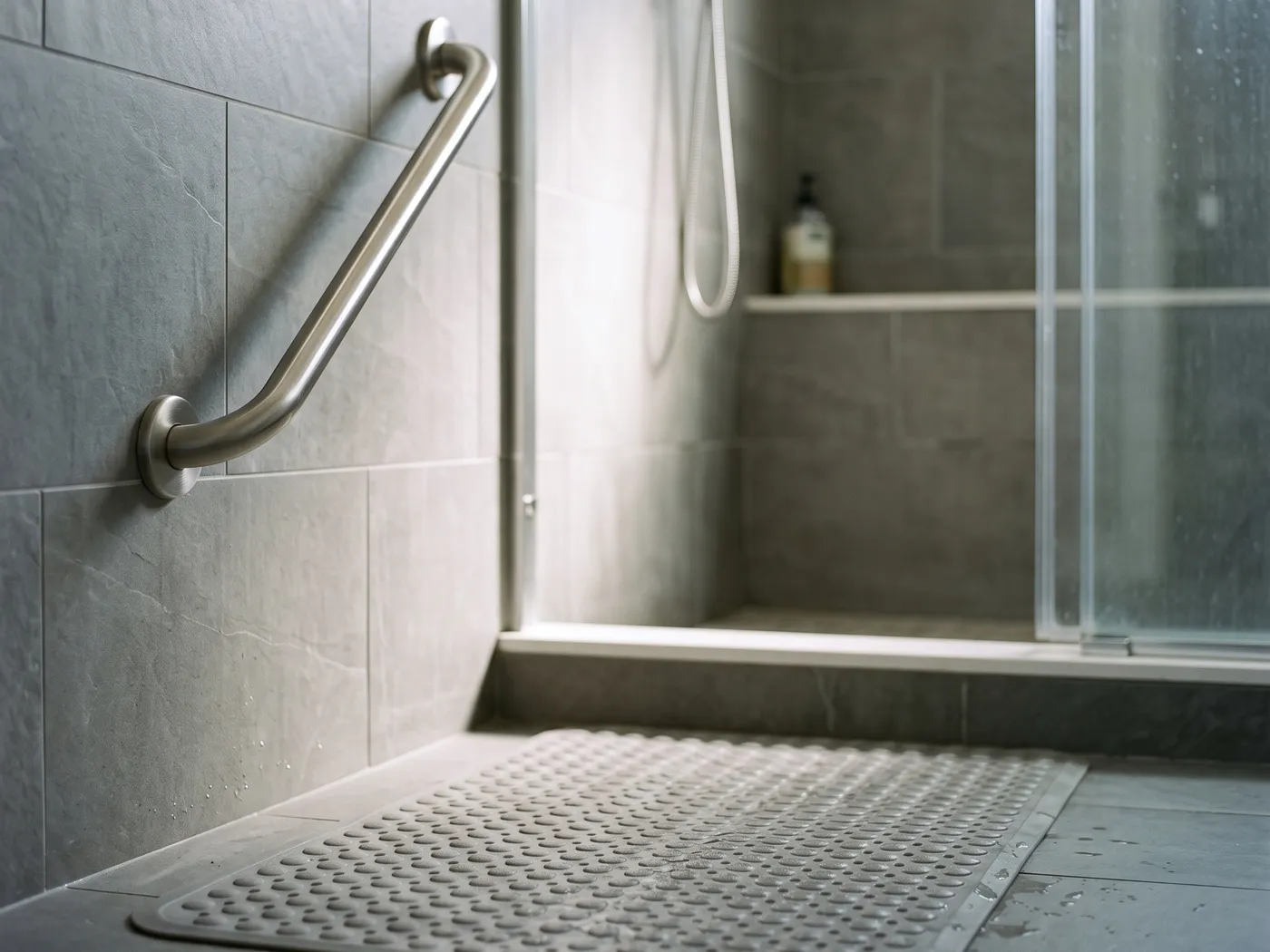
Photo: Modern bathroom safety features with non-slip mat and grab bar by Christena nageh on Vecteezy.
A fall at home rarely comes out of nowhere. It tends to happen at the rug, in the dark hallway or on the step that wobbles. Here are ten fixes in order of effort, and the first four cost nothing.
Why fix the house first?
Because it is the part of the problem you can change this weekend. The CDC facts page reports that over one in four older people falls every year, that under half mention it to a doctor, and that one fall doubles the odds of another. It also lists home hazards, such as broken steps, throw rugs and clutter, among the risk factors that can be changed. The CDC defines older adults as 65 and over, so those figures describe that group. The fixes below are worth doing earlier, and cheaper to do before anything happens.
Here are the ten fixes at a glance, in the order we would do them:
| # | Fix | Where | Effort |
|---|---|---|---|
| 1 | Clear the stairs and floors | Whole house | Free |
| 2 | Secure or remove throw rugs | Living areas | Free to low |
| 3 | Tame the cords | Living areas | Free to low |
| 4 | Wear shoes with support | Inside and out | Free to low |
| 5 | Bring the kitchen down to waist height | Kitchen | Low |
| 6 | Put a lamp and a nightlight in reach | Bedroom | Low |
| 7 | Add light and cut the glare | Whole house | Low |
| 8 | Put a non-slip mat in the tub | Bathroom | Low |
| 9 | Fix the steps, carpet and handrails | Stairs | A weekend job |
| 10 | Install grab bars and stair lights | Bathroom, stairs | A job for a pro |
Which fixes are free and take an afternoon?
1. Clear the stairs and floors
Start with what is lying around. The CDC home checklist asks about papers, shoes, books and other objects on the stairs and on the floor, and the answer is the same for both: always keep them off. It also asks whether you have to walk around furniture to cross a room. If so, ask someone to move it so your path is clear.
2. Secure or remove throw rugs
The checklist gives two ways out: remove them, or use double-sided tape or a non-slip backing so they will not slip. In our opinion, a rug that you catch with your toe more than once should go to the closet.
3. Tame the cords
Lamp, telephone and extension cords that cross a walking path are trip lines. The CDC says to coil or tape them next to the wall, and, if you need one, to have an electrician put in another outlet.
4. Wear shoes with support, inside too
The CDC's What YOU Can Do sheet says to wear well-fitting shoes with good support inside and outside the house. Foot pain and poor footwear are on the CDC's list of conditions that make a fall more likely, and it suggests having a health care provider check your feet once a year and talk about proper footwear.
Which fixes need a small purchase?
5. Bring the kitchen down to waist height
Move what you use every day to the lower shelves, about waist high, so you never need to climb for the coffee or the pans. If you still need a step stool, the CDC says to get a sturdy one with a bar to hold on to. It also says never to use a chair as a step stool.
6. Put a lamp and a nightlight in reach
The checklist asks two questions about the bedroom: is the light near the bed hard to reach, and is the path from the bed to the bathroom dark? The fix is a lamp close to the bed and a nightlight along the path. Some nightlights switch on by themselves after dark. If you already get up at night, our guide to waking up to pee at night after 50 explains why, and in our opinion this is the best first purchase on the list.
7. Add light and cut the glare
The CDC prevention page keeps this one short: add more bulbs or brighter ones. The What YOU Can Do sheet gives the reason, which is that aging eyes need brighter light, and suggests lightweight curtains or shades to reduce glare.
8. Put a non-slip mat in the tub
A wet tub floor is slippery. The CDC says to put a non-slip rubber mat or self-stick strips on the floor of the tub or shower.
Which fixes are worth a weekend or a pro?
9. Fix the steps, carpet and handrails
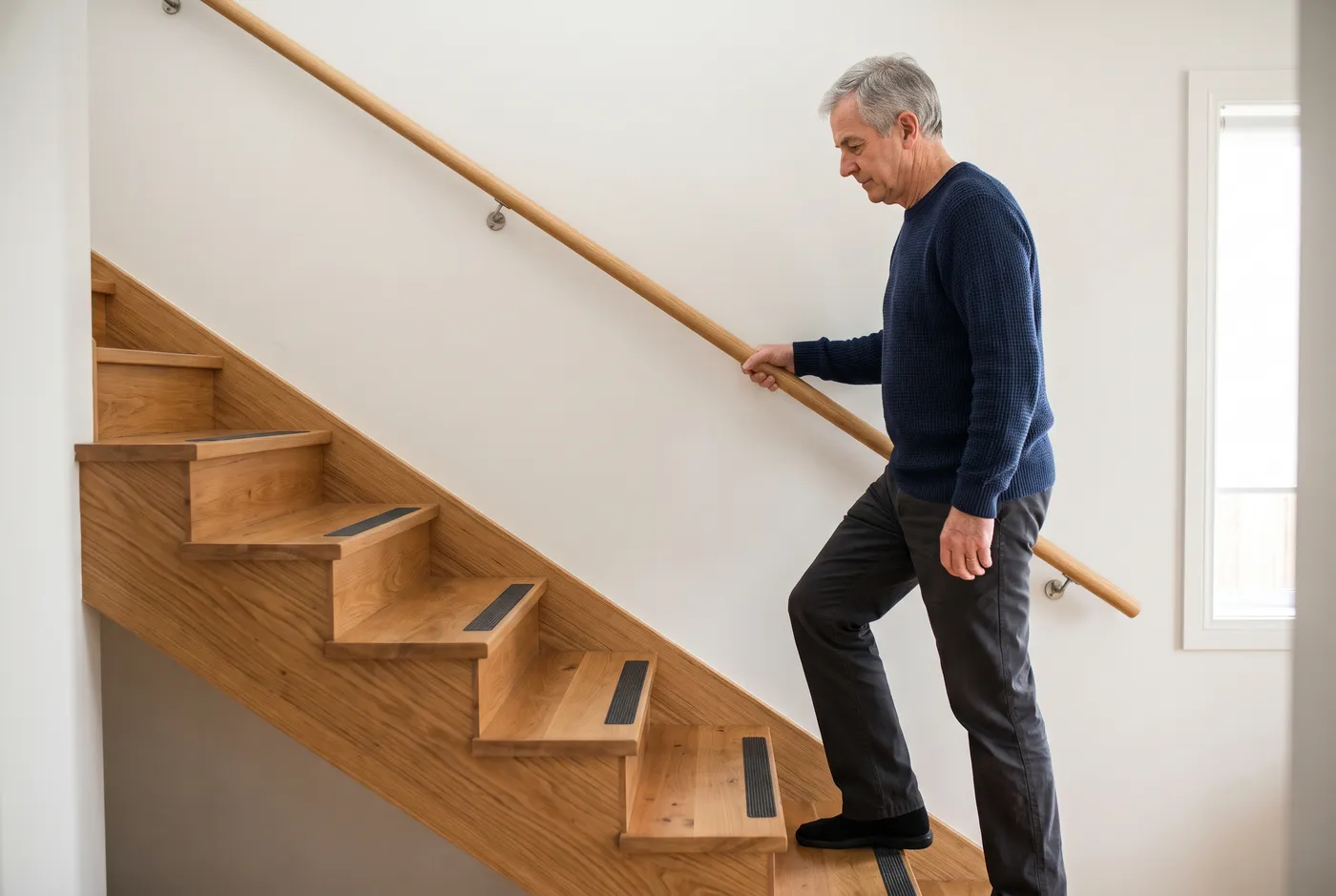
Stairs call for the most care, so this is the fix not to skip. The CDC checklist says to fix loose or uneven steps and to make sure stair carpet is firmly attached to every step, or to remove the carpet and attach non-slip rubber treads. For handrails, it says to fix loose or broken ones or put in new ones, with a handrail on both sides of the stairs, as long as the stairs.
10. Install grab bars and stair lights
Two jobs the CDC says to have done by someone. Grab bars belong beside and inside the tub and beside the toilet, and the prevention page adds the outside of the tub or shower. A light and a light switch at the top and bottom of the stairs should be put in by an electrician, and you can get switches that glow. If a stair bulb burns out before the electrician comes, the checklist suggests asking a friend or relative to change it. Asking is part of the plan.
What can a safe house not fix?
The CDC says most falls come from a combination of risk factors, so the house is one part of the plan. The other parts are quick to name. Ask your doctor or pharmacist to review your medicines, even the over-the-counter ones, because some can make you dizzy or sleepy. See an eye doctor at least once a year and update your glasses. Do exercises that make your legs stronger and improve your balance, and the CDC gives Tai Chi as an example. It also suggests asking your provider about vitamin D and about screening for osteoporosis.
For the exercise part, our starter plan for strength training after 50 is a simple place to begin, and the checkups guide lists what to bring up at your next visit. The year-round version of this list, with alarms and heating upkeep, is in our Home and DIY guide.
What should I do after a fall?
Head injury after a fall
The CDC says an older person who falls and hits their head should see their doctor right away to make sure they do not have a brain injury, and that head injuries can be very serious, especially if the person takes certain medicines, such as blood thinners. It also says to tell a provider right away if you fall, worry about falling or feel unsteady.
The same page says many people who fall become afraid of falling, and cut back on everyday activities. Being less active makes them weaker, which raises the chance of falling again. That is one more reason to fix the house: a safer home makes it easier to stay active.
Where do I start this weekend?
- Walk the house with the table above. Do fixes 1 to 4 as you go, because they cost nothing.
- Buy the small things on one trip: a nightlight, a bedside lamp, a tub mat and brighter bulbs.
- Make a short list for a pro: handrails, stair lights, grab bars.
- Tell your doctor about any fall, and ask for a medicine review at the next visit.
Winter adds its own list, from alarms to pipes, in our winterize your home checklist. And our men's health guide lists the signs that mean you should call a doctor now.
Frequently asked questions
What are the biggest fall hazards in a home?
The CDC names broken or uneven steps, throw rugs, clutter and cords in the walking path, loose or missing handrails, dark stairs and bedroom paths, a slippery tub floor and no grab bars. Its home checklist pairs each hazard with a fix.
Should I get rid of every throw rug?
The CDC checklist gives two choices: remove the rugs, or use double-sided tape or a non-slip backing so they do not slip. A rug that still moves underfoot is the one to remove.
Where do grab bars go?
The CDC says next to and inside the tub or shower and next to the toilet, and it says to have them put in. Its prevention page adds the outside of the tub or shower.
Do I need a handrail on both sides of the stairs?
Yes. The CDC says to fix loose handrails or put in new ones, with handrails on both sides of the stairs, and as long as the stairs.
Can I stand on a chair to reach a high shelf?
No. The CDC says never to use a chair as a step stool. If you must use one, get a sturdy step stool with a bar to hold on to, and keep the things you use often on lower shelves, about waist high.
Is a nightlight enough for the path to the bathroom?
It is a good start. The CDC suggests a nightlight on the path from bed to bathroom and a lamp that is easy to reach from the bed. It also says older eyes need brighter light overall, so add more or brighter bulbs in the rest of the house.
What should I do if I fall and hit my head?
The CDC says an older person who falls and hits their head should see a doctor right away to make sure there is no brain injury, and that head injuries can be especially serious for people who take certain medicines, such as blood thinners.
Who can help me make my home safer?
The CDC checklist suggests contacting your local community or senior center for information on exercise, fall prevention programs or options for improving home safety. For stair lights and switches, it says to have an electrician put them in.
Sources we checked for this article
- CDC: Preventing Falls and Hip Fractures (page dated January 27, 2026, read November 7, 2026)
- CDC: About Older Adult Fall Prevention (page dated September 8, 2026, read November 7, 2026)
- CDC: Facts About Older Adult Falls (page dated September 8, 2026, read November 7, 2026)
- CDC STEADI: Check for Safety, A Home Fall Prevention Checklist for Older Adults (brochure, 2017)
- CDC STEADI: What YOU Can Do to Prevent Falls (brochure, 2017)