
Prostate Health · Night-time symptoms
Why Do I Wake Up to Pee at Night After 50? Causes and What Helps
By OakMan Guide Editorial Team Updated 8 min read
The short answer
Waking up two or more times a night to pee is called nocturia, and it gets more common for men after 50. An enlarged prostate is a frequent reason, along with evening drinks, caffeine and alcohol. Cut back on fluids after dinner, keep a three-night bladder diary to see your own pattern, and consider a prostate formula alongside those habits.
We're not doctors, and this is not medical advice. This article may contain affiliate links, always to the official websites of the products mentioned. If you buy through one of these links, you support our work at no additional cost to you. This never influences what we write.
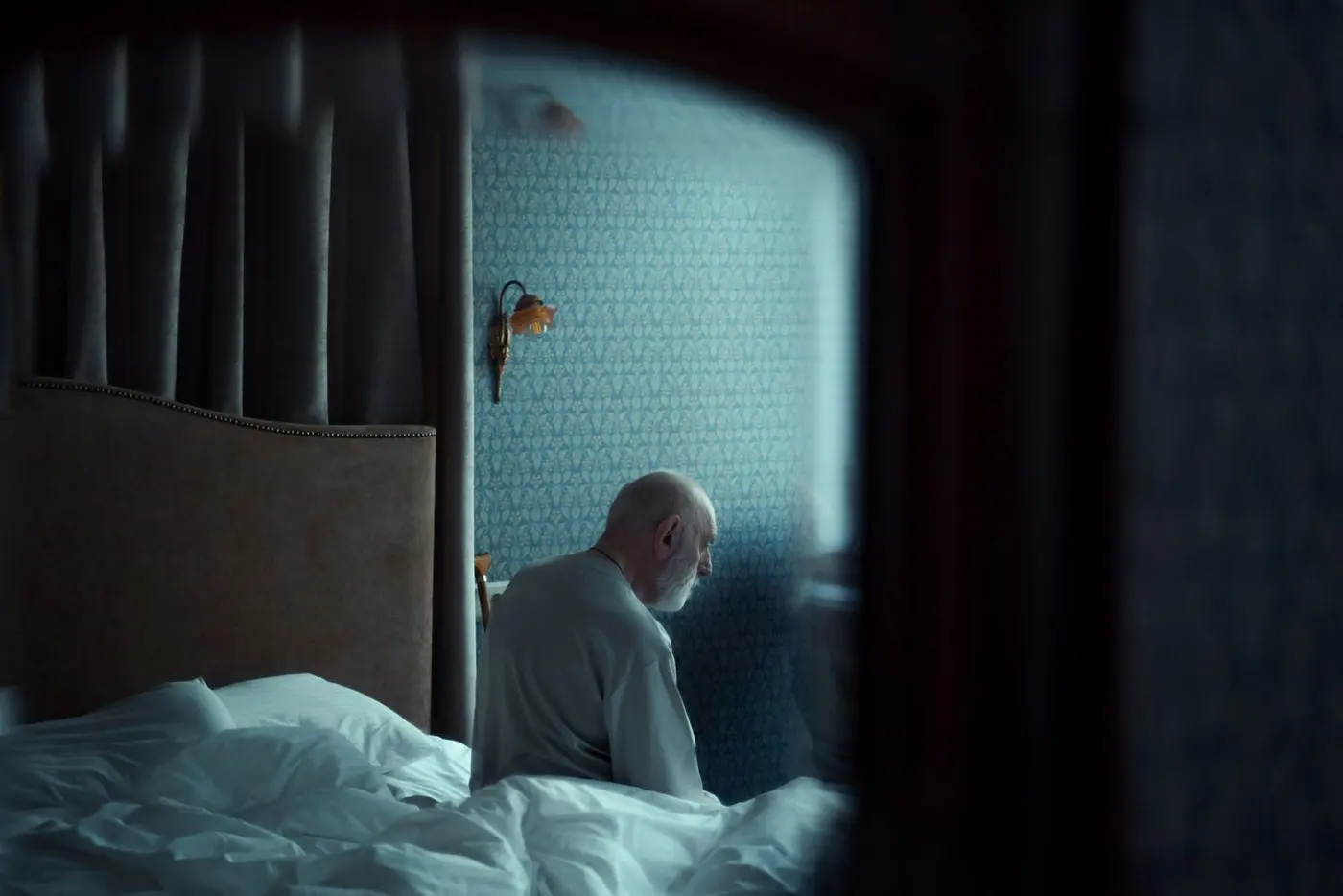
Two, sometimes three trips a night is a common story for men in their fifties. Here is what is behind it and the free things worth trying first.
What is nocturia, and how many night trips are normal?
Nocturia is the medical word for waking up at night because you need to pee. It is not the same as peeing a lot during the day. Cleveland Clinic puts it plainly: you should usually be able to sleep six to eight hours without a bathroom trip, and getting up once or twice is still normal. Two or more trips is where doctors start calling it nocturia.
One detail from the StatPearls review on the National Library of Medicine site: the first pee of the morning does not count. To be a night trip, you have to be asleep before it and fall asleep again after it.
You are far from alone. The same review reports that about one in three adults over 30 gets up at least twice a night. Among adults over 65, roughly half get up at least once a night.
For many men it starts somewhere in their fifties: two trips a night, sometimes three, and mornings that feel shorter on sleep.
Why does it get more common after 50?
Cleveland Clinic lists two risk factors for nocturia in one line: being male, and being over 50. After 50 the prostate is the big reason.
The prostate sits right under the bladder and wraps around the tube you pee through. When it grows, a condition called benign prostatic hyperplasia (BPH), it can squeeze that tube. The NIDDK lists nocturia right next to a weak stream, dribbling and trouble emptying your bladder as symptoms of BPH. A bladder that never feels fully empty can mean more trips, and that includes the ones at night.
A "mildly enlarged" prostate is one of the most common findings for men past 50. Our prostate supplement guide explains what BPH is and how common it gets, and the other signs to watch for are in our guide to enlarged prostate symptoms after 50.
What else adds to the night trips?
The prostate is not the only thing that plays a part, and that is good news, because some of the others are easy to change. Cleveland Clinic splits the causes into everyday habits and health conditions. These are the everyday ones.
| What adds to it | What is going on | Easy to spot if... |
|---|---|---|
| Drinks in the evening | Extra fluid before bed makes more urine overnight | Your trips drop on nights when you drink less |
| Caffeine and alcohol | Both make the bladder produce more and can irritate it | The trips follow the after-dinner coffee or beer |
| Enlarged prostate (BPH) | The prostate squeezes the urine tube, so the bladder empties less completely | You also notice a weaker stream or dribbling |
| Habit | You have trained yourself to wake up and go, even when the bladder is not full | The volume each time is small |
The point is not to memorize the list. The point is that the night trips usually have more than one small piece, and the habit pieces are the ones you control, starting tonight.
How do you keep a bladder diary? The 3-night version
This is the best free thing on the page, and you can start tonight. Both Cleveland Clinic and the StatPearls review name the bladder diary (the review calls it a voiding diary) as a standard tool. After three nights you will have real numbers instead of "a few times."
Cleveland Clinic says a diary records how much you drink, how often you go and what time you go. Here is a simple version to start with:
- Pick three ordinary days and nights in a row. Not a party weekend, not a fishing trip.
- Write down every drink, with the time and a rough size (a mug, a can, a glass). Mark the coffee and any alcohol.
- Write down each bathroom trip at night: the time, and whether it was a lot, a little or a trickle.
- Write one line each morning: how you slept, and whether you felt rested.
After three nights you can see patterns. Maybe the trips come after the evening beer. Maybe there is a big one at 2 a.m. and small ones after it. Keep the diary going once you start a new habit or a formula, and you will see for yourself whether anything changed.
What can you try tonight that costs nothing?
These are the low-risk steps the big medical sources list before anything else. They cost nothing and they work well together.
- Drink less in the evening. The NIDDK says to drink fewer liquids, particularly before you go to bed, and to avoid or limit alcohol and caffeine. Keep drinking normally earlier in the day. Our guide to caffeine, alcohol and night-time urination shows what to cut first.
- Empty your bladder fully before bed, and do not hold it for long stretches during the day. That is also NIDDK's advice.
- Move your body. The NIDDK lists being physically active among the steps for BPH symptoms. Our foods and habits guide has the Mayo Clinic numbers.
- Train your pelvic floor. The NIDDK says men can benefit from Kegel exercises, which strengthen the muscles that hold urine in. Our Kegel guide for men over 50 has the step-by-step routine.
- Try elevating your legs. Cleveland Clinic lists it to help fluid distribution, along with an afternoon nap.
- Add a night light. A motion-sensor light between the bed and the bathroom makes every trip safer, especially when you are half asleep.
None of this is exciting, and that is sort of the point. Small habits, kept every night, are what move the count.
Can a prostate formula help with the night trips?
Many men add one on top of the habits above, and night-time trips are the symptom the research looks at most closely. A Cochrane review of pygeum found night-time urination down 19 percent, and a specific saw palmetto and nettle root extract cut night trips 29 percent versus 18 percent with placebo in a 2014 analysis.
Our prostate supplement guide lines up four formulas side by side. The one built around saw palmetto plus stinging nettle, the pairing in that 2014 analysis, is Prosta Defend, and our Prosta Defend review reads its label line by line.
Give any formula two or three months inside its money-back window, and keep your bladder diary going so you have a number to compare. As the official pages advise, ask your doctor first if you take medication, are pregnant or nursing, or have a medical condition.

Frequently asked questions
How many times a night is normal to get up and pee?
Cleveland Clinic says it is normal to get up once or twice, and that most people should be able to sleep six to eight hours without a bathroom trip. Waking two or more times is what doctors call nocturia, and it is common after 50.
Is waking up to pee at night just part of getting older?
It is common, and that is exactly why so many men put up with it. The StatPearls review from the National Library of Medicine notes that many men believe it is a normal part of aging. Cleveland Clinic says the outlook is good and that in most cases it is highly treatable.
Does drinking less water at night really help?
For many men it does. The NIDDK lists drinking fewer liquids before bedtime, and cutting back on alcohol and caffeine, as the first lifestyle steps for BPH symptoms. Keep drinking normally earlier in the day.
What is a bladder diary?
A simple record of what you drink, when you go and how much. Cleveland Clinic and the StatPearls review both name it as a standard tool, and three nights of notes show you patterns, such as trips that follow the evening coffee or beer.
Do prostate supplements reduce night-time bathroom trips?
Night-time trips are the symptom the research looks at most closely. Pygeum showed night-time urination down 19 percent in a Cochrane review, and a saw palmetto and nettle root extract showed 29 percent fewer trips versus 18 percent on placebo. Many men pair a formula with the free habits below and keep a simple log.
How long should I try a formula before judging it?
Two to three months. The pygeum trials averaged about two months and the saw palmetto and nettle trials ran 24 weeks. Keep your bladder diary going so you have a number to compare instead of a feeling.
Sources we checked for this article
- Cleveland Clinic: Nocturia (medically reviewed, updated July 2026)
- Leslie SW, Sajjad H, Singh S. Nocturia. StatPearls, National Library of Medicine, 2024
- NIDDK: Enlarged Prostate (Benign Prostatic Hyperplasia)
- Wilt T, et al. Pygeum africanum for benign prostatic hyperplasia. Cochrane Database Syst Rev. 2002
- Oelke M, et al. Fixed-dose combination PRO 160/120 of sabal and urtica extracts improves nocturia. World J Urol. 2014