
Fitness & Food · Holiday Eating
Thanksgiving After 50: Enjoy the Meal Without Paying for It Later
By OakMan Guide Editorial Team Updated 7 min read
The short answer
Eat close to your usual times, fill at least half your plate with vegetables and eat slowly, since the CDC says it takes at least 20 minutes to feel full. Keep alcohol small or skip it, walk 10 minutes after the meal, and refrigerate leftovers within two hours. If you take any medicine that interacts with alcohol, skip the drink completely.
We're not doctors, and this is not medical advice. Everything below comes from the official sources listed at the end, and what suits your own health, medicines and meals is a question for your doctor.
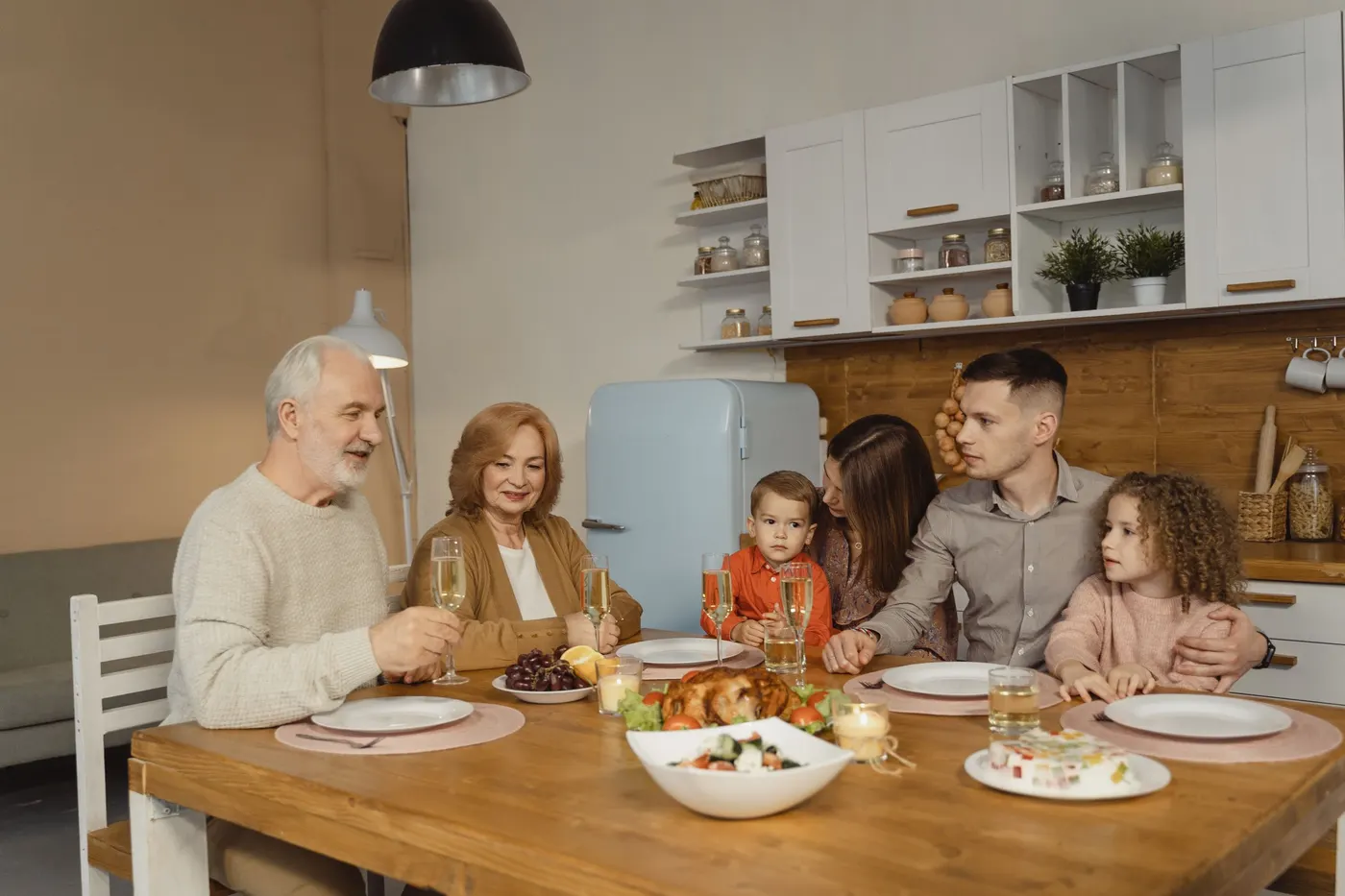
Photo: Tima Miroshnichenko on Pexels.
Thanksgiving is one meal, not a verdict on your health. The trouble is usually everything around the meal, and a few small habits take care of most of it.
Does one big meal really matter after 50?
One dinner will not undo your habits, and the official pages do not tell you to fear it. The CDC says you can still enjoy your favorite holiday treats in moderation, and suggests focusing on the dishes you really love and cannot get any other time of year. That is a better rule than a long list of forbidden foods.
What the sources do say is to plan the day around the meal instead of letting the meal take over. The 2025-2030 Dietary Guidelines for Americans ask you to pay attention to portion sizes, particularly for foods and drinks higher in calories, and to choose water or unsweetened drinks. Our Fitness and Food guide covers the everyday version of the same ideas, and this article is the holiday version.
What should I do before dinner is served?
Eat normally. The CDC's holiday page, which is written for people with diabetes but reads as common sense for anyone, says to eat close to your usual times and not to skip meals to save up for a feast, because when you are really hungry you might be more likely to overeat. It adds a small trick: if you have a snack at your usual mealtime, have a little less when dinner is served.
Two more habits from the same page cost nothing. Drink plenty of water, and if you are invited to a dinner, offer to bring a healthy dish. A bowl of vegetables you like is then guaranteed to be on the table.
How do I build my plate?
Start with the vegetables, then add the dishes you came for. The CDC says to fill at least half your plate with vegetables and leave less room for the rest. The guidelines say to build meals around protein, vegetables and whole foods, and name roasting and baking over deep-frying. Here is how that lines up with a typical Thanksgiving table, using only what the sources say:
| On the table | What the sources say | What it means for you |
|---|---|---|
| Turkey and other protein | The Dietary Guidelines say to prioritize high-quality protein at every meal. They also say to swap deep-fried cooking for baked, broiled, roasted, stir-fried or grilled. | Roast or bake it, and enjoy it. |
| Vegetables and salad | The CDC says to fill at least half your plate with vegetables. The guidelines set a goal of 3 servings of vegetables a day. | Load them first, before the heavier dishes. |
| Potatoes, stuffing and rolls | The CDC says to plan your carb choices in advance, for example cutting back on potatoes, bread or pasta if you want a sweet treat. | Pick the one or two you really love. |
| Cans, jars and packaged mixes | The guidelines say to avoid highly processed packaged foods that are salty or sweet, and to keep sodium under 2,300 mg a day. | Read the label for sugar and sodium. |
| Pie and sweet sides | The guidelines say one meal should contain no more than 10 grams of added sugars. The CDC says to ask your host if you can take a favorite treat home for later. | Have a small slice, and take the rest home. |
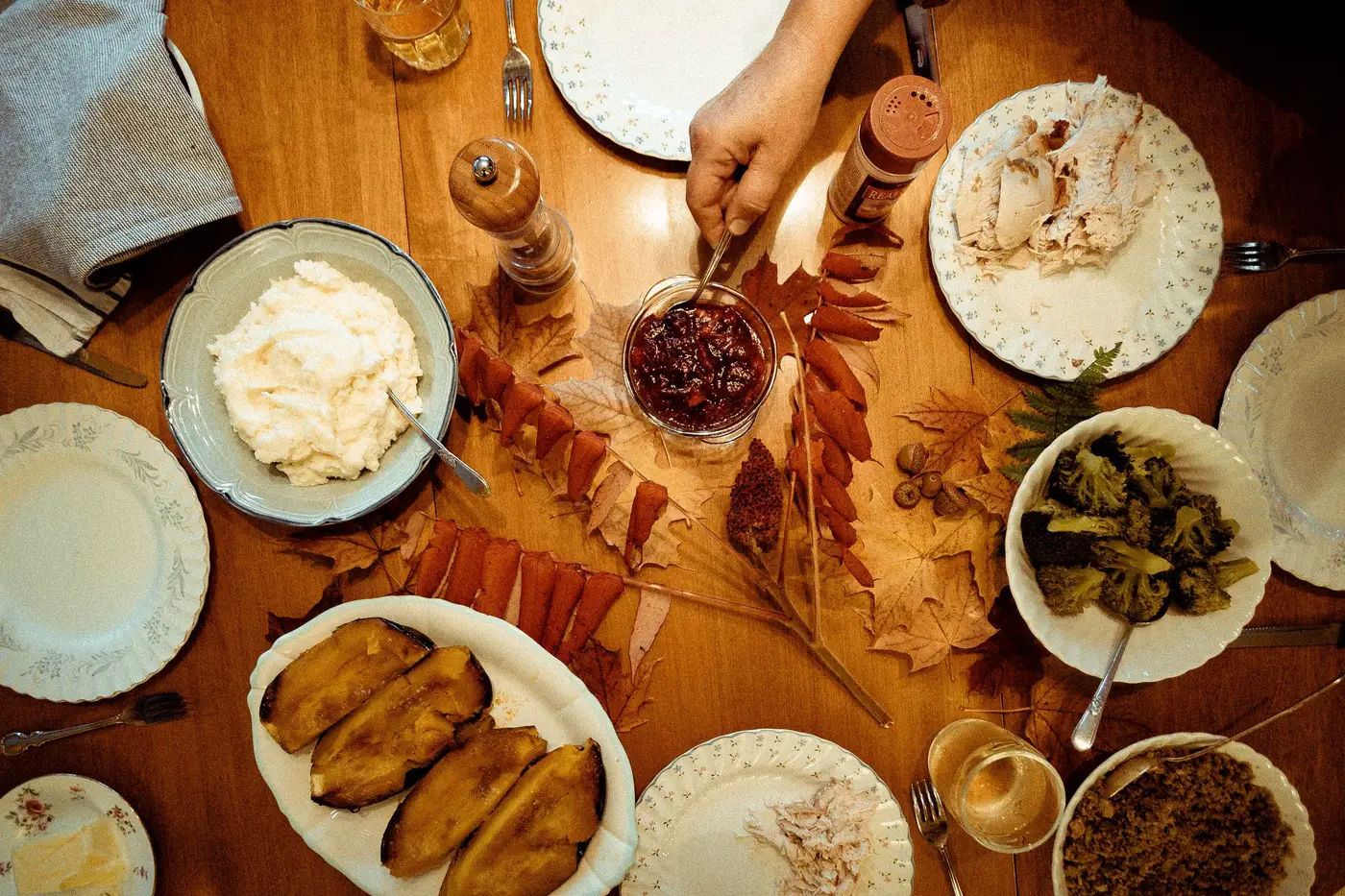
On sugar, the guidelines say no amount of added sugars is recommended and that one meal should contain no more than 10 grams. We cannot tell you how many grams are in a slice of homemade pie, so the CDC's way of thinking works better at the table: choose the treat you love, keep it small, and ask your host to wrap a piece to take home. To spot added sugar on a label, the guidelines say to look for ingredients with the word "sugar" or "syrup" or ending in "-ose".
How fast should I eat, and when are seconds fine?
Slowly. The CDC says it takes at least 20 minutes for your brain to realize you are full, so take your time before deciding whether you want seconds. In practice that means putting the fork down between bites, talking, and checking in with yourself before you stand up for another plate. If you are still hungry afterwards, vegetables and turkey are the easy second helping.
What about wine, beer and the after-dinner drink?
The guidelines are short on this: consume less alcohol for better overall health. They say people who should avoid alcohol completely include anyone taking medications, or with medical conditions, that can interact with alcohol. The CDC says to avoid or limit alcohol, to skip sugary mixers such as juice or soda, and to eat food if you do have a drink.
Check what your own medicines say before the day, not at the table. If a bathroom trip at 3 a.m. is already a problem, our article on caffeine, alcohol and night-time urination explains why the evening drink is the first thing to move earlier or make smaller.
Is a walk after dinner worth it?
It is the cheapest tool on the list. The CDC calls being active your secret holiday weapon, says it can help you digest your food better and reduce stress, and says that you may not have time for a long walk but even 10 minutes after a big meal helps. It also suggests inviting friends and family along, which turns the walk into part of the holiday.
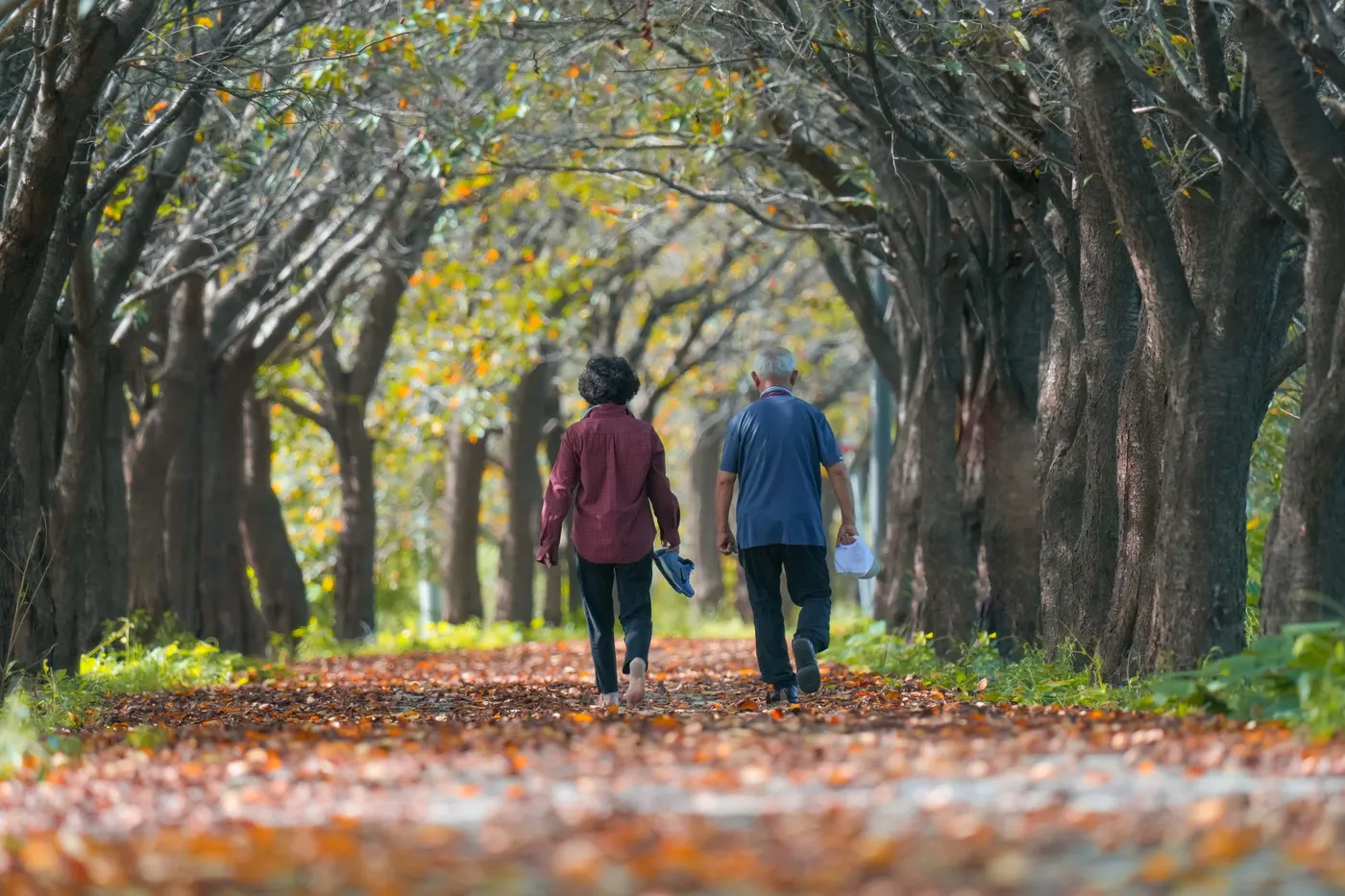
For the rest of the year, the CDC says adults need at least 150 minutes of moderate activity a week plus two days of muscle-strengthening activity, so a holiday walk is a good start and not the whole plan. Our strength training starter plan covers the second half.
How do I avoid heartburn and a bad night?
Thanksgiving dinner is full of things the NIDDK lists as commonly linked to GERD symptoms: acidic foods such as citrus fruits and tomatoes, alcoholic drinks, chocolate, coffee and other sources of caffeine, high-fat foods, mint and spicy foods. The same page says that if you have GERD symptoms at night or when you are lying down, eating meals at least 3 hours before you lie down or go to bed may improve symptoms.
So if you are prone to heartburn, eat dinner earlier, keep the coffee and chocolate to a small serving and take the walk before the couch. The NIDDK says to talk with your doctor about the foods and drinks that seem to increase your symptoms, and that if you think you may have GERD, you should see your doctor. Our guide to sleep and recovery after 50 has the bigger picture on rest.
What if I take medicine for blood pressure or diabetes?
Keep your usual routine and ask before you change anything. The CDC's holiday page says to check your blood sugar even in the middle of the festivities and to eat close to your usual times to keep it steady. The guidelines say that if you have a chronic disease, you should talk with your health care professional to see whether the guidelines need to be adapted to your needs.
Before the holiday
If any of your medicines can interact with alcohol, the guidelines say to avoid it completely. Ask your doctor or pharmacist before the day, not at the table.
If you measure your blood pressure at home, our guide to measuring it right covers the routine, including the 30-minute wait after food, caffeine and alcohol.
How do I keep the leftovers safe?
The CDC turkey page gives the numbers. Refrigerate leftovers at 4 °C (40 °F) or colder within 2 hours of cooking, or within 1 hour if they were exposed to temperatures above 32 °C (90 °F), like in a hot car. Eat cooked turkey and dishes made with it within 3 to 4 days, freeze what you will not eat by then, and reheat all leftovers to at least 74 °C (165 °F) before serving. The CDC's general food safety page says the same two-hour rule applies to any perishable food, including meat, dairy and cooked leftovers.
If you are the cook, the CDC says to use a food thermometer to check that the turkey reaches 74 °C (165 °F), inserting it in three places and avoiding bone: the thickest part of the breast, where the body and thigh join, and where the body and wing join. Stuffing should reach 74 °C (165 °F) at its center. A pop-up timer is not a substitute for the thermometer.
What does the whole day look like?
Put together, the plan fits on one card. Screenshot it or print it:
| When | What to do | Source |
|---|---|---|
| Morning | Eat breakfast and lunch near your usual times, with a little less when dinner is served if you had a snack. Drink water. | CDC |
| Before dinner | Decide which two or three dishes you came for. Offer to bring a vegetable dish. | CDC |
| At the table | Half the plate vegetables, eat slowly, wait before seconds. | CDC |
| With a drink | Keep it small or skip it. Eat food with it. No sugary mixers. | CDC, Dietary Guidelines |
| After dinner | Walk 10 minutes. Stop eating at least 3 hours before bed if night heartburn is a problem. | CDC, NIDDK |
| Next day | Leftovers in the fridge within 2 hours, eaten in 3 to 4 days, reheated to 74 °C (165 °F). | CDC |
What is the bottom line?
Eat on your usual schedule, start the plate with vegetables, pick the few dishes you love, eat slowly, keep the drink small and take a 10-minute walk. Put the leftovers in the fridge within two hours and ask your doctor about anything that touches your medicines. That is enough to enjoy the table and feel good on Friday morning.
Frequently asked questions
How long should I wait before going back for seconds?
Give it time. The CDC says it takes at least 20 minutes for your brain to realize you are full, so take your time before deciding whether you want seconds. Filling at least half your plate with vegetables the first time around also leaves less room for everything else.
Should I skip breakfast and lunch to save room for the meal?
No. The CDC says not to skip meals to save up for a feast, because when you are really hungry you might be more likely to overeat. It suggests eating close to your usual times instead.
Is a walk after Thanksgiving dinner worth it?
Yes, even a short one. The CDC says being active can help you digest your food better and reduce stress, and that even 10 minutes after a big meal helps. It also suggests inviting friends and family to come along.
How long before bed should I stop eating?
The NIDDK says that if you have heartburn symptoms at night or when lying down, eating meals at least 3 hours before you lie down or go to bed may improve symptoms. If you think you may have GERD, it says to see your doctor.
How long can Thanksgiving leftovers stay out?
Two hours. The CDC says to refrigerate leftovers at 4 °C (40 °F) or colder within 2 hours of cooking, or within 1 hour if they were exposed to temperatures above 32 °C (90 °F), such as in a hot car.
How many days do leftovers keep, and how hot should I reheat them?
The CDC says to eat cooked turkey and dishes made with it within 3 to 4 days and to freeze leftovers to keep them longer. It says to reheat all leftovers to at least 74 °C (165 °F) before serving or eating.
Can I have a drink at Thanksgiving dinner?
It depends on you. The 2025-2030 Dietary Guidelines say to consume less alcohol for better overall health, and say people taking medications that can interact with alcohol should avoid it completely. The CDC adds to eat food with it and to skip sugary mixers such as juice or soda.
Sources we checked for this article
- CDC: Healthy Eating and the Holidays (page dated May 15, 2024)
- U.S. HHS and USDA: Dietary Guidelines for Americans, 2025-2030 (January 2026)
- NIDDK, NIH: Eating, Diet, & Nutrition for GER and GERD in Adults (last reviewed July 2020)
- CDC: Preparing Your Holiday Turkey Safely (page dated April 29, 2024)
- CDC: Preventing Food Poisoning (page dated November 24, 2025)
- CDC: Physical Activity Guidelines for Adults (page dated December 20, 2023)