
Prostate Health · The Herbs
Pygeum vs Saw Palmetto vs Nettle Root: What Each One Brings
By OakMan Guide Editorial Team Updated 9 min read
The short answer
Each herb brings something different. Saw palmetto has the largest research file and a very good safety record. Pygeum has the most encouraging numbers among the single herbs: in 18 trials, men were more than twice as likely to report better symptoms than on placebo. Nettle root has two placebo-controlled trials of its own, and its pairing with saw palmetto has the best-documented effect on night-time bathroom trips. In the research, they are teammates.
We're not doctors, and this is not medical advice. This article may contain affiliate links, always to the official websites of the products mentioned. If you buy through one of these links, you support our work at no additional cost to you. This never influences what we write.
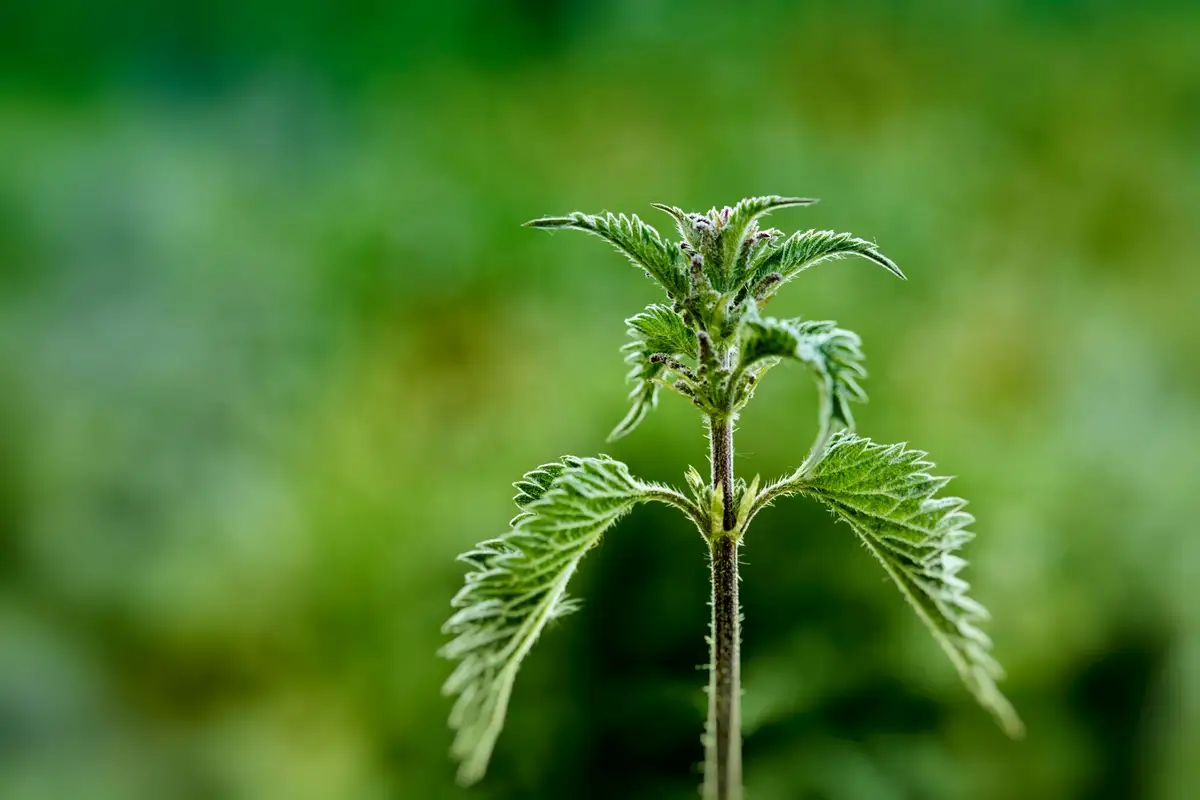
Three plants show up on almost every prostate label. We went through the reviews and trials to see what each one brings.
What are pygeum, saw palmetto and nettle root?
They are three plant extracts that have been used for urinary comfort in men for a long time, and they travel together on supplement labels. Memorial Sloan Kettering says nettle is usually combined with herbs such as saw palmetto and pygeum for BPH, which is why one bottle often holds all three.
- Pygeum (Prunus africana) comes from the bark of the African cherry tree, also called the African plum tree. MSK notes that its extracts have long been used in traditional medicine for prostate and urinary problems.
- Saw palmetto (Serenoa repens) is the berry of a small dwarf palm that grows in the southeastern United States. NCCIH calls it a dietary supplement promoted for the urinary symptoms of an enlarged prostate.
- Nettle root (Urtica dioica) is the root of the stinging nettle. The root, not the leaf, is the part used in the prostate research.
BPH, or benign prostatic hyperplasia, is the non-cancerous growth of the prostate that many of us deal with after 50. If you want the full picture of the symptoms, our guide to enlarged prostate symptoms after 50 covers them, and the full prostate supplement guide shows how these herbs fit into the bigger decision.
What does pygeum bring?
The main source is a Cochrane review that pooled 18 randomized trials with 1,562 men. Compared with placebo, pygeum gave a moderately large improvement in the combined measure of symptoms and urine flow. Men taking it were more than twice as likely to report that their overall symptoms got better (risk ratio 2.1). Night-time urination dropped by 19%, leftover urine in the bladder by 24%, and peak urine flow went up by 23%.
Side effects were the good part of the story: the review found them mild and comparable to placebo, and the dropout rate was similar to placebo too, at 13% against 11%. The reviewers concluded that a standardized pygeum preparation "may be a useful treatment option" for men with these symptoms.
There is also a French study that looked at dose. In a trial of 209 men, 100 mg once a day worked as well as 50 mg twice a day over two months, with symptom scores improving by about 35 to 38%, so a single daily capsule is enough. Memorial Sloan Kettering lands in the same spot: several trials show pygeum helps urinary symptoms, and it may take several weeks to notice the benefit.
In short, pygeum has the most consistent positive signal of the single herbs. Our ViriFlow review looks at the one liquid formula that standardizes its pygeum to 3% phytosterols.
What does saw palmetto bring?
Saw palmetto has the biggest research file of the three. The 2023 Cochrane review included 27 studies and 4,656 men, and NCCIH adds that two NIH-funded trials, one with up to three times the usual dose, looked at it closely.
There is plenty to like in the rest of the file. NCCIH calls saw palmetto well tolerated, used safely in studies for up to 3 years, with mild and infrequent side effects, and says it does not appear to affect PSA readings. That matters if you are screened, because your number stays your number. In Europe, the EMA's herbal committee concluded that saw palmetto fruit extracts can be used for urinary symptoms related to BPH, with the ethanol extract accepted on the basis of long-standing use.
The newest chapter of the saw palmetto story is combinations with other herbs, and nettle root is the pairing with the most trials behind it. Our full saw palmetto article goes through the trials one by one.

What does nettle root bring?
On its own, nettle root has two placebo-controlled trials. The larger one, from Iran, followed 620 men for six months. In the Safarinejad trial, 81% of the men on nettle root reported improved symptoms compared with 16% on placebo. The IPSS (the standard symptom questionnaire, where lower is better) went from 19.8 down to 11.8 on nettle root and from 19.2 to 17.7 on placebo, and peak urine flow rose by 8.2 mL/s against 3.4 mL/s. PSA and testosterone did not change, and no side effects were reported.
The second is a German trial of 246 men that lasted a full year. In the Schneider and Rübben trial, a 459 mg nettle root extract lowered the IPSS from 18.7 to 13.0, compared with 18.5 to 13.8 on placebo. The authors found fewer adverse events and fewer urinary infections on nettle root than on placebo, and called it a safe option, especially for irritative symptoms like urgency.
Taken together, nettle root looks like a gentle helper for the symptom score with a clean safety record, backed by two real trials. Official bodies take it seriously: the EMA lists nettle root as a traditional herbal medicine for relieving urinary symptoms related to BPH, and its monograph says long-term use is possible.

What happens when saw palmetto and nettle root are combined?
This is where the story gets interesting. A European extract called PRO 160/120 pairs 160 mg of saw palmetto fruit extract with 120 mg of nettle root extract in each capsule, taken twice a day. It has been tested in several controlled trials, and the results are the best-documented of any herb pairing in this aisle.
- Against placebo. In a 24-week trial of 257 men, the IPSS dropped 6 points on the combination versus 4 on placebo. It helped both obstructive symptoms, like a weak stream, and irritative ones, like urgency, and tolerability was comparable to placebo.
- Over the long run. In the open-label follow-up, 219 men kept going to week 96. The IPSS was down 53%, peak urine flow was up 19%, and the rate of side effects was one in 1,181 treatment days.
- For night-time trips. A 2014 re-analysis of four trials with 922 men, mean age 66, looked only at night-time voids. In the two placebo-controlled trials, voids improved by 0.8 (29%) with the combination versus 0.6 (18%) with placebo, and the responder rate was 69% versus 52%.
One note, which we also make in the full guide: those studies used a specific, standardized extract at a specific dose. A formula that contains both saw palmetto and nettle is in the same neighborhood, not the same house. Still, if getting up at night is your main complaint, this is the pairing with the most research behind it. Our article on waking up to pee at night after 50 has a three-night diary to measure your own starting point.
How do the three line up side by side?
Here is the whole picture in one table. We kept the numbers exactly as the papers report them.
| Herb | Main source | Men and length | What stands out | Good to know |
|---|---|---|---|---|
| Pygeum African cherry tree bark | 18 randomized trials pooled in a Cochrane review | 1,562 men; 64 days on average (30 to 122) | Men were more than twice as likely to report better overall symptoms than on placebo. Night-time urination down 19%, peak urine flow up 23%. | Mild side effects, similar to placebo. |
| Saw palmetto Berries of the dwarf palm | 27 studies in the 2023 Cochrane review, including two NIH-funded trials | 4,656 men; 3 to 17 months | The largest research file of the three. Well tolerated, used for up to 3 years in studies, and PSA readings are not affected. | The anchor of most formulas; combinations are where the newest research is. |
| Nettle root Root of Urtica dioica | Two placebo-controlled trials on its own | 246 men for 12 months; 620 men for 6 months | Symptom scores fell more than on placebo in both. In the larger trial, 81% on nettle reported improvement versus 16% on placebo. | A clean safety record, and listed by the EMA as a traditional herbal medicine for BPH urinary symptoms. |
| Saw palmetto + nettle root The PRO 160/120 extract | Four controlled trials, re-analyzed in 2014 | 922 men, mean age 66; 24 weeks | Night-time voids down 0.8 (29%) versus 0.6 (18%) on placebo. | The best-documented herb pairing for night-time trips. |
In one line each: saw palmetto has the most solid research and the best safety record, pygeum has the most encouraging single-herb numbers, and nettle root is the partner that makes the saw palmetto story more interesting. That is why it makes more sense to see them as partners than as rivals. In the research, they are teammates.
How do trial doses compare with what is on the label?
Here is what the studies used, so you have a reference point when you read a label.
| Herb | Amount used in the trials | Source |
|---|---|---|
| Pygeum extract | 100 mg a day (or 50 mg twice a day) | Chatelain et al., Urology, 1999 |
| Saw palmetto extract | 160 mg twice a day in STEP; up to 960 mg a day in CAMUS | NCCIH and the saw palmetto article |
| Nettle root dry extract (alone) | 459 mg a day in the 12-month trial | Schneider and Rübben, Urologe A, 2004 |
| Saw palmetto + nettle root (PRO 160/120) | 160 mg + 120 mg per capsule, one capsule twice a day | Lopatkin et al., World J Urol, 2005 |
Supplement makers usually group their herbs into a "proprietary blend" with a single total weight, and that is allowed under federal labeling rules. The sensible way to use the research is as a map of which herbs are worth having in the bottle, then to pick a formula that comes with a guarantee that gives you time to judge. If a label only says "nettle", the brand's support team can tell you whether it is the root.
How long should you try an herbal formula?
The research gives a good guide. The pygeum trials averaged about two months, the saw palmetto and nettle root trials ran 24 weeks, and the nettle root trials ran six and twelve months. Here is a simple routine to follow:
- Write down your starting point. Count how many times you get up at night over three nights, and note your daytime urgency.
- Take it as the label says, at the same time every day, so you build a habit.
- Check in at two to three months. Compare the numbers, not the mood. If there is a clear change, you have your answer, and you still have time inside the guarantee to decide.
Which formulas bring these herbs together?
Three of the formulas we have reviewed carry saw palmetto and pygeum, and one adds nettle. Here is how they line up on the three herbs from this article, in no particular order. Any of them is a reasonable way to put the research to work.
| Formula | Saw palmetto | Pygeum | Nettle and more | Format |
|---|---|---|---|---|
| ViriFlow | Yes, the largest share of the 700 mg blend | Yes, standardized to 3% phytosterols | Plus seaweeds and plant sterols | 2 mL of liquid drops, once a day |
| Prosta Peak | Yes | Yes | Plus green tea, cat's claw and more | Capsules, a "20+ ingredient" blend |
| Prosta Defend | Yes | Yes | Yes, stinging nettle | Two capsules a day with a meal |
If you like the idea of having all three herbs in one place, Prosta Defend is the one that lists them together, and our Prosta Defend review looks at how it pairs saw palmetto with nettle. If you prefer liquid drops with pygeum, ViriFlow is built that way, with a one-dropper daily serving. And Prosta Peak puts saw palmetto and pygeum into a plain daily capsule with a long money-back guarantee. Each one is covered by a guarantee, so you can run the two-to-three-month test from the section above.
As the official pages advise, ask your doctor first if you take medication, are pregnant or nursing, or have a medical condition.
What is the bottom line on pygeum, saw palmetto and nettle root?
Each herb brings something different. Saw palmetto brings the largest research file and a very good safety record. Pygeum brings the most encouraging single-herb numbers, from 18 trials with 1,562 men. Nettle root brings two placebo-controlled trials, and its pairing with saw palmetto has the best-documented results for night-time trips.
So the smartest way to use this research is not to crown a winner. It is to look for a formula that brings the herbs together, give it a fair two to three months with a simple log, and enjoy the habit. The full prostate supplement guide has the label questions worth asking about every bottle.
Frequently asked questions
Which is better for an enlarged prostate: pygeum, saw palmetto or nettle root?
Each one brings something different, which is why they travel together. Pygeum has the most encouraging numbers among single herbs, from 18 trials. Saw palmetto has the largest research file and a very good safety record. Nettle root has two placebo-controlled trials of its own, and its pairing with saw palmetto has the best-documented results for night-time trips.
Can I take pygeum, saw palmetto and nettle root together?
Many formulas combine them, and saw palmetto plus nettle root has been followed in four controlled trials. Prosta Defend lists all three together, ViriFlow and Prosta Peak pair saw palmetto with pygeum.
How long does it take to see a difference?
The pygeum trials averaged 64 days, the saw palmetto and nettle root trials ran 24 weeks, and the nettle root trials ran 6 and 12 months. A fair test is two to three months. Keep a simple log of how many times you get up at night, so you have a number to compare instead of a feeling.
Do these herbs change PSA results?
NCCIH says saw palmetto does not appear to affect PSA readings, even at higher-than-usual amounts. In the 620-man nettle root trial, serum PSA was unchanged in both groups. That makes them easy to live with during your yearly checkup.
Is nettle root the same as nettle leaf tea?
No. The prostate research uses extracts of the root, and the European Medicines Agency monograph for BPH covers nettle root. If a label only says "nettle", the brand's support team can tell you which part of the plant is in the capsule.
Are pygeum and nettle root well tolerated?
In the research, side effects were mild. The Cochrane review found pygeum side effects mild and comparable to placebo, and the nettle root trials reported no side effects in the larger one and fewer adverse events than placebo in the year-long one.
Sources we checked for this article
- Cochrane: Pygeum africanum for benign prostatic hyperplasia (Wilt et al., 2002)
- American Journal of Medicine: Pygeum africanum for BPH, systematic review and meta-analysis (Ishani et al., 2000)
- Urology: Once and twice daily dosage of Pygeum africanum extract (Chatelain et al., 1999)
- Memorial Sloan Kettering: Pygeum
- Cochrane: Serenoa repens for lower urinary tract symptoms due to benign prostatic enlargement (Franco et al., 2023)
- NCCIH: Saw Palmetto and Memorial Sloan Kettering: Saw Palmetto
- European Medicines Agency: Saw palmetto fruit, herbal medicinal product
- Journal of Herbal Pharmacotherapy: Urtica dioica for BPH (Safarinejad, 2005)
- Urologe A: Stinging nettle root extract in long-term treatment of BPS (Schneider and Rübben, 2004)
- Memorial Sloan Kettering: Nettle
- European Medicines Agency: Nettle root, herbal medicinal product
- World Journal of Urology: PRO 160/120 against placebo (Lopatkin et al., 2005)
- International Urology and Nephrology: PRO 160/120 long-term follow-up (Lopatkin et al., 2007)
- World Journal of Urology: PRO 160/120 and nocturia, re-evaluation of four trials (Oelke et al., 2014)
- NIDDK: Enlarged Prostate (Benign Prostatic Hyperplasia)