
Home & DIY · Winter
Winterize Your Home: A Simple Checklist for Men Over 50
By OakMan Guide Editorial Team Updated 9 min read
The short answer
Start with what protects people, then what protects the budget. First test your smoke and carbon monoxide alarms and book the yearly heating service. Then check the furnace filter, protect pipes and outdoor faucets, seal drafts and stock a kit for a power outage. Most of it fits in a weekend. Leave gas, oil and chimney work to a qualified technician, and pace yourself when you shovel.
We're not doctors, and this is not medical advice.
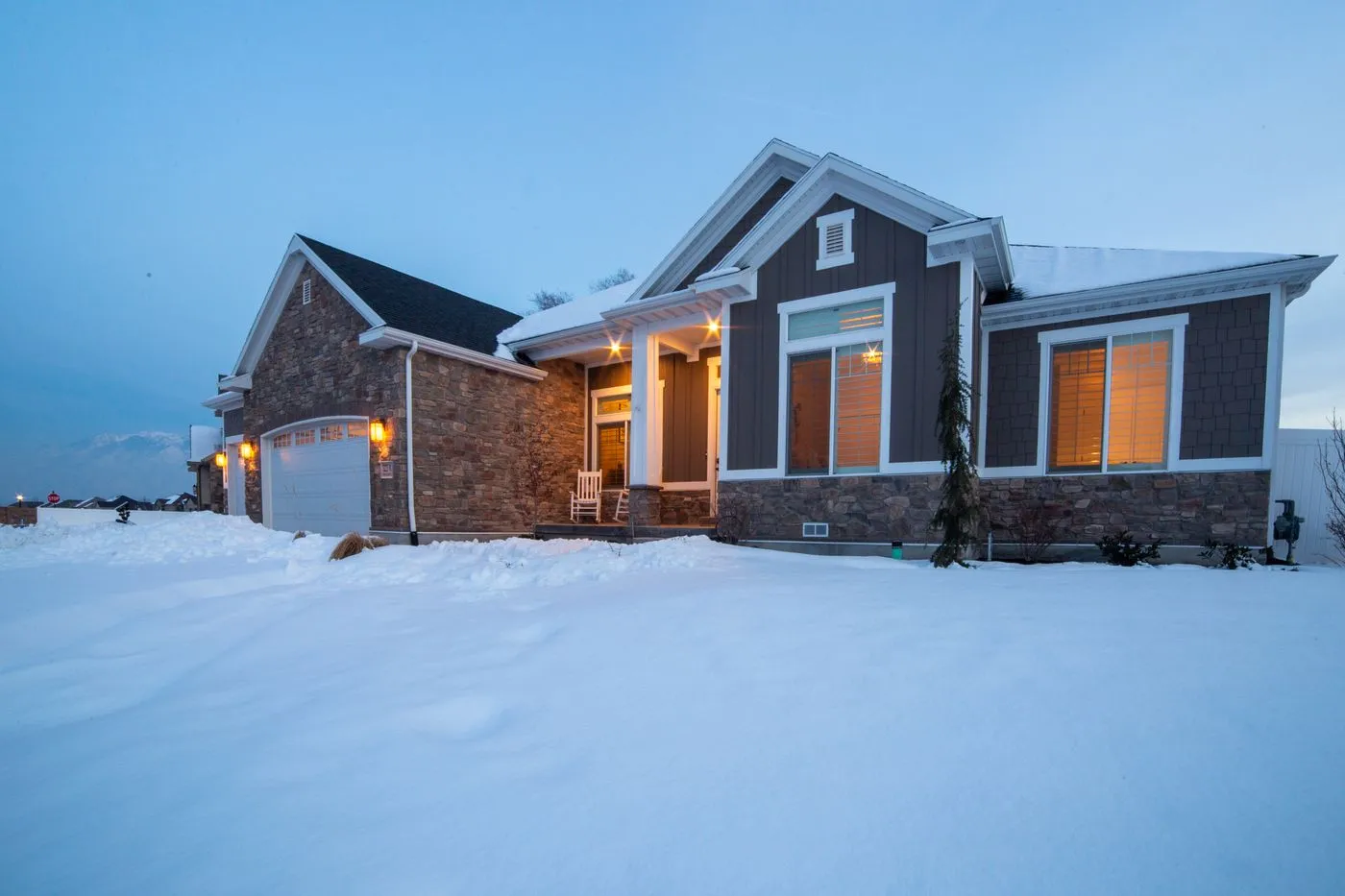
Photo: Get Lost Mike on Pexels.
The clocks went back this morning, which is a handy reminder for the first job on the list. Here is the winter checklist in the order we would do it, with what the official sources say about each step.
What should I do first?
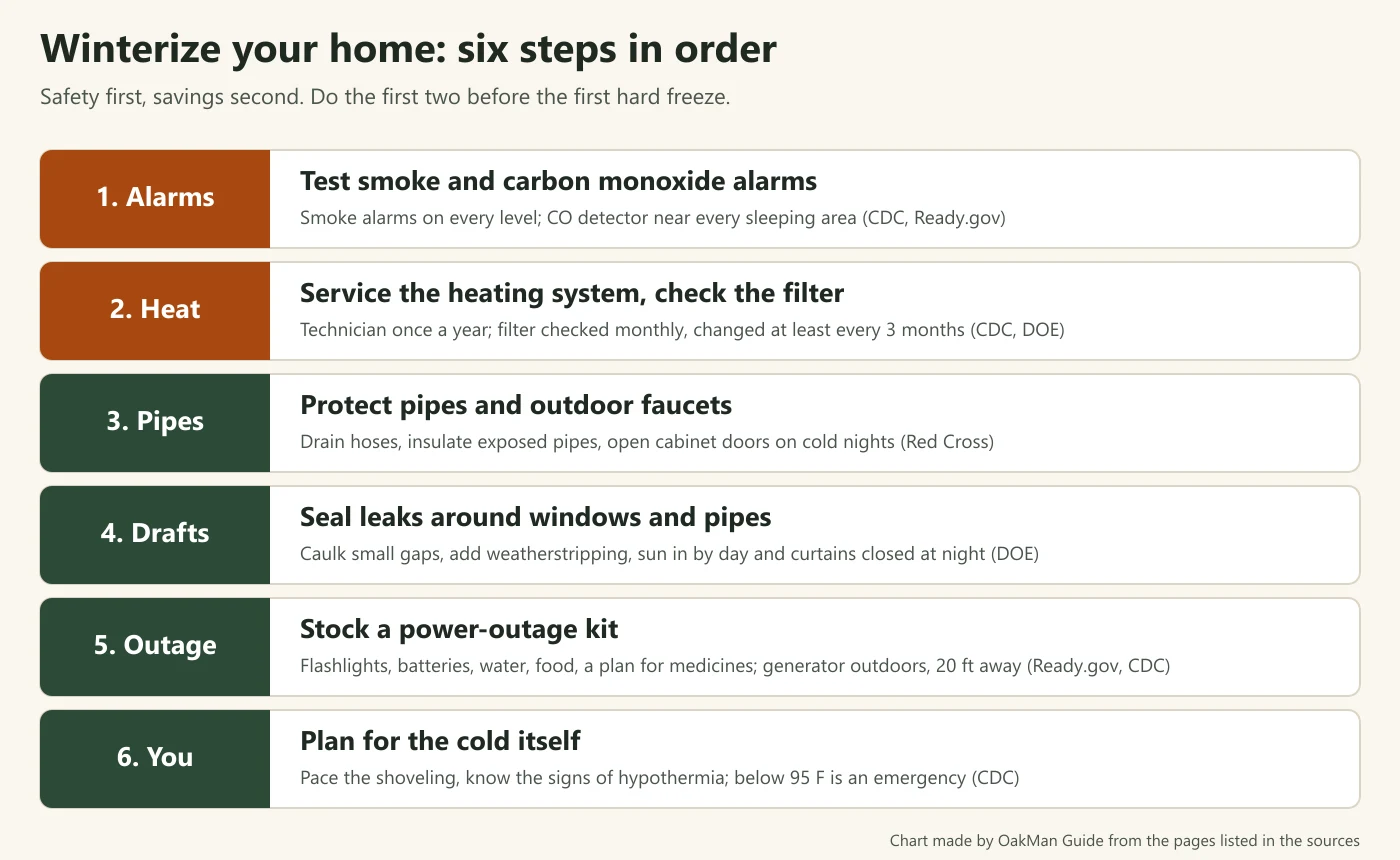
Work from the jobs that protect people to the jobs that save money. Alarms and heating service come first because a failure there can hurt someone. Pipes and the power-outage kit come next, because they limit the damage when the weather turns. Drafts and thermostat habits come after that, because they mostly lower the bill. The picture below puts the six steps in one place, and each is explained below it.
Are my smoke and carbon monoxide alarms ready?
Test them today. The CDC says to install battery-operated or battery back-up carbon monoxide detectors near every sleeping area, and to check their batteries when you change the clocks each spring and fall. It also says to replace a CO detector following the manufacturer's instructions or every 5 years. If you read our note on the end of daylight saving time, this is the same weekend.
Ready.gov covers smoke alarms: put one on every level of the home, including the basement, replace the batteries twice a year unless the alarm uses 10-year lithium batteries, and replace the whole unit every 10 years or as the maker says. It also says never to disable a smoke alarm while cooking. For power outages, Ready.gov asks for CO detectors with battery backup on every level. The year-round version of this checklist, with fall hazards and a monthly calendar, is in our Home and DIY guide.
Why the fuss about a gas you cannot see? The CDC says the most common symptoms of CO poisoning are headache, dizziness, weakness, upset stomach, vomiting, chest pain and confusion, often described as flu-like. It adds that infants, the elderly and people with chronic heart disease, anemia or breathing problems are more likely to get sick from CO, and that people who are sleeping can die from it before they have symptoms. That is why the detector goes near the bedrooms.
Is my heating system ready for winter?
Book the service now, while the furnace is not yet working hard. The CDC says to have your heating system, water heater and any other gas, oil or coal burning appliances serviced by a qualified technician every year, and to have the chimney checked or cleaned every year. The Department of Energy's home energy checklist gives the same yearly advice for a furnace or heat pump, and notes that heating can account for almost half of the average family's winter energy bill.
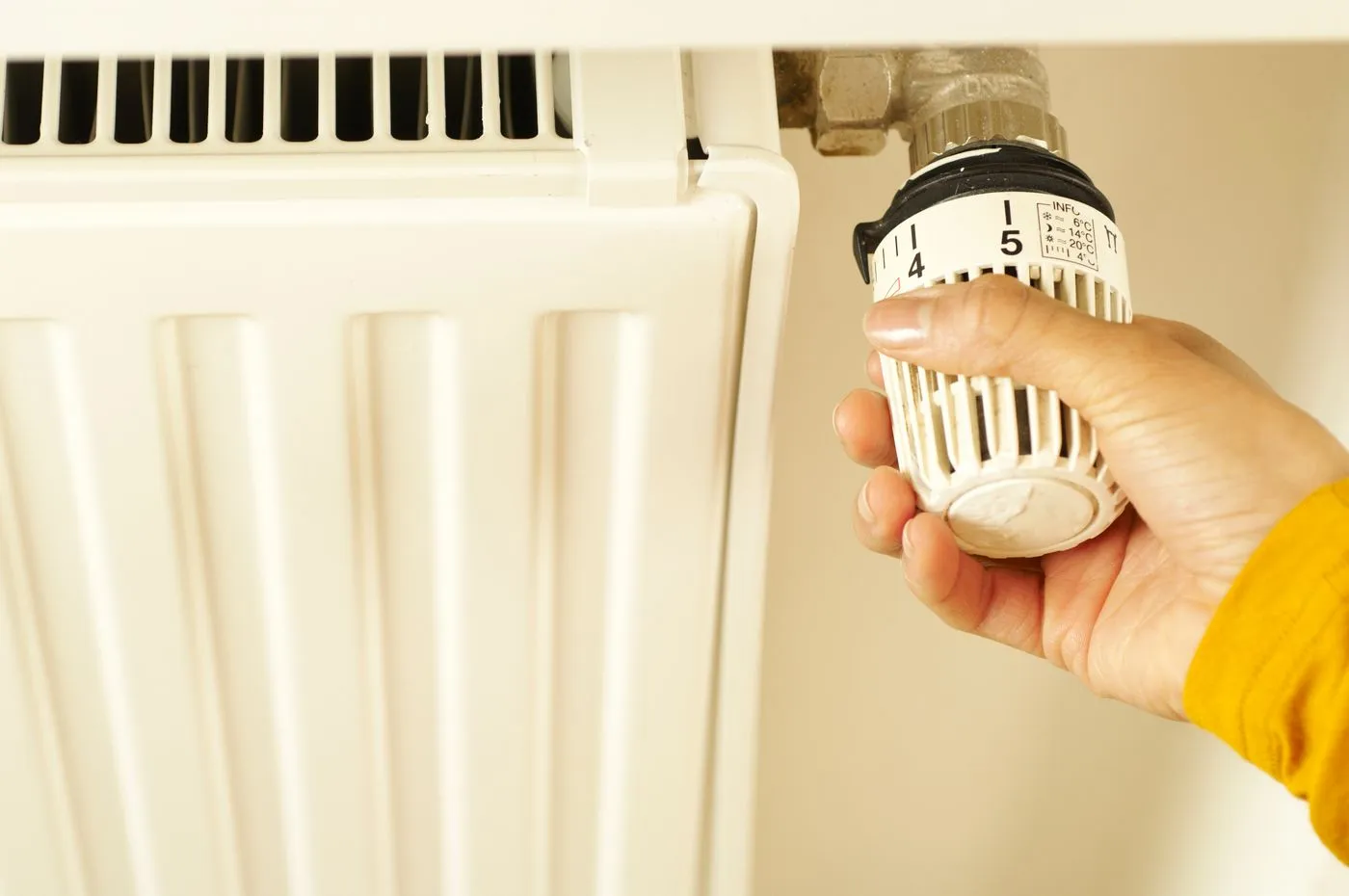
The one job that is yours every month is the filter. The Department of Energy says dirty filters trap lint, pollen and dust and reduce airflow, which makes the system work harder and take longer to heat the home. Check it every month, change it if it is dirty, and at a minimum replace it at least once every three months.
If you have a fireplace, a wood stove or a portable heater, Ready.gov has simple rules. Inspect and clean woodstove pipes and chimneys annually and check them monthly for damage or blockage. Use a fireplace screen that covers the whole opening, and make sure the fire is completely out before you leave the house or go to bed. Keep anything that can burn at least three feet from a portable heater, and buy only heaters evaluated by a nationally recognized laboratory such as Underwriters Laboratories, with a thermostat and an automatic shut-off if the heater falls over.
And one rule worth repeating: do not heat the house with the oven or stove. The CDC says never to heat your house with a gas oven, and Ready.gov says a gas stove is especially dangerous as a heat source because carbon monoxide can build up.
How do I keep pipes from freezing?
The American Red Cross says water expands as it freezes, and that pressure can break metal or plastic pipes. The pipes that freeze most often are outdoor hose bibs, supply lines in unheated areas such as basements, crawl spaces, attics, garages and kitchen cabinets, and pipes along exterior walls with little insulation.
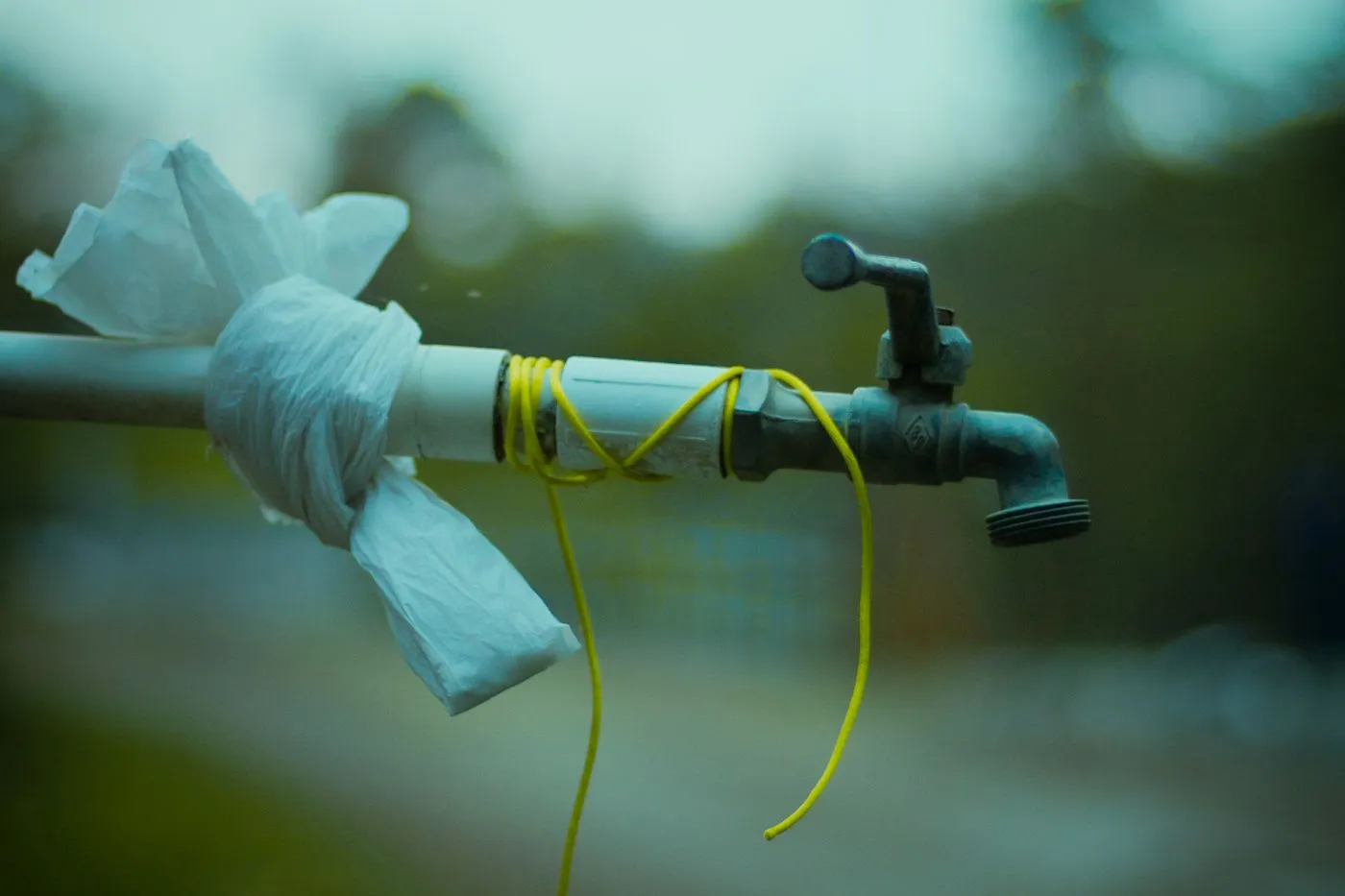
Before the cold arrives, the Red Cross suggests this short list:
- Hoses: remove, drain and store them. Close the inside valves that supply outdoor hose bibs and open the outside ones so leftover water can drain.
- Insulation: add it to attics, basements and crawl spaces, and insulate both hot and cold pipes in the garage and under kitchen and bathroom cabinets, with pipe sleeves or UL-listed heat tape or heat cable.
- Cold nights: open the kitchen and bathroom cabinet doors so warmer air reaches the pipes, keep garage doors closed if supply lines run through the garage, and let the cold water drip from a faucet served by exposed pipes. Running water, even a trickle, helps prevent freezing.
- Thermostat: to protect pipes, the Red Cross says to keep it at the same temperature day and night, accepting a possibly higher heating bill to avoid a costly repair.
- Away from home: leave the heat on, no lower than 55 degrees F.
If you turn on a faucet and only a trickle comes out, suspect a frozen pipe. Keep the faucet open and warm the pipe with a hair dryer, an electric heating pad or towels soaked in hot water, and never use a blowtorch, kerosene or propane heater, charcoal stove or other open flame. The Red Cross says to call a licensed plumber if you cannot find the frozen area, cannot reach it or cannot thaw the pipe.
Where is the heat escaping, and what can I do about it?
Start with the windows. The Department of Energy's winter tips say that caulking small gaps, adding weatherstripping to the moving parts and using window attachments can keep a home warmer, and its checklist says the typical home loses more than 25 percent of its heat through windows. In winter, open the curtains on south-facing windows during the day to let the sun in, and close them at night to cut the chill from cold glass.
The same checklist says the worst leaks are usually not the windows and doors. Look at the places where pipes come through walls, gaps around chimneys and recessed lights in insulated ceilings, and unfinished spaces behind cupboards and closets. For a whole-house answer it suggests an energy audit, which you can ask your utility company or state energy office about.
Two small habits help too. The Department of Energy says a programmable thermostat can set the temperature back at night and heat the home only when someone is around, and that a ceiling fan turned to run clockwise at a low speed pushes warm air down from the ceiling. It will not change the room temperature, it adds, so turn it off when no one is in the room. The Red Cross advice above, to hold the temperature steady day and night, is the exception, and it is there to protect the pipes.
If heating costs are a strain, Ready.gov says you can contact the Low Income Home Energy Assistance Program (LIHEAP) for help with heating costs, weatherization or energy-related home repairs.
What goes in a power-outage kit?
Ready.gov says a winter storm can last a few hours or several days and can cut off heat, power and communication. Its advice is to gather supplies in case you need to stay home for several days without power, and to keep each person's specific needs in mind, including medication. Its power outage page adds the practical items: flashlights for every household member, extra batteries for radios and flashlights, a portable charger or power bank, nonperishable food and water, and a check on whether your home phone will work and how long its battery backup lasts.
Two points matter more after 50. First, medicines and devices: Ready.gov says to talk to your medical provider about a plan for any electrically powered medical device and for refrigerated medicines, and to find out how long a medicine can be stored at higher temperatures. Second, our small tip: if you already get up at night, as many men do (our guide to night-time bathroom trips explains why), keep a flashlight within reach of the bed, because the hallway light may not work.
For the kitchen, Ready.gov says a closed refrigerator keeps food cold for about four hours and a full freezer for about 48 hours, and that food exposed to 40 degrees F or higher for two hours or more should be thrown out. If the power is out for more than a day, it says to discard refrigerated medication unless the label says otherwise and to consult your doctor or pharmacist right away for a new supply.
If you own a generator, the rules are firm. The CDC says to run it outdoors more than 20 feet from windows, doors and vents, and never inside the home or garage, even with doors and windows open. Ready.gov adds to keep it dry, connect appliances with heavy-duty extension cords and let it cool before refueling. Camp stoves and charcoal grills belong outdoors too, and the CDC says never to burn charcoal indoors.
For the car, Ready.gov suggests a kit with jumper cables, sand, a flashlight, warm clothes, blankets, bottled water and nonperishable snacks, and a full tank of gas. If the weather is bad, stay off the roads if at all possible.
How do I stay safe in the cold myself?
The CDC says cold puts extra strain on the heart, and that if you have heart disease or high blood pressure you should follow your doctor's advice about shoveling snow or other hard work in the cold. Its advice is to try not to sweat or get too tired, because your body is already working hard just to stay warm. Ready.gov lists heart attacks from overexertion among the winter-storm risks and says to avoid overexertion when shoveling snow and walking in the snow. Our guide to snow shoveling after 50 covers who should hand the job off and how to do it with less strain. Our pieces on blood pressure and the heart and checkups after 50 cover what to ask at your next visit.
Older adults need one more watch item. The CDC says older adults often make less body heat because of a slower metabolism and less physical activity. It suggests that anyone over 65 check the temperature in the home often during extremely cold weather, and that we check on older friends and neighbors to make sure their homes are heated properly.
Know the signs of hypothermia. The CDC lists shivering, exhaustion, confusion, fumbling hands, memory loss, slurred speech and drowsiness in adults, and says that a body temperature below 95 degrees F is an emergency that needs medical attention immediately. Our men's health guide lists the signs that mean call 9-1-1 or a doctor now.
When should I call a professional?
The sources point to the same short list. Gas, oil or coal appliances and the heating system are for a qualified technician, once a year, and so is the chimney. A pipe you cannot find or thaw is for a licensed plumber. Light switches that are hot to the touch, or lights that flicker, should be shut off and professionally replaced, says Ready.gov. For leaks you cannot track down, the Department of Energy suggests hiring an energy auditor with a blower door to point out the worst cracks.
What is the bottom line?
Do the first two steps this weekend: test the alarms and book the heating service. Then work down the list as time allows, filter, pipes, drafts and the outage kit. None of it needs special skill, and the parts that do are clearly marked for a professional. A warm, safe house is the best winter plan we know.
Frequently asked questions
When should I winterize my home?
Before the cold arrives. The American Red Cross lists its pipe steps as things to do "before the onset of cold weather," and Ready.gov says winter storm warnings usually come only 12 to 24 hours before the event. Do the alarms and the heating service first, because those protect people, then the rest as the weather allows.
How often should I change the furnace filter?
The Department of Energy says to check it every month, change it if it is dirty, and at a minimum replace it at least once every three months. Dirty filters reduce airflow, so the system works harder and takes longer to heat the house.
Where should carbon monoxide detectors go?
The CDC says to install battery-operated or battery back-up CO detectors near every sleeping area. Ready.gov adds battery-backup detectors on every level of the home. The CDC says to replace a detector following the manufacturer's instructions or every 5 years.
Can I heat my home with the oven or stove?
No. The CDC says never to heat your house with a gas oven, and Ready.gov says never to use a stove range or oven to heat your home because it can raise the risk of fires, burns and carbon monoxide poisoning. Gas stoves are especially risky.
How do I keep pipes from freezing?
The Red Cross suggests insulating pipes in unheated areas such as the garage and under kitchen and bathroom cabinets, draining outdoor hoses, opening cabinet doors on cold nights so warmer air reaches the plumbing, and letting a faucet on an exposed pipe drip when it is very cold.
How far from the house should a generator be?
The CDC says more than 20 feet from windows, doors and vents, and never inside the home or garage, even with doors and windows open. Ready.gov says at least 20 feet from windows, doors and attached garages, and keep it dry.
What temperature should I leave the heat at when I travel?
The Red Cross says that if you will be away during cold weather, leave the heat on and set it to no lower than 55 degrees F.
Is there help paying heating bills?
Ready.gov says that if you cannot afford heating costs, weatherization or energy-related home repairs, you can contact the Low Income Home Energy Assistance Program (LIHEAP) for help.
When does being cold become an emergency?
The CDC says that a body temperature below 95 degrees F is an emergency and calls for medical attention right away. Signs in adults include shivering, exhaustion, confusion, fumbling hands, memory loss, slurred speech and drowsiness.
Sources we checked for this article
- CDC: Carbon Monoxide (CO) Poisoning Basics (updated October 26, 2026)
- CDC: About Winter Weather (updated August 25, 2026)
- CDC: Stay Safe During and After a Winter Storm (updated January 26, 2026)
- CDC: Preventing Hypothermia (updated January 30, 2024)
- Ready.gov: Winter Weather (last updated March 10, 2026)
- Ready.gov: Power Outages (last updated June 4, 2026)
- Ready.gov: Home Fires (last updated February 26, 2026)
- American Red Cross: Preventing and Thawing Frozen Pipes (read November 1, 2026)
- U.S. Department of Energy: 5 Tips to Help You Save on Energy Bills this Winter (posted December 21, 2022; updated December 7, 2023)
- U.S. Department of Energy, Federal Energy Management Program: Home Energy Checklist (read November 1, 2026)