
Prostate Health · Ingredients
Saw Palmetto for the Prostate: What to Know Before You Buy
By OakMan Guide Editorial Team Updated 8 min read
The short answer
Saw palmetto is the best-known prostate herb, and it sits on almost every prostate label. NCCIH calls it well tolerated, used safely in studies for up to 3 years, and it does not appear to change PSA readings. The newest research looks at blends, such as saw palmetto with nettle root or pygeum. To choose a product, read the label for the amount, what it is paired with and the guarantee.
We're not doctors, and this is not medical advice. This article may contain affiliate links, always to the official websites of the products mentioned. If you buy through one of these links, you support our work at no additional cost to you. This never influences what we write.
It is the herb on almost every prostate label. Here is why men take it, what the big NIH-funded trials say about it, and how to read a label.
What is saw palmetto, and why do men take it for the prostate?
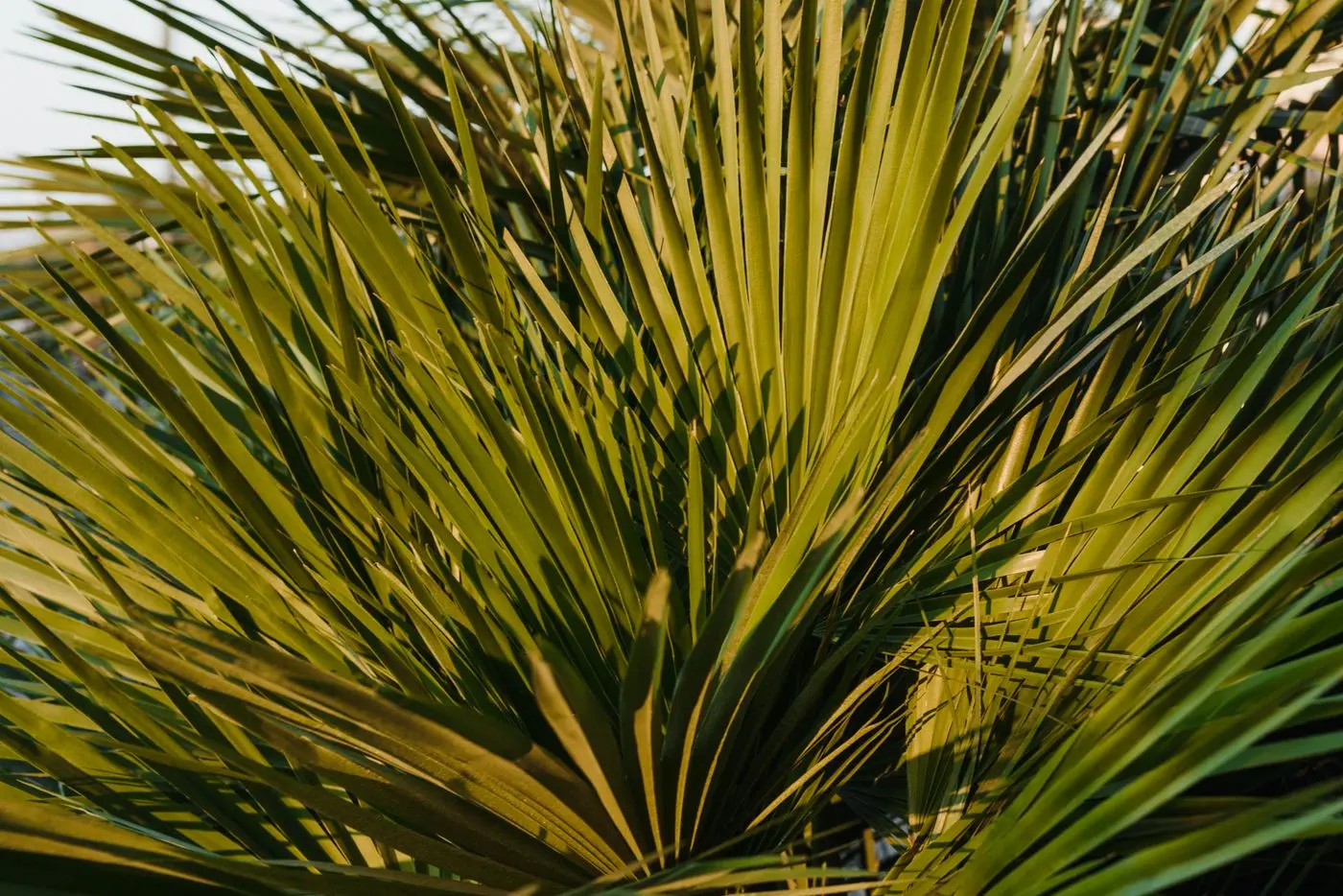
NCCIH, the NIH center that studies herbs and supplements, describes saw palmetto (Serenoa repens) as a small palm, 6 to 10 feet tall, native to the West Indies and the southeast coast of North America. The berries are what end up in the bottle. It is promoted for the urinary symptoms of an enlarged prostate, which doctors call benign prostatic hyperplasia, or BPH.
It is popular because the symptoms are common and the herb is easy to find. The authors of the STEP trial noted in 2006 that more than 2 million men in the United States were using it for BPH. Memorial Sloan Kettering adds that lab studies point to several ways it might act on the prostate, including blocking the conversion of testosterone to DHT.
Read a few prostate labels in a row and you will see it on nearly all of them. It sits first on the list of one, and inside a "proprietary blend" on another.
What do the big studies show about it?
Two large trials paid for by the NIH, and a European combination program, carry most of the weight. Here is what each one did and found.
| Study | Who | What they tested | What stands out |
|---|---|---|---|
| STEP trial (NEJM, 2006) | 225 men over 49 with moderate to severe symptoms | 160 mg extract twice a day, 1 year | Side effects were similar to placebo; more than 2 million US men were already using it for BPH at the time |
| CAMUS trial (JAMA, 2011) | 369 men aged 45 and older | 320 mg a day, raised to 640 and then 960 mg a day, 72 weeks | Up to three times the standard dose, with no clearly attributable adverse effects and PSA unchanged |
| PRO 160/120 re-evaluation (World J Urol, 2014) | 922 men, average age 66, four controlled studies | Saw palmetto 160 mg + nettle root 120 mg, twice a day, 24 weeks | Night-time trips down 29% with the combination versus 18% with placebo |
The STEP trial was double-blind and placebo-controlled: 225 men over 49 took 160 mg of extract twice a day for a year, and side effects were about the same as in the placebo group.
The CAMUS trial asked a fair follow-up question: what about higher doses? It followed 369 men for 72 weeks and raised the dose from 320 mg to 640 and then 960 mg a day, up to three times the standard dose. The authors found no clearly attributable adverse effects, which tells you how thoroughly this herb has been tested.
The most interesting research is on combinations. A European fixed combination of saw palmetto and stinging nettle root extracts, called PRO 160/120, was studied in four controlled trials with 922 men (average age 66). In the 2014 re-evaluation, night-time voids dropped by 0.8 a night (29 percent) with the combination against 0.6 (18 percent) with placebo. One note: that was one specific, standardized extract at a specific dose. A bottle that contains saw palmetto and nettle is in the same neighborhood, not the same house. For how pygeum and nettle root stand on their own, see our pygeum vs saw palmetto vs nettle root article.

How well tolerated is saw palmetto, and does it affect PSA?
The news is good on both. NCCIH says saw palmetto is well tolerated and has been used safely in research studies for up to 3 years. Adverse effects are mild and infrequent, and may include digestive symptoms, dizziness and headache. In the 2023 Cochrane review, the rate of adverse events was about the same as with placebo.
The second piece of good news matters if you get screened. NCCIH says saw palmetto does not appear to affect PSA readings, even in higher-than-usual amounts, and that was checked directly in the CAMUS trial. So a daily saw palmetto habit does not get in the way of your yearly checkup: the number your doctor sees is still your number.
How do you read a saw palmetto label?
If you decide to try it, the label is where you can be the smartest shopper in the aisle. Here is what to look for, in order:
- The amount per serving. The trials used 160 mg twice a day and 320 mg a day as the standard dose. If the bottle lists a number, you can compare it. If saw palmetto sits inside a blend, you get the blend's total.
- The order of the ingredients. Federal labeling rules (21 CFR 101.36) say ingredients in a proprietary blend must be listed from most to least by weight. The first name is the biggest piece, the last is the smallest.
- What it is paired with. The combinations are where the newest research is, so it is worth knowing which other plants are in the mix, such as pygeum or stinging nettle.
- What the label claims. Good labels say "supports" and "helps maintain," not "cures" or "shrinks."
- The guarantee. A longer money-back window means more time to see how you feel.
Our prostate supplement guide goes deeper on how to compare formulas, with the questions worth asking about every label.
Where does saw palmetto show up in the products we review?
All four prostate formulas we have reviewed contain it, each in a different setup. Prosta Defend pairs it with pygeum and stinging nettle in capsules, the closest of the four to the saw palmetto and nettle pairing above. Prosta Peak puts it in a larger herb blend. Prostadine carries saw palmetto oil in a small blend with neem, next to the seaweeds.
The fourth, ViriFlow, is a multi-plant liquid. Its 700 mg blend combines saw palmetto with pygeum, plant sterols, pomegranate, shilajit and a group of seaweeds, in a water-based drop you take as one full dropper a day, and the official store backs it with a 60-day guarantee. Our ViriFlow review goes through the label ingredient by ingredient, the price and the guarantee.
How do you get the most out of a saw palmetto formula?
Start with the free things, because they cost nothing and you can begin tonight. Cut the caffeine and alcohol after dinner, spread your fluids across the day and stop drinking about two hours before bed. The whole list, with a three-night bladder diary, is in our guide to why you wake up to pee at night after 50.
Then pick a formula with a plan: the amount, what it is paired with, and a date two or three months out to check whether the trips have gone down. As the official pages advise, ask your doctor first if you take medication, are pregnant or nursing, or have a medical condition. Of all the herbs on these labels, saw palmetto is the easy one to start with: well tolerated, and it does not get in the way of the PSA test.

Frequently asked questions
What is saw palmetto, and why is it in prostate formulas?
Saw palmetto (Serenoa repens) is the berry of a small palm native to the southeast coast of North America. It is the best-known prostate herb, which is why it sits on almost every prostate label, usually next to pygeum, nettle or seaweed.
Will saw palmetto hide a high PSA reading?
No. NCCIH says saw palmetto does not appear to affect PSA readings, even when taken in higher-than-usual amounts. That is good news if you are screened: the number your doctor sees is still your number.
How much saw palmetto did the studies use?
The STEP trial used 160 mg of extract twice a day, and the CAMUS trial started at 320 mg a day and went up to 640 and then 960 mg a day for 72 weeks. Products vary, and many put saw palmetto inside a blend, so the Supplement Facts panel is where you see what is in your bottle.
Is saw palmetto well tolerated?
NCCIH calls it well tolerated and says it has been used safely in research studies for up to 3 years. Side effects are mild and infrequent and may include digestive symptoms, dizziness and headache. In CAMUS, men took up to three times the standard dose for 72 weeks with no clearly attributable adverse effects.
Why do so many formulas combine saw palmetto with other plants?
The combinations are where the newest research is. One specific saw palmetto and nettle root extract, called PRO 160/120, showed 29 percent fewer night-time trips versus 18 percent on placebo in a re-evaluation of four trials, and pygeum has its own encouraging trials. Saw palmetto works as the anchor of a team.
How long should I try a saw palmetto product?
The trials ran from 3 months to more than a year. Give a formula a fair few months, keep a simple log of your night-time trips, and judge it by your own notes.
Sources we checked for this article
- NCCIH: Saw Palmetto (last updated April 2025)
- Franco JV et al. Serenoa repens for the treatment of lower urinary tract symptoms due to benign prostatic enlargement. Cochrane Database of Systematic Reviews, 2023
- Bent S et al. Saw palmetto for benign prostatic hyperplasia. New England Journal of Medicine, 2006
- Barry MJ et al. Effect of increasing doses of saw palmetto extract on lower urinary tract symptoms (CAMUS). JAMA, 2011
- Oelke M et al. Fixed-dose combination PRO 160/120 of sabal and urtica extracts improves nocturia in men with LUTS suggestive of BPH. World Journal of Urology, 2014
- Memorial Sloan Kettering: Saw Palmetto (last updated October 2023)
- 21 CFR 101.36: Nutrition labeling of dietary supplements