
Home & DIY · Winter Safety
Snow Shoveling After 50: How to Clear the Driveway Safely
By OakMan Guide Editorial Team Updated 8 min read
The short answer
The safest way to shovel snow after 50 starts with one question: should you shovel at all? If you have heart disease or its risk factors, the American Heart Association says to get someone else to do it. If you are cleared, start early, push the snow instead of lifting it, take breaks, and stop at the first sign of chest pain or pressure.
We're not doctors, and this is not medical advice.
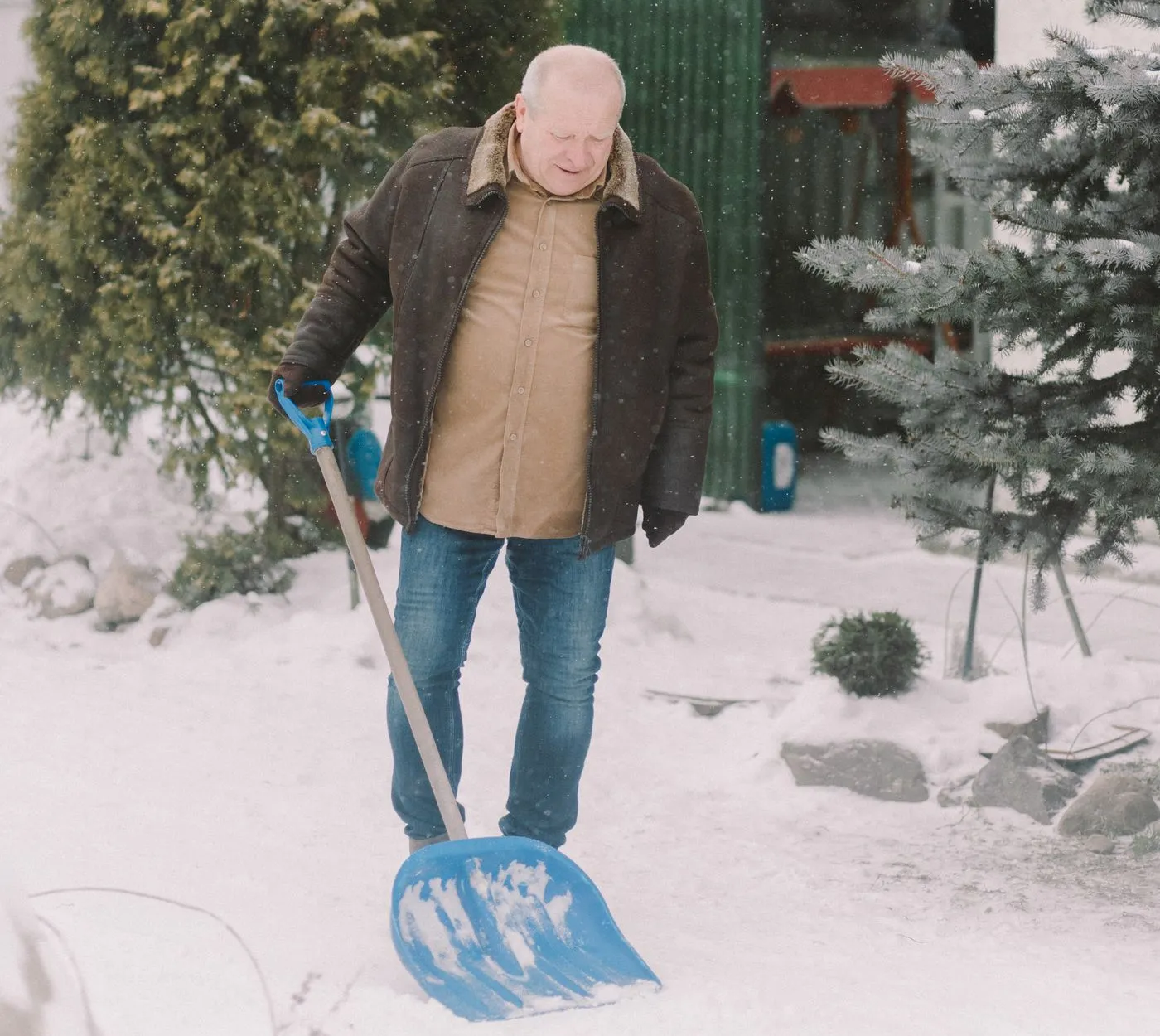
Photo: Man in Brown Jacket Holding a Blue Shovel by Nataliya Vaitkevich on Pexels.
A snowfall can turn a quiet morning into hard exercise for a heart that has not been training for it. Here is how to decide whether to shovel, how to do it with less strain, and when to stop.
Why does shoveling snow strain the heart after 50?
Because it is harder work than it looks. The American Heart Association (AHA) says the strain of heavy shoveling may be as demanding on the heart as a treadmill stress test, and that after only two minutes, the heart rates of study participants passed 85% of their maximum. The AHA points to five reasons: shoveling is mostly static effort, it is mostly arm work, you tend to hold your breath when you lift a heavy load, you stand still while your blood pools in the legs, and breathing cold air narrows blood vessels and raises blood pressure.
The AHA also describes a Canadian study in which a heavy snowfall, about 7 to 8 inches, was linked to 16% higher odds of men being admitted to hospital with a heart attack and a 34% higher chance of men dying from one. It did not see the same pattern in women. The AHA adds that many events happen to people who are usually sedentary and then shovel the driveway after a big storm.
The heart is not the only risk. The American Academy of Orthopaedic Surgeons (AAOS) cites the Consumer Product Safety Commission (CPSC) for more than 137,000 people treated in 2018 for injuries from shoveling or using snow blowers, mostly sprains and strains of the back and shoulders. The National Institute on Aging says to avoid shoveling snow yourself when possible, because of the risk of falling and the risk of heart attack for older adults.
Should I shovel at all?
That is the first decision, and it is a health one. The AHA says that if you have known or suspected heart disease, or risk factors for it, you should get someone else to clear the snow. Its list of risk factors is long and common: a sedentary lifestyle, obesity, being a current or former smoker, diabetes, high cholesterol and high blood pressure. It says people who have had a heart attack or stroke, bypass surgery or angioplasty simply should not be shoveling.
Check with your doctor first
The AAOS says clearing snow puts a great deal of stress on the heart. If you have a medical condition or do not exercise regularly, it says to speak with your doctor before shoveling or snow blowing, and to consider hiring someone to do it.
Not sure where you stand? Our guide to checking blood pressure at home and the checkups list for men over 50 are good places to start before the first storm, so the answer is not a surprise in the driveway.
How do I get ready before I go out?
- Dress in layers. The AHA says to cover your mouth and nose and to wear layers, a hat and gloves. The AAOS adds water-repellent clothing, warm socks and shoes or boots with slip-resistant soles.
- Warm up. The AAOS recommends 10 minutes of light exercise before you start.
- Start early. Clear snow early and often, when there is only a light covering. Packed, heavy snow is what causes many of the injuries, the AAOS says.
- Check the wind. The AHA says to be extra careful when the wind blows, because it makes the temperature feel colder than it is and increases the effect of the cold on your body.
- Make sure you can see. The AAOS says not to let a hat or scarf block your vision, and to watch for ice patches and uneven surfaces.
- Tell someone. The NIA suggests letting others know when you plan to spend time outdoors and carrying a fully charged mobile phone.
What is the safest way to move the snow?
Both the AHA and the AAOS say the same thing first: push the snow instead of lifting it. The AAOS gives the rest of the technique, and the table shows it at a glance.
| Instead of | Do this |
|---|---|
| Lifting and throwing | Push the snow |
| A full, heavy load | Small scoops |
| Bending at the waist | Knees bent, legs lift |
| Arms stretched out | Load close to the body |
| Tossing over the shoulder | Walk it to the pile |
| One deep pass | Thin layers, one at a time |
If you must lift, the AAOS says to squat with your legs apart, knees bent and back straight, and to lift with your legs, not by bending at the waist. Scoop small amounts and walk to where you want to dump them, because holding a loaded shovel with outstretched arms puts too much weight on your spine. It also says not to throw snow over your shoulder or to the side, since the twist stresses your back, and never to remove deep snow all at once, especially heavy, wet snow.
Pace matters as much as form. The AHA says to start gradually and take short breaks, and the AAOS says to drink plenty of fluids. In our opinion, the simplest rule is to stop and straighten up at the end of every pass, before your body asks you to.
What are the warning signs to stop?
Stop and get help
The AHA says that if you feel chest pain or pressure, lightheadedness, heart palpitations or an irregular heart rhythm, you should stop the activity immediately. Call 9-1-1 if the symptoms do not subside shortly after you stop. The AAOS adds shortness of breath and says to seek emergency care for signs of a heart attack. If you see someone collapse, call for help and start Hands-Only CPR if they are unresponsive and have no pulse.
Our men's health guide lists other signs that mean you should call a doctor now.
Is a snow blower a safer choice?
For the heart, a little. The AHA says research shows a snow blower raises the heart rate to around 120, compared with around 170 while shoveling. It still tells you to be careful and listen to your body, and it has noted studies that found an increased risk of heart attacks among people using automatic blowers, since pushing one can raise heart rate and blood pressure quickly too.
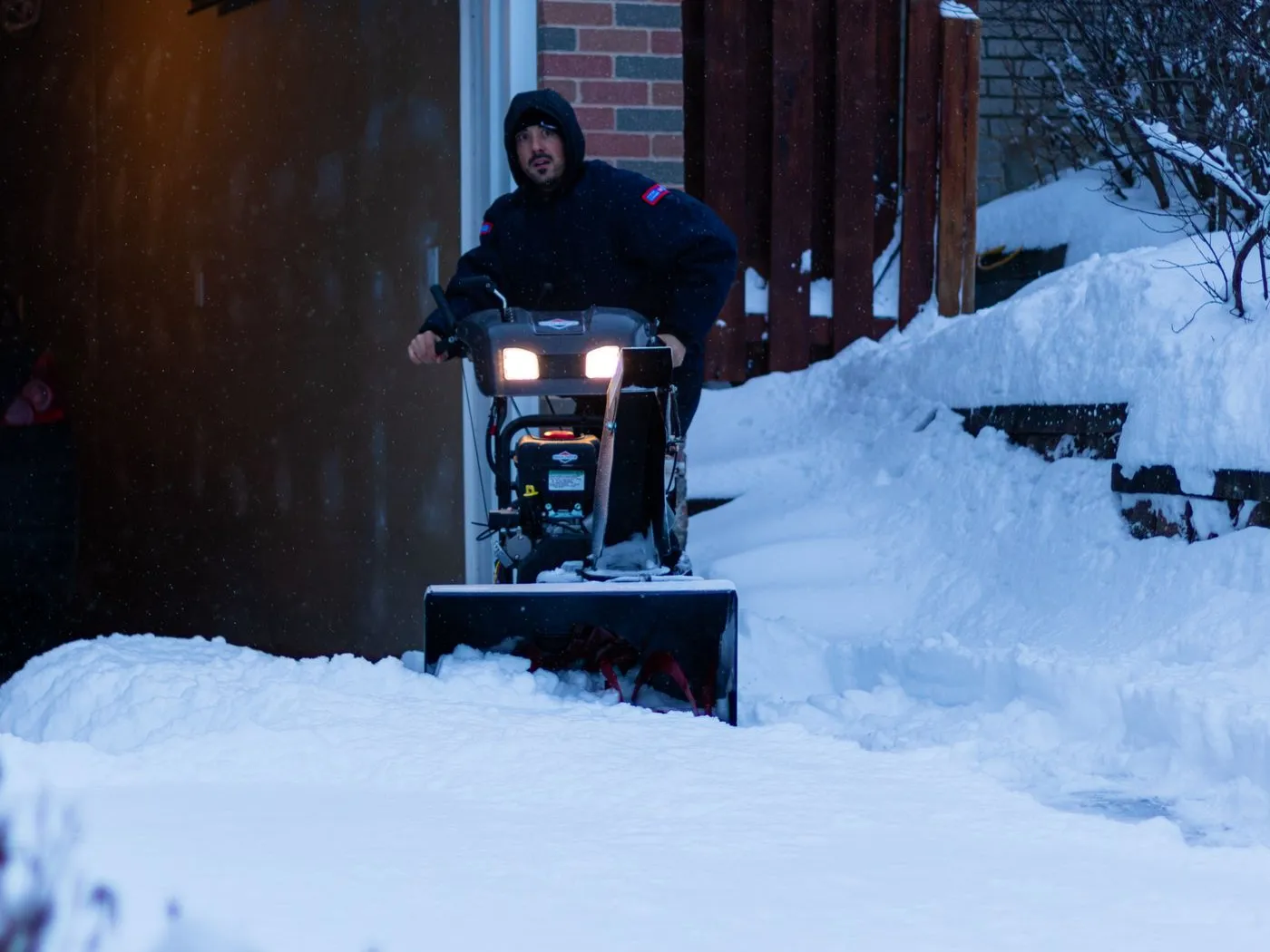
The machine itself needs respect. The CPSC says most injuries happen when people try to clear the auger or discharge chute with their hands, and that people have died after being caught in a machine. Its rules are short:
- Stop the engine and use a long stick to clear wet snow and debris. Never use your hands.
- Keep hands and feet away from all moving parts.
- Never run the machine in an enclosed area. The CPSC says people have died of carbon monoxide poisoning from leaving the engine running in one.
- Add fuel outdoors, never to a running or hot engine. With an electric model, always know where the power cord is.
The AAOS adds a few more: wait more than 5 seconds after shutting the engine off, because the blades can recoil, never leave a running machine unattended, and keep children 15 and younger away.
What are the alternatives to shoveling?
More than most people think, and all of them come from the same sources:
- Hand it off. The AHA says to get someone else to do it if you have heart risk, and the AAOS says to consider hiring someone.
- Make less to shovel. The NIA says to keep outside walkways clear of snow and ice with an ice melt product or sand, and the AAOS says to start while the snow is still a light covering.
- Hold the railings. The NIA says to use railings on icy stairs and walkways and to wear nonskid, rubber-soled, low-heeled footwear. Our guide to fall-proofing your home covers the rest of the house.
- Stay in when you can. The NIA suggests staying inside in bad weather if possible, and using delivery services for prescriptions and groceries.
In our opinion, the best time to line up help is before the first storm, when it is a simple favor to ask, not a job you feel you must do yourself that morning.
What is a simple plan for this winter?
- Settle the first question now. Ask your doctor whether shoveling is safe for you, and name a backup person or service.
- Get the gear ready. A shovel that fits you, layers, a hat, gloves, boots with slip-resistant soles, and ice melt or sand by the door.
- Plan the pass. Start early, push, scoop small, rest often and drink water.
- Know your stop signs. Chest pain or pressure, lightheadedness, palpitations, shortness of breath: stop and get help.
The rest of the season is in our winterize your home checklist and the Home and DIY guide. If your legs and back are your worry, our strength training starter plan is a gentle place to begin.
Frequently asked questions
Is shoveling snow bad for your heart after 50?
It can be. The American Heart Association says the exertion of shoveling may raise the risk of a heart attack or sudden cardiac arrest, most of all for people who are not used to regular exercise. It reports that after only two minutes of shoveling, study participants' heart rates passed 85% of their maximum.
Who should not shovel snow at all?
The AHA says people with known or suspected heart disease or risk factors should get someone else to do it. Its list of risk factors includes a sedentary lifestyle, obesity, smoking now or in the past, diabetes, high cholesterol and high blood pressure, and a past heart attack, stroke, bypass surgery or angioplasty.
Is it better to push snow or lift it?
Push it. Both the AHA and the American Academy of Orthopaedic Surgeons say pushing the snow takes less effort than lifting and throwing it. If you must lift, the AAOS says to squat with your knees bent and your back straight, lift with your legs and take small scoops.
Is a snow blower easier on the heart than a shovel?
The AHA says research shows a snow blower raises the heart rate to around 120, compared with around 170 for shoveling. It adds that you should still be careful, because pushing a blower can also raise heart rate and blood pressure quickly.
What are the warning signs to stop shoveling?
The AHA lists chest pain or pressure, lightheadedness, heart palpitations and an irregular heart rhythm. Stop right away, and call 9-1-1 if the symptoms do not go away soon after you stop. The AAOS adds shortness of breath.
How long should I warm up before shoveling?
The AAOS recommends 10 minutes of light exercise to warm up your muscles first, since shoveling is a vigorous activity.
When is the best time to clear the snow?
Early. The AAOS says it is best to begin when there is just a light covering of snow, because packed, heavy snow is where many injuries start. For deep or wet snow, it says to take it off in pieces rather than all at once.
What should I do if someone collapses while shoveling?
The AHA says to call for help and start Hands-Only CPR if the person is unresponsive and has no pulse.
Sources we checked for this article
- American Heart Association: Snow shoveling, cold temperatures combine for perfect storm of heart health hazards (news release, January 11, 2024, read November 8, 2026)
- American Heart Association: Snow shoveling can be hazardous to your heart (news release, December 15, 2022, read November 8, 2026)
- American Academy of Orthopaedic Surgeons, OrthoInfo: Prevent Snow Shoveling and Snowblowing Injuries (read November 8, 2026)
- National Institute on Aging: Cold Weather Safety for Older Adults (page updated January 26, 2026, read November 8, 2026)
- U.S. Consumer Product Safety Commission: Snow Thrower Safety (safety alert, publication 5117, January 2012)