
Fitness & Food · Balance
Balance Exercises for Men Over 50: Five Moves You Can Do at Home
By OakMan Guide Editorial Team Updated 5 min read
The short answer
Five balance moves you can do at home are the tandem stance, standing on one foot, the heel-to-toe walk, standing up from a chair and a straight-line walk. Keep a sturdy chair, wall or person nearby. The National Institute on Aging suggests about three balance sessions a week, and says balance exercises help prevent falls and fall-related injuries.
We're not doctors, and this is not medical advice.
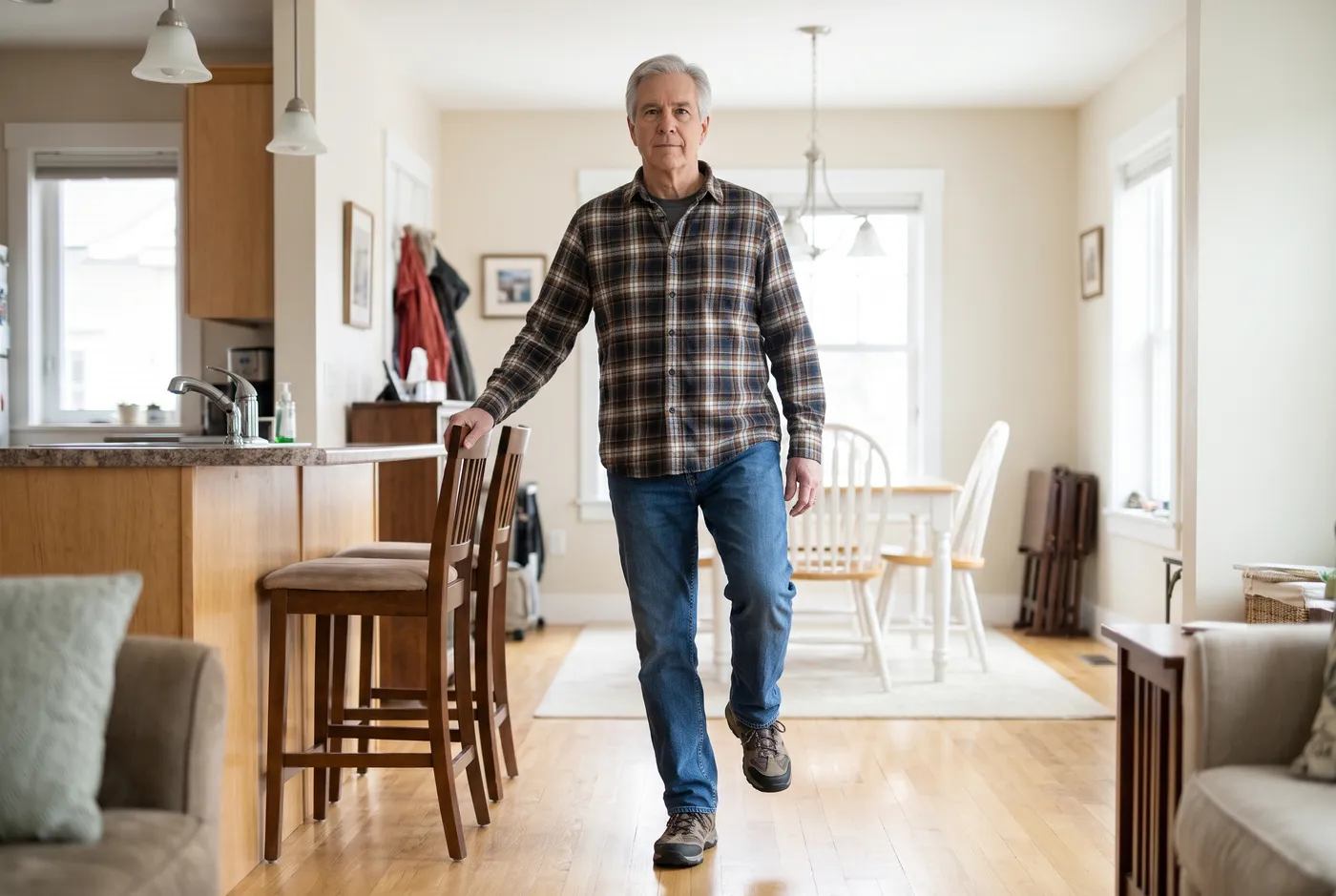
A man in a flannel shirt stands in a kitchen, one hand on a bar stool, lifting one foot off the floor. Realistic AI-generated image.
If you have felt a wobble getting out of a chair or turning in the hallway, these five moves are a calm place to start. Each one fits in a living room and needs only something sturdy to hold.
Why does balance matter after 50?
The NIA exercise guide calls falls a common problem in older adults that can have serious consequences, and says balance exercises help prevent them. It adds that many lower-body strength exercises also improve balance, so the moves here pair well with our strength training starter plan.
Before you begin, clear the floor where you will practice. The usual tripping hazards are in our fall-proofing checklist, and the Fitness & Food Guide shows where balance fits in the rest of the week.
How do we do the tandem stance?
The tandem stance uses the same foot position the NIA describes for the heel-to-toe walk: the heel of one foot just in front of the toes of the other, with heel and toes touching or almost touching. Here you stand still in that position instead of walking.
Stand beside a sturdy chair or a wall and keep your fingertips on it at first. Switch which foot is in front and repeat. In our opinion, the best sign of progress is needing less support, not holding the position for longer.
How do we stand on one foot?
The NIA guide says to try standing on one foot, then the other. If you need support at first, it says to hold on to something sturdy, and then to work your way up to balancing without support.
The NIA gives no number of seconds, so we do not set one either. Lift one foot only as far as feels safe, keep a hand near the support and look at a fixed spot ahead of you. Stop before you feel yourself wobbling off balance.
How do we practice the heel-to-toe walk?
This is one of the balance examples the NIA lists. As you walk, put the heel of one foot just in front of the toes of the other, so heel and toes touch or almost touch with every step.
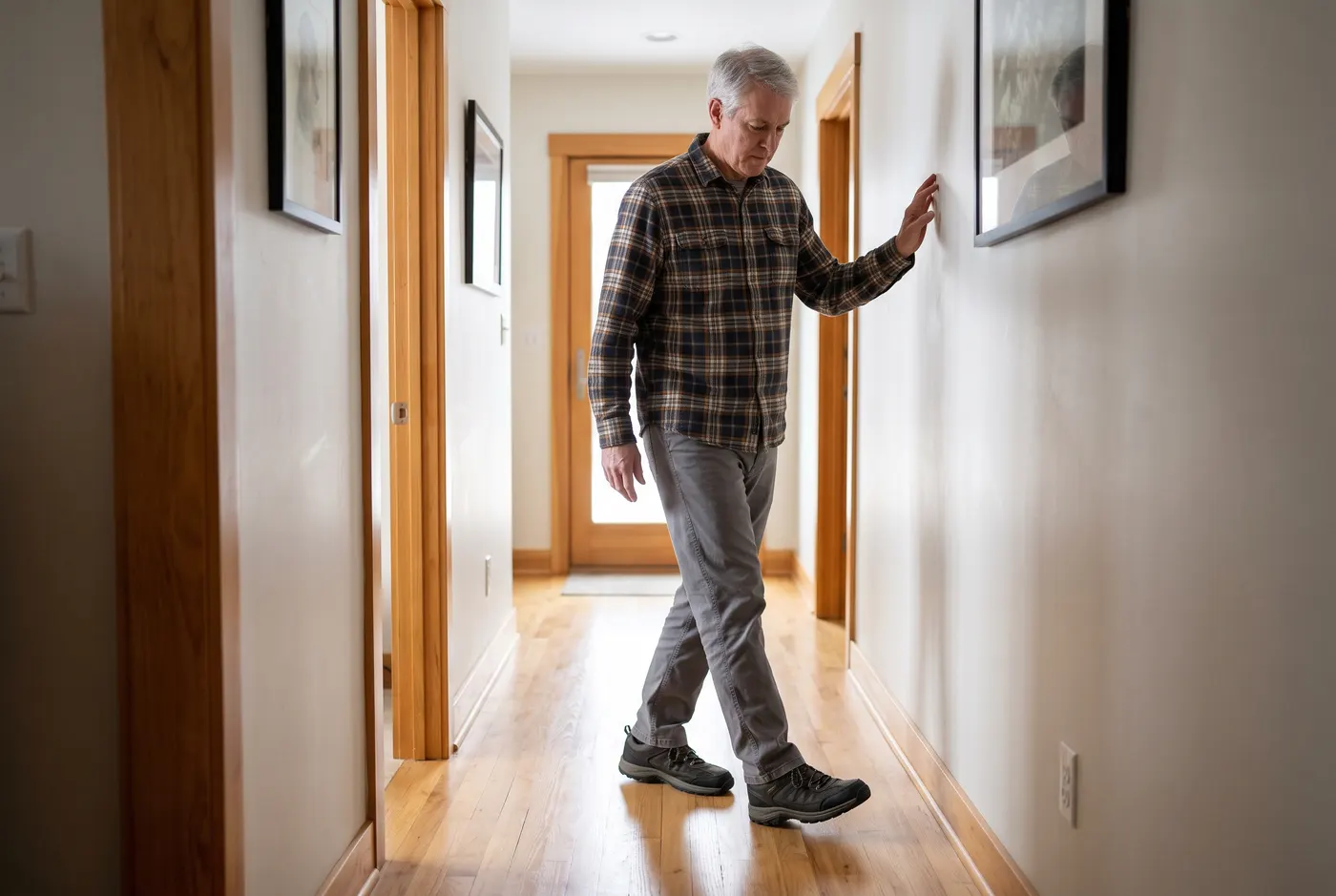
Pick a spot ahead of you and look at it instead of your shoes. Walk slowly, keep a wall within reach and wear comfortable, stable shoes or go barefoot for grip, as the NIA safety tips suggest.
How do we practice standing up from a chair?
Practicing standing from a sitting position is on the NIA's list of balance exercises. Its guide suggests that once you feel steady, you try getting up from a chair without using your hands or arms.
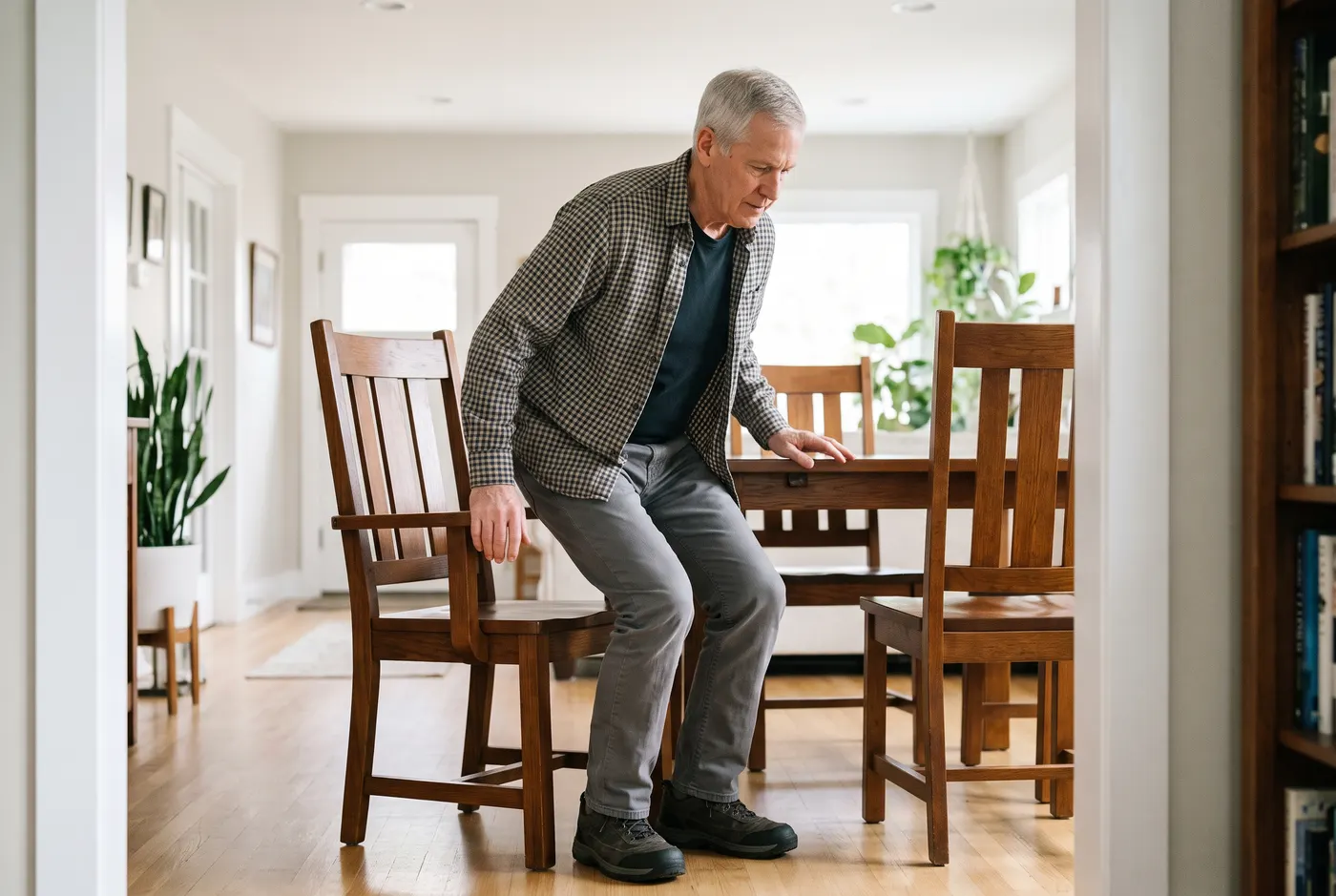
Use a sturdy chair that will not slide, plant both feet and stand up slowly. Begin with a hand on the table or the chair arm, then work toward standing with less help. If your legs ache the next day, our note on joint and muscle aches after 50 may help you tell normal soreness from something to mention to your doctor.
What is the straight-line walk?
The NIA lists the balance walk, and walking backward or sideways, as balance exercises, but its pages give no step-by-step. We keep our version simple: pick a straight line on the floor, such as a seam in the boards, and walk it slowly with a wall within reach.
If it feels steady, make it harder one step at a time. If it does not, stay close to the wall. Our guide to walking after 50 covers the everyday walking that goes alongside these drills.
How do we fit this into a week?
The NIA says to aim for about three sessions of balance exercises a week. The plan below is our own way to spread the five moves over three days.
| Day | Moves | Keep nearby |
|---|---|---|
| Monday | Standing on one foot, standing up from a chair | Sturdy chair or wall |
| Wednesday | Heel-to-toe walk, straight-line walk | A wall within reach |
| Friday | Tandem stance, standing up from a chair | Sturdy chair or wall |
The NIA also notes that doing one type of exercise can help improve your ability to do the others, so balance work fits easily next to walking and strength days.
When should we stop, and when should we ask a doctor?
The NIA safety tips say to listen to your body, go slowly and mindfully, and have a sturdy chair, person or wall nearby. If you are unsure about a particular movement, it says to seek guidance from your doctor or physical therapist.
When to stop exercising, according to the NIA
The NIA's Get Fit for Life guide says to stop if you have pain or pressure in your chest, neck, shoulder or arm, feel dizzy or sick to your stomach, break out in a cold sweat, have muscle cramps, or feel severe pain in your joints, feet, ankles or legs.
If you have had a fall, or often feel unsteady, tell your doctor. For the rest of what to raise after 50, see our checkups guide.
What is the bottom line?
Five simple moves, a sturdy place to hold and about three short sessions a week are enough to start. The NIA says balance exercises help prevent falls and fall-related injuries, so it is worth a few minutes in the living room. Go slowly, use your support and let it get easier before you make it harder.
Frequently asked questions
How often should I do balance exercises?
The National Institute on Aging (NIA) says to aim for about three sessions of balance exercises a week.
Do I need equipment for balance exercises at home?
Not much. The NIA safety tips ask for a sturdy chair, a person or a wall nearby to hold on to, and comfortable, stable footwear or bare feet for grip on the floor or mat.
What should I do if I feel unsteady during a move?
The NIA says to listen to your body and, if you feel unsteady, take action to steady yourself. It also says to go slowly and mindfully, and to have a sturdy chair, a person or a wall nearby to hold on to.
When should I stop exercising?
The NIA exercise guide Get Fit for Life says to stop if you have pain or pressure in your chest, neck, shoulder or arm, feel dizzy or sick to your stomach, break out in a cold sweat, have muscle cramps, or feel severe pain in your joints, feet, ankles or legs.
Can balance exercises help prevent falls?
The NIA says balance exercises help to prevent falls and fall-related injuries. It adds that many lower-body strength exercises also improve balance.
Is it okay to use my hands to stand up from a chair?
At first, yes. The NIA guide says that if you need support, you can hold on to something sturdy, and then work your way up to balancing without support, including getting up from a chair without using your hands or arms.
Sources we checked for this article
- NIA, NIH: Three Types of Exercise Can Improve Your Health and Physical Ability (content reviewed January 14, 2025)
- NIA, NIH: Get Fit for Life (exercise guide) (2024)