
Prostate Health · Seasonal symptoms
Cold Weather and Frequent Urination After 50: Why Winter Sends You to the Bathroom More
By OakMan Guide Editorial Team Updated 7 min read
The short answer
Cold weather can make you urinate more because cold exposure raises blood pressure, and rat studies link that to less of the hormone that holds water back, so the kidneys make more urine. Cold can also make the bladder more irritable. A few habit changes usually help, but waking several times a night, pain, fever or blood in the urine call for a doctor.
We're not doctors, and this is not medical advice. The facts below come from the NIDDK, the NIA, MedlinePlus, Cleveland Clinic and the studies listed at the end. What is behind your own symptoms is for your doctor to say.
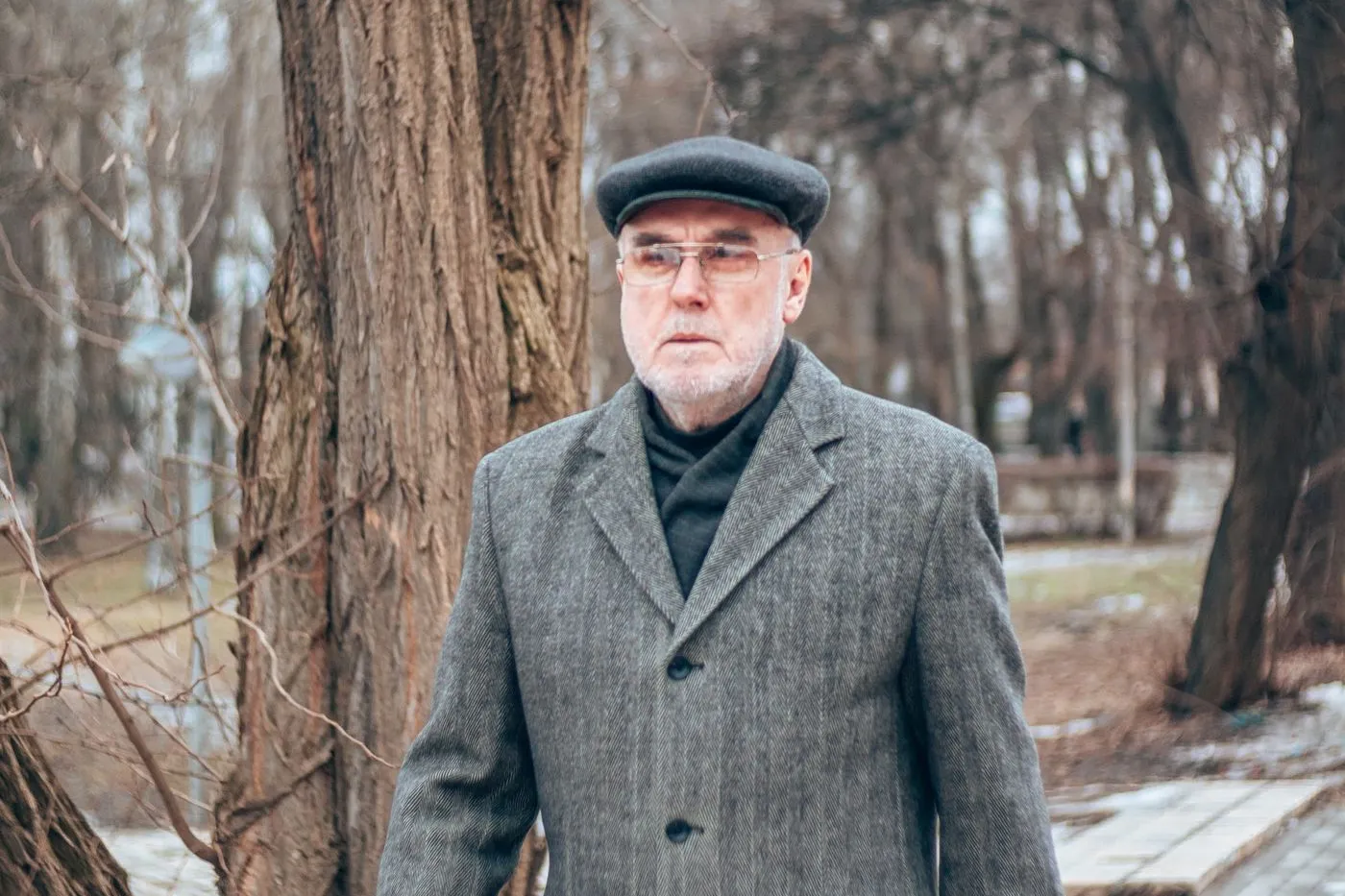
An older man in a flat cap and wool coat stands in a leafless park. Photo: Vitaliy Photo, Pexels.
The first cold snap brings a pattern many men notice: one more trip before you leave the house, one more during the night. Here is what researchers think is going on, and what to do about it.
Why does cold weather make you urinate more?
The best-known explanation is called cold diuresis, a rise in urine output after the body is exposed to cold. In a 1983 experiment published in the American Journal of Physiology, Morgan and colleagues exposed rats to cooler air and saw urine flow go up within 45 minutes. Blood pressure rose with it, and the team concluded that the extra urine came from the body easing off vasopressin, the hormone that tells the kidneys to keep water, as a result of that rise in pressure.
A second thread concerns the bladder. A review in the International Journal of Urology by Imamura and colleagues says whole-body cooling at low temperatures worsens urinary urgency, nocturia and leftover urine. In rats moved from about 27 °C (81 °F) to about 4 °C (39 °F), the bladder muscle became overactive: shorter gaps between voids, smaller volumes, less capacity. The review points to cold-sensitive channels called TRPM8, which respond to temperatures below roughly 25 to 28 °C (77 to 82 °F), and to the sympathetic nervous system.
One fair note: both findings come from rats, and the reviews say so. They are a good explanation for what many men notice, not a measured human rule.
Is it the cold, or something else?
Often it is a mix. Cleveland Clinic says nocturia, waking more than once at night to urinate, sometimes has an easy explanation, such as drinking too many fluids before bed or taking a medication that makes you urinate more. Winter changes the habits around both: more hot drinks in the evening, more time indoors and different routines.
| What changes in winter | Why it can matter | A clue |
|---|---|---|
| Cold exposure | Rat studies: more urine output and a more active bladder | Worse after time outdoors or in a cold room |
| Evening drinks | Cleveland Clinic lists fluids before bed, especially caffeine and alcohol | Tea, coffee or a nightcap after dinner |
| Medicines | Cleveland Clinic lists diuretic medicines; the NIDDK lists decongestants and antihistamines for BPH | A cold remedy or new pill this month |
| An enlarged prostate | The NIDDK lists nocturia, urgency and frequency among BPH symptoms | Weak stream or a feeling of not emptying |
| Poor sleep | Cleveland Clinic names sleep disorders, including sleep apnea, as a cause | Snoring, or waking tired |
When the picture is unclear, a note of what you drink, when, and how often you get up is a useful thing to bring to the doctor. Our guide to waking up to pee at night shows how to keep one.
Does it have anything to do with the prostate?
It can overlap. The NIDDK lists nocturia, urgency and frequency among the symptoms of benign prostatic hyperplasia (BPH), and adds that symptoms may not be directly related to the size of the prostate. It also lists other possible causes of urinary symptoms, such as bladder problems, urinary tract infections and prostatitis. So a winter flare is not a reason to assume the worst, and it is not a reason to ignore a symptom that keeps coming back.
Our enlarged prostate symptoms guide and the piece on a weak urine stream cover the other signs worth knowing.
Should you drink less when it is cold?

Not over the whole day. MedlinePlus says dehydration can come from urinating too much, that some people lose their sense of thirst as they age, and that the key to preventing it is getting enough fluids every day. Its symptoms in adults include dry mouth, dark-colored urine, feeling tired and dizziness. The NIDDK advice for BPH is more specific: try to drink fewer liquids, particularly before you go out in public or go to bed.
Put together, the sensible plan is to move your fluids to the earlier part of the day, not to cut them. Our article on caffeine and alcohol at night walks through that one change at a time.
What can you do at home?
The sources give us a short list, and some of it is just winter common sense.
- Move the big drinks earlier. The NIDDK says to drink fewer liquids before bed and to avoid or limit alcohol and caffeine; Cleveland Clinic lists the same habits.
- Do not hold it. The NIDDK says to use the restroom often and not try to hold urine for long periods, and to empty the bladder completely when you go.
- Dress in layers outdoors. The NIA says to wear a hat, scarf and gloves or mittens, and several layers of loose clothing to trap warm air.
- Keep the house warm enough. The NIA says to set the thermostat to at least 20 to 21 °C (68 to 70 °F), and that even mildly cool homes at 16 to 18 °C (60 to 65 °F) can lead to hypothermia in older adults.
- Stay active. The NIDDK lists being physically active among the lifestyle changes for BPH symptoms.
In our opinion, the easiest win is the one nobody notices: put on the extra layer before you step out, and finish the evening tea earlier. Our foods and habits guide covers the rest of the daily routine, and the winterize-your-home checklist and snow shoveling guide help with the cold side.
Could a medicine or a sleep problem be involved?
Both are on the lists. Cleveland Clinic names taking medications that contain a diuretic among the causes of nocturia, and sleep disorders, including obstructive sleep apnea, among the health conditions behind it. The NIDDK asks you to tell a health care professional if you take over-the-counter cold and cough medicines such as decongestants or antihistamines, tranquilizers, antidepressants or diuretics, since some medicines can make BPH symptoms worse.
Winter is cold-and-flu season, so a new remedy in the cabinet is worth a mention at your next visit. Do not stop a prescription on your own. For the sleep side, see our sleep problems guide.
When is it time to see a doctor?
The NIDDK says to tell a health care professional right away if you:
- cannot urinate at all;
- feel painful, frequent and urgent needs to urinate and have a fever and chills;
- have blood in your urine;
- feel great discomfort or pain in your lower abdomen or urinary tract.
For the milder pattern, Cleveland Clinic says to schedule an appointment if you wake more than once or twice to urinate and it bothers you, or if the symptoms do not go away after treatment or get worse. It adds that the outlook is relatively good and that in most cases nocturia is highly treatable. The checkups guide lists what to bring to the visit.
What is the bottom line?
More bathroom trips in the cold are common, and the research gives a reasonable explanation: cold raises urine output and can make the bladder more active. Dress warmly, keep the house comfortable, move the big drinks to the daytime and keep a simple note of how often you get up. If the pattern is getting worse or comes with pain, fever or blood, the next step is a short conversation with your doctor. The men's health guide puts the rest of the topics in one place.
Frequently asked questions
Why do I pee more when it is cold?
Researchers call it cold diuresis. In rat experiments, cold exposure raised blood pressure and lowered the hormone vasopressin, which normally tells the kidneys to hold on to water, so more urine was made. Cold can also make the bladder itself more active. Both ideas come from animal studies, so treat them as the leading explanation, not a proven human rule.
Is it normal to wake up more at night in winter?
It can happen. A review in the International Journal of Urology says cold stress can worsen urinary urgency and nocturia, which means waking at night to urinate. Cleveland Clinic says to schedule a visit if you wake more than once or twice a night and it bothers you.
Does winter make an enlarged prostate worse?
The sources we read do not say that winter enlarges the prostate. The NIDDK says BPH symptoms, which include nocturia, urgency and frequency, are not always tied to prostate size, and the cold-stress research describes worse urinary symptoms in the cold. If your symptoms change with the season, tell your doctor.
Should I drink less in winter to avoid the bathroom?
Not across the whole day. MedlinePlus says to drink enough water every day and notes that some people lose their sense of thirst as they age. The NIDDK advice for BPH is to drink fewer liquids before bed, so move your drinks earlier in the day.
Can a cold house make me urinate more?
The research we found tests cold exposure, not a particular room temperature. The NIA does say that even mildly cool homes, 16 to 18 °C (60 to 65 °F), can lead to hypothermia in older adults, and recommends a thermostat setting of at least 20 to 21 °C (68 to 70 °F). Keeping warm is worth it on its own merits.
Could my medicine be part of the problem?
Possibly. Cleveland Clinic lists medicines that contain a diuretic among the causes of nocturia, and the NIDDK says to tell a health care professional about decongestants, antihistamines, tranquilizers, antidepressants and diuretics, because they can make BPH symptoms worse. Do not stop a prescription on your own.
When should I see a doctor about frequent urination?
The NIDDK says to tell a health care professional right away if you cannot urinate at all, have painful, frequent and urgent urination with fever and chills, have blood in your urine, or feel great discomfort or pain in your lower abdomen. For night trips alone, Cleveland Clinic says to schedule a visit if you wake more than once or twice and it bothers you.
Sources we checked for this article
- American Journal of Physiology: Mechanism of cold diuresis in the rat (Morgan et al., 1983)
- International Journal of Urology: Cold stress induces lower urinary tract symptoms (Imamura et al., 2013)
- Cleveland Clinic: Nocturia (medically reviewed, updated July 22, 2026, read November 12, 2026)
- NIDDK: Enlarged Prostate (Benign Prostatic Hyperplasia) (last reviewed June 2024)
- MedlinePlus (National Library of Medicine): Dehydration (read November 12, 2026)
- National Institute on Aging (NIH): Hypothermia: A cold weather hazard (December 21, 2018)