
Home & DIY · Home Safety
Space Heater Safety: How to Heat a Room Without Starting a Fire
By OakMan Guide Editorial Team Updated 6 min read
The short answer
Plug a space heater straight into a wall outlet, never an extension cord or power strip, and keep it at least 3 feet from anything that can burn. Put it on a flat, solid surface, choose a unit with a thermostat, a tip-over shut-off and a testing-lab seal, and turn it off when you leave the room or go to bed.
We're not doctors, and this is not medical advice.
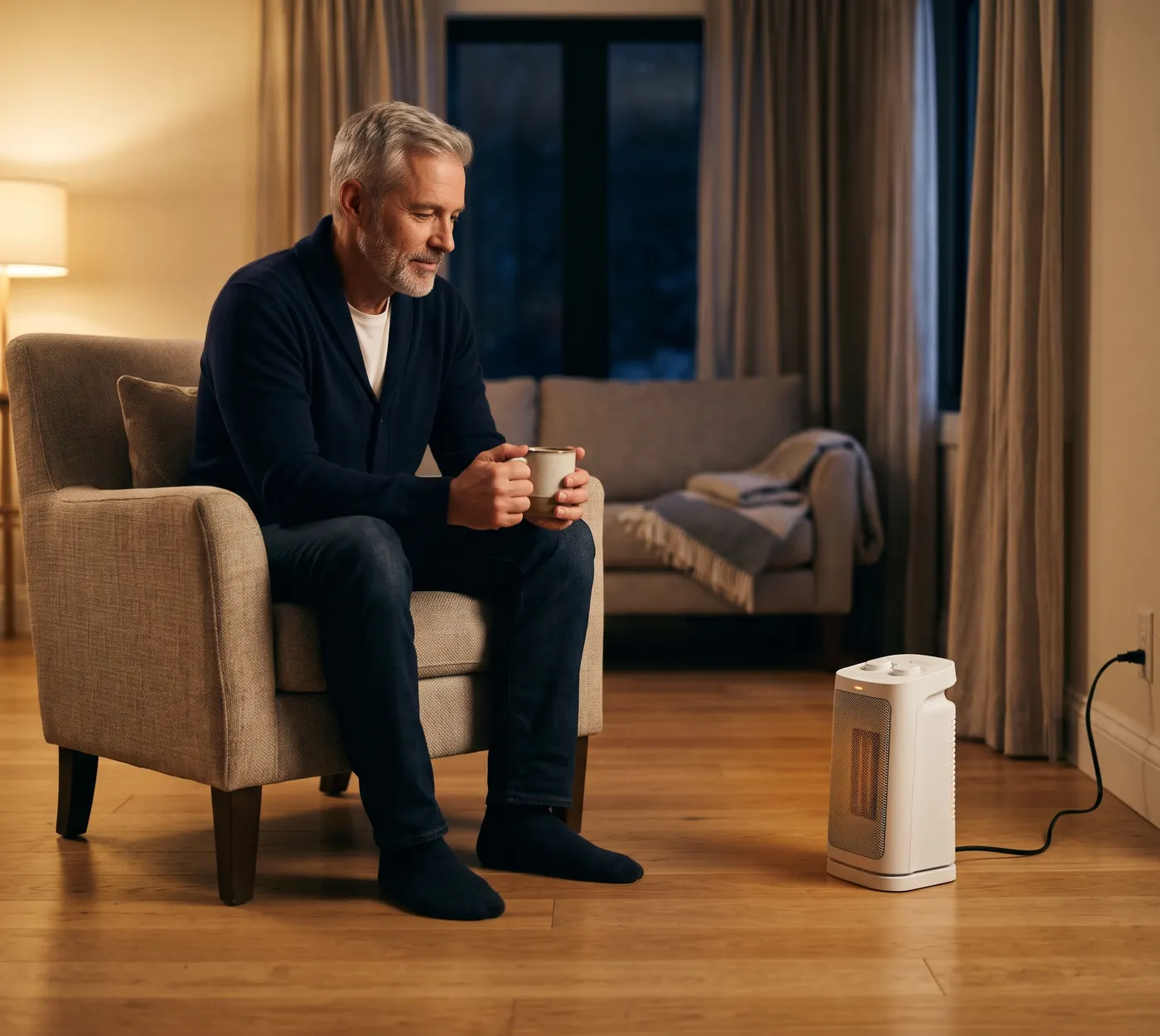
A man sits in an armchair with a mug, with a small electric space heater a few feet away on the floor. Realistic AI-generated image.
When the first cold snap hits, the space heater comes out of the closet. It can warm a room well, and the same few rules decide whether it stays a convenience or becomes a hazard.
Why do space heaters need rules?
Because they cause a large share of the damage. The NFPA says space heaters and heating stoves were behind nearly a third (30 percent) of home heating equipment fires from 2020 to 2024, but over seven out of ten of the deaths (73 percent) and injuries (70 percent) in those fires. Nearly half of heating equipment fires (46 percent) happen from December through February.
The CPSC puts a number on portable heaters, including electric space heaters: an average of 1,600 fires a year, with 70 deaths and 150 injuries a year from 2020 to 2022. None of this means you should skip the heater. It means the setup matters, and the setup is the part you control.
What should a safe space heater have?
The NFPA tip sheet for portable electric heaters starts with the unit itself. Buy a heater with the seal of a qualified testing laboratory. Choose one with a thermostat and overheat protection. Make sure it has an automatic shut-off that turns the heater off if it tips over. Ready.gov gives the same short list: a heater tested by a nationally recognized lab such as UL, with a thermostat control and an automatic switch-off if the heater falls over.
The NFPA names four common types: oil or water-filled radiator, fan-forced, ceramic and infrared. Its checklist applies to all of them. If you already own an older heater, you can hold it up to the same list and see which items it meets.
Where do I put it?
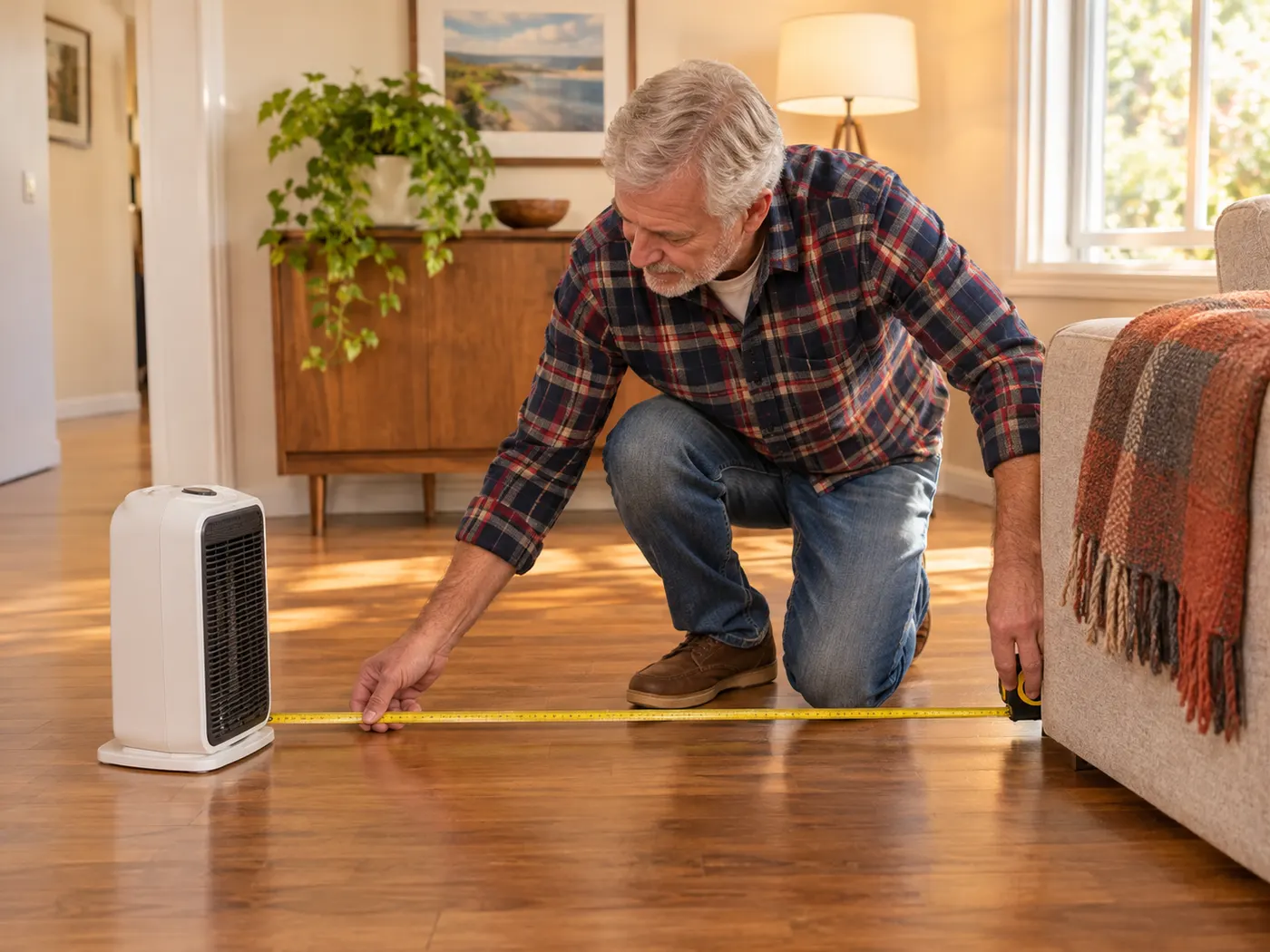
The distance rule appears in every source we read. The NFPA says to keep the heater at least 3 feet (1 meter) away from anything that can burn, including people. The CPSC names drapes, furniture, bedding and other combustible materials. Ready.gov says the same in one line.
- Use a solid, flat surface. The NFPA says to place the heater on one, so it does not wobble or slide.
- Keep it out of foot traffic. The NFPA says never to block an exit. A heater in a doorway is easy to trip over, and our fall-proofing guide covers the clear-floor habits that go with it.
- Make a kid-free zone. The NFPA suggests a 3-foot (1 meter) kid-free zone around space heaters and open fires. The same radius is a good rule for pets and for the blanket on the back of the couch.
| Rule | What the sources say |
|---|---|
| Distance | At least 3 feet (1 meter) from anything that can burn |
| Plug | Straight into a wall outlet, no extension cord or power strip |
| Surface | Solid, flat surface, out of foot traffic |
| Features | Testing-lab seal, thermostat, tip-over shut-off |
| Sleep or leave | Turn it off, and unplug it |
How do I plug it in?
Wall outlet only
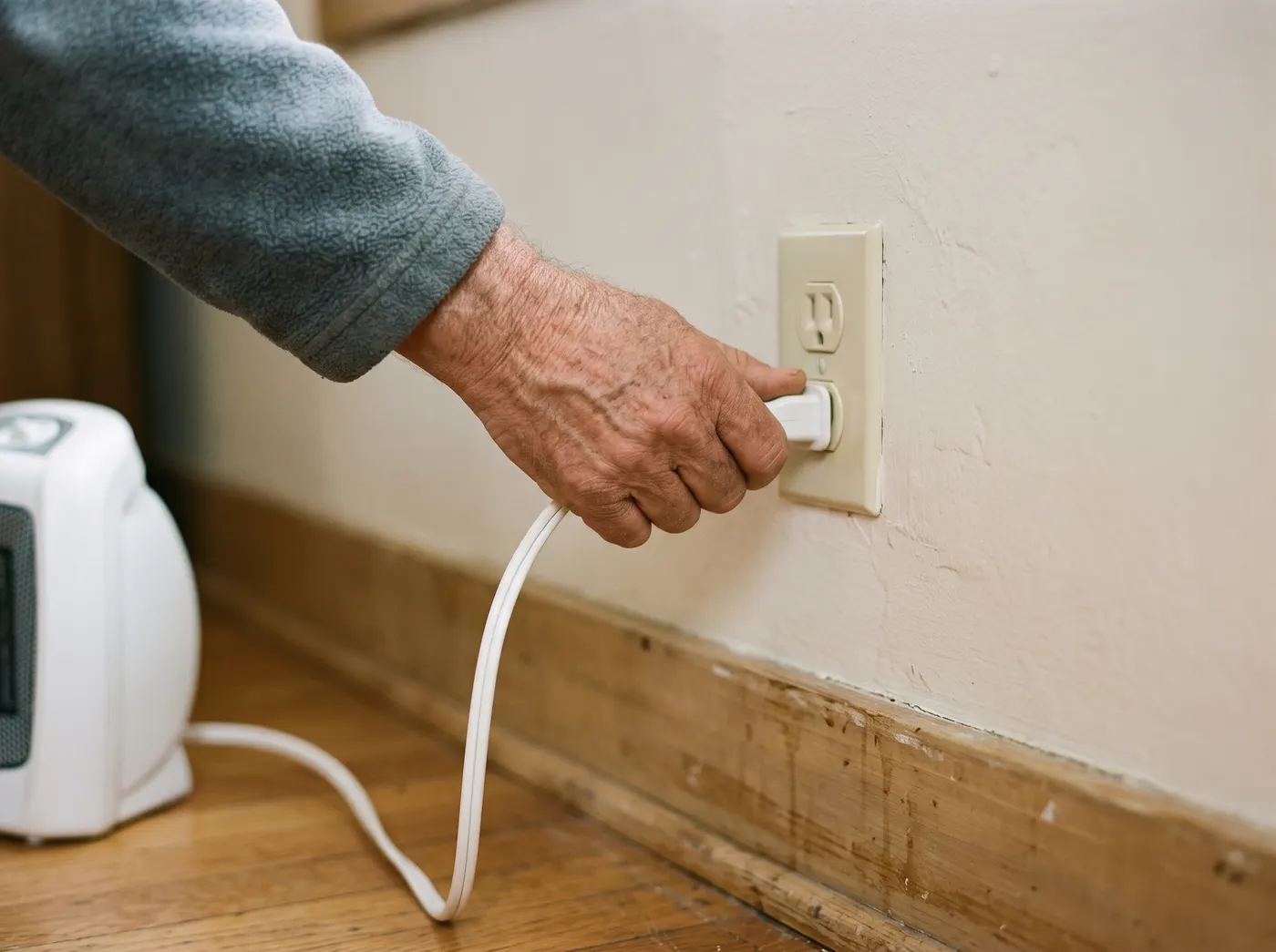
That rule decides where the heater can sit. If the nearest wall outlet is far from where you want the warmth, the answer is to move the heater to the outlet, not to stretch a cord across the room.
When do I turn it off?
Whenever you are not in the room, and whenever you sleep. The NFPA says space heaters should be turned off and unplugged when you leave the room or go to bed. The CPSC says to turn heaters off when sleeping. The NFPA also says to turn portable heaters off before bed in its heating safety materials.
In our opinion, it helps to tie the heater to a habit you already have: the same minute you lock the door at night, you pull the heater plug. If the bedroom is too cold at night, our winterize your home checklist covers the quieter fixes, such as sealing drafts.
What about heaters that burn fuel?
They add a second risk, carbon monoxide (CO). The NFPA heating tip sheet says to use the right fuel, the one specified by the manufacturer, in fuel-burning space heaters. It says all fuel-burning equipment should be vented to the outside to avoid CO poisoning, and that you should install and maintain CO alarms. The CPSC says never to refuel a fuel-burning portable heater while it is in use: turn it off and let it cool first.
Our guide to smoke and CO alarms covers where the alarms go and when to replace them. The NFPA adds two more rules for the whole house: never use your oven to heat your home, and test smoke alarms at least once a month.
What is a simple setup for tonight?
- Check the label. Look for a testing-lab seal, a thermostat and a tip-over shut-off.
- Pick the spot. Flat, solid floor, 3 feet clear on every side, nowhere near a doorway.
- Plug it into the wall. No extension cord, no power strip.
- Turn it off and unplug it when you leave the room and before you sleep.
- Test the smoke alarm in the hallway while you are at it.
More cold-weather habits are in the Home and DIY guide, and our snow shoveling guide covers the outdoor chores that come with a storm.
Frequently asked questions
How far should a space heater be from furniture and curtains?
The NFPA, the CPSC and Ready.gov all say at least 3 feet (1 meter) from anything that can burn, such as drapes, furniture and bedding. The NFPA adds people to the list, and suggests a 3-foot kid-free zone around space heaters.
Can I plug a space heater into an extension cord or power strip?
No. The CPSC says to plug electric space heaters directly into a wall outlet, never into an extension cord or power strip. The NFPA gives the same rule: plug the heater directly into the wall outlet and never use an extension cord.
Is it safe to leave a space heater on overnight?
The NFPA says space heaters should be turned off and unplugged when you leave the room or go to bed, and the CPSC says to turn heaters off when sleeping. If the room needs warmth at night, the heat has to come from somewhere other than a portable heater that is running while you sleep.
What features should a safe space heater have?
The NFPA and Ready.gov list the same basics: the seal of a qualified testing laboratory, a thermostat, and an automatic shut-off that turns the heater off if it tips over. The NFPA also lists overheat protection.
Can I use my oven to heat the house?
The NFPA says never to use your oven to heat your home.
Do fuel-burning space heaters need anything extra?
Yes. The NFPA says to use only the fuel the manufacturer specifies and to vent fuel-burning equipment to the outside, and to keep working CO alarms in the home. The CPSC says never to refuel a fuel-burning portable heater while it is in use: turn it off and let it cool first.
When are home heating fires most common?
The NFPA says nearly half of heating equipment fires (46 percent) happen from December through February, based on 2020-2024 annual averages.
Sources we checked for this article
- National Fire Protection Association: Safety with heating equipment (statistics for 2020-2024 and downloadable tip sheets, read November 15, 2026)
- National Fire Protection Association: Portable Electric Space Heater Safety (tip sheet, 2018, read November 15, 2026)
- National Fire Protection Association: Heating Safety (tip sheet, 2017, read November 15, 2026)
- U.S. Consumer Product Safety Commission: Keep Warm and Safe This Winter (news release of January 23, 2026, read November 15, 2026)
- Ready.gov: Home fires (Portable Space Heaters section, read November 15, 2026)