
Money & Medicare · Scams
Black Friday and Holiday Scams: How Men Over 50 Can Shop Safely
By OakMan Guide Editorial Team Updated 7 min read
The short answer
To shop safely on Black Friday and through the holidays, buy only from stores you can verify and pay with a credit card. Search the store name plus "complaint" or "scam," type web addresses yourself instead of clicking ads or texts, and never pay with gift cards, wire transfers, payment apps or crypto. If a charge looks wrong, tell your card company right away.
We're not financial advisers or lawyers, and this is not legal or financial advice. If you have a problem with a charge, contact your card company or bank, and use the reporting sites listed below.

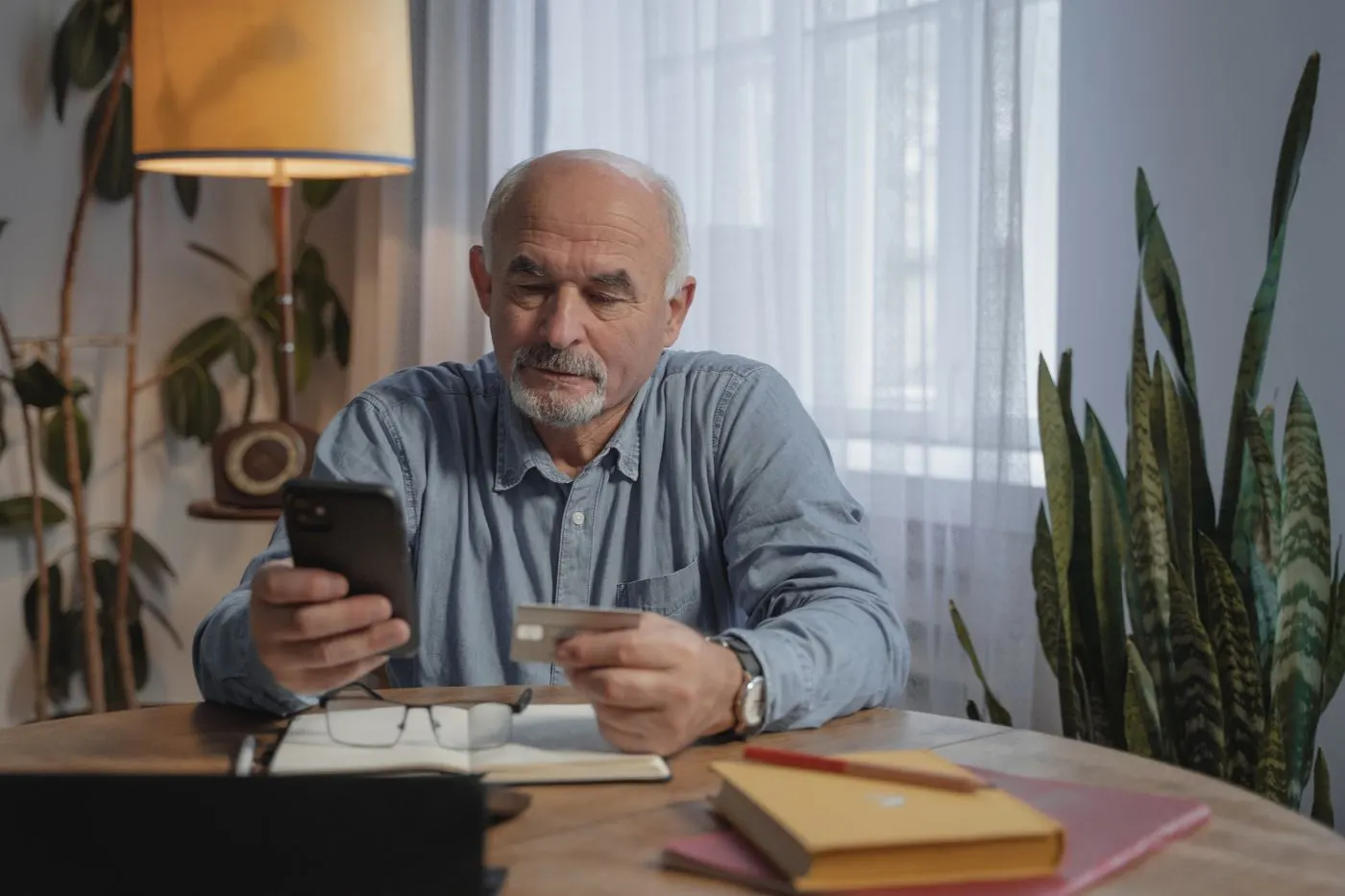
Check the store before the card comes out, even when the price looks great. Photo: Andrea Piacquadio on Pexels.
Black Friday is November 27 this year, and scammers prepare for it as carefully as the stores do. A handful of checks protects you from most of what they try.
What do Black Friday and holiday shopping scams look like?
Most of them begin with something that looks like a deal. Here are the signs the FTC and the FBI describe, with what to do about each:
| Sign | What the official sources say | What to do |
|---|---|---|
| A price far below every other store | The FTC says expensive brand-name items at bargain prices could be counterfeit or stolen. The FBI lists unrealistic discounts on untrusted sites as a warning. | Compare the price at stores you know, then search the seller name plus "complaint" or "scam". |
| A paid search ad or social post for a hot item | The FTC says scammers pay for search ads that can appear at the top of the results, next to real ones. The FBI also lists ads for hot-ticket items and social media giveaways. | Scroll past the ads or type the store address yourself. |
| A text about a package you did not expect | The FTC lists a fake package delivery notice as a common spam text, and says legitimate companies will not ask for account information by text. | Do not click. Check with the carrier or store through a number or site you know. |
| A demand to pay by gift card, wire, app or crypto | The FTC says never pay a seller who insists on a gift card, wire transfer, payment app or cryptocurrency. | Walk away. Pay by credit card or not at all. |
| Pressure to decide right now | The FTC says scammers pressure you to act immediately, and that honest businesses give you time to decide. | Close the page. A real sale will still be there in an hour. |
| A seller with a free email address or a different name on the payment | The FBI lists both, along with subscriptions hidden in the fine print, in its holiday shopping alert. | Read the fine print and check who is named on the charge. |
Nothing on this list has to be settled right now. Closing the tab is free, and a real sale will still be there later.
How common are holiday shopping scams?
The FBI's holiday shopping alert of November 15, 2023 is the most recent one on this topic we found on IC3. It says that during the 2022 holiday shopping season the FBI received reports from almost 12,000 victims of non-payment or non-delivery scams, with losses over $73 million. In a non-delivery scam, you pay for something you found online and it never arrives. We did not find a newer holiday shopping alert from the FBI, so we are not quoting later totals.
How do I check an online store before I buy?
The FTC’s online shopping advice comes down to five checks you can do in a few minutes:
- Search the name. Look up the store or product name plus "complaint" or "scam" and read what comes back.
- Read reviews, not just stars. Some reviews are fake, positive or negative. Look at the reviewer's history and whether they were given an incentive.
- Add up the real cost. Note the model number and the total with shipping, handling, taxes and fees. "Refurbished," "vintage" or "close-out" can mean less than perfect.
- Read the return policy. Check who pays return shipping, how many days you have and whether there is a restocking fee, because sale items can follow different rules.
- Do not trust the padlock alone. The FTC says an https address does not mean a site is legitimate. The FBI also lists https and the padlock as a baseline check, so treat them as the minimum, not proof.
The FTC also says a seller must ship as promised, and if no time is promised, within 30 days of getting your order and payment. Keep a record of the store name, website, order date, amount, return policy and every message, along with your statements.
Can I trust the first result when I search for a deal?
Not automatically. In an alert dated November 19, 2026, the FTC explains that scammers use paid search ads that can appear at the top of the results, next to legitimate ones, and clicking can lead to paying a scammer or sharing bank account details. Its advice is to slow down before you click the top result, scroll past it, because the results below the ads are ranked by relevance and not by who paid the most, and check the seller. If you already know the store, type its web address into your browser yourself.
Should I pay with a credit card or a debit card?
The FTC says paying by credit card best protects you. The CFPB explains why, and the numbers differ from debit:
| What to know | Credit card | Debit card |
|---|---|---|
| Unauthorized use before you report | If someone uses your credit card before you report it missing, the most you owe is $50. If only the account number was stolen and you still have the card, you generally have no liability. | If you report within two business days, you cannot be held responsible for more than $50 or the amount taken, whichever is less. After two business days, up to $500. |
| Time limit to speak up | Call the card company right away and send a written billing error notice within 60 calendar days after the charge appeared on your statement. | Notify your bank within 60 days after it sends the statement that shows the withdrawal. |
| What happens next | The company has 30 days to confirm it got your notice, unless it solves the problem first. | The bank has ten business days to investigate and, if it takes longer, generally must give you a temporary credit. |
The FBI's tip fits with this: pay for online purchases with a dedicated credit card and check your statements. Using one card only for online shopping makes a strange charge easier to spot. Your own card agreement may add terms, so it is worth reading yours.
What about fake package texts and gift cards?
The FTC lists a fake package delivery notice among the spam texts scammers send. If a text asks for personal or financial information, do not click the link, because legitimate companies will not ask for account information by text. Contact the company through a number or website you know is real, forward the message to 7726 (SPAM) and report it at ReportFraud.ftc.gov. During the holidays you really do have packages coming, so track your orders on the store's own site or the carrier's site instead of through a text.
On payment, the FTC puts it plainly: no real business or government agency will ever tell you to buy a gift card to pay them. The FTC adds that you should never pay someone who insists on cryptocurrency, a wire transfer service, a payment app or a gift card. A seller that only takes those is a reason to leave.

What if I already paid or shared my card number?
Move fast, but stay calm. The steps the official sources give, in order:
- Call your card company or bank right away. The FBI says to contact your financial institution immediately to stop or reverse the transaction. The CFPB says to call the card company right away about a credit card charge.
- Put it in writing for a credit card. Send the billing error notice within 60 calendar days after the charge appeared on your statement.
- If you paid with a gift card, tell the gift card company right away and ask for your money back. Keep a copy of the card and the receipt.
- Report it. Tell the FTC at ReportFraud.ftc.gov. For a non-delivery loss, the FBI asks for a report at ic3.gov.
- If the company does not fix it, you can submit a complaint to the CFPB online or by phone at (855) 411-2372. The CFPB says most companies respond within 15 days.
Do not be hard on yourself. These sites and texts are built to look real, and a quick report helps protect other people. Our Medicare scams guide covers the same habits for calls about your Medicare Number.
What can I do this week?
- Pick one card for online shopping, ideally a credit card, and check its statement every few days through the holidays.
- Bookmark the stores you trust and use the bookmark, not a search ad or a text.
- Search "store name complaint" before the first order from any new store.
- Track packages from the store's own site, and ignore delivery texts you did not expect.
- Agree on one rule at home: no gift cards, wires or crypto for a purchase, ever.
Shopping is only part of a busy week. Our Thanksgiving guide and turkey safety rules cover the table, and our ladder safety guide helps with the holiday lights. The rest of your money decisions are in our Money and Medicare guide.
Frequently asked questions
Is it safe to shop online on Black Friday?
Yes, if you buy from stores you can verify and pay by credit card. Scammers copy real sales, so the habits that protect you are checking the seller, typing addresses yourself and refusing gift cards, wire transfers, payment apps or crypto.
Is a credit card or a debit card safer for online shopping?
The FTC says paying by credit card best protects you. The CFPB says that if someone uses your credit card before you report it, you will owe at most $50, while a debit card ties the loss to how fast you report it: $50 within two business days, up to $500 after that.
How can I tell if an online store is fake?
Search the store name plus "complaint" or "scam", read reviews instead of star ratings alone, and be wary of brand-name items at bargain prices. The FTC says a padlock or https address does not mean a site is legitimate.
Can I trust the first result when I search for a deal?
Not automatically. The FTC warned on November 19, 2026 that scammers pay for search ads that can sit at the top of the results. Scroll past them, or type the store address into your browser yourself.
What should I do with a text about a package I did not order?
Do not click the link. The FTC says fake delivery notices are a common scam text. Contact the carrier or store through a website or number you already know, and forward the text to 7726 (SPAM).
Why is paying with a gift card a red flag?
The FTC says no real business or government agency will ever tell you to pay with a gift card. Once you give the numbers on the back, the money is hard to get back.
How long do I have to dispute a charge?
For a credit card billing error, the CFPB says to send a written notice within 60 calendar days after the charge appeared on your statement, and to call the card company right away. For a debit card, notify your bank within 60 days after it sends the statement.
Where do I report a shopping scam?
Tell your card company or bank first, then report at ReportFraud.ftc.gov. If you lost money to a non-delivery scam, the FBI also asks for a report at ic3.gov.
Sources we checked for this article
- FTC: Online Shopping (May 2023, read November 22, 2026)
- FTC: How to avoid holiday shopping scams in your search results (November 19, 2026, read November 22, 2026)
- FTC: How To Avoid a Scam (July 2023, read November 22, 2026)
- FTC: Avoiding and Reporting Gift Card Scams (July 2023, read November 22, 2026)
- FTC: How to Recognize and Report Spam Text Messages (July 2022, read November 22, 2026)
- CFPB: Am I responsible for unauthorized charges if my credit cards are lost or stolen? (reviewed April 15, 2024, read November 22, 2026)
- CFPB: How do I dispute a charge on my credit card bill? (reviewed April 15, 2024, read November 22, 2026)
- CFPB: How do I get my money back after I discover an unauthorized transaction? (reviewed August 28, 2026, read November 22, 2026)
- CFPB: Submit a complaint (page modified October 5, 2026, read November 22, 2026)
- FBI IC3: 2023 Holiday Shopping Scams (I-111523-PSA) (November 15, 2023, read November 22, 2026)