
Fitness & Food · Movement
Joint and Muscle Aches After 50: What Men Can Do to Keep Moving
By OakMan Guide Editorial Team Updated 8 min read
The short answer
Most joint and muscle aches after 50 trace back to overuse, strains or early joint changes, and the official advice is to keep moving gently instead of stopping. The National Institute on Aging recommends a mix of walking, strength work, balance and stretching, and says to listen to your body. See a doctor if muscle pain lasts more than three days or comes with swelling or weakness.
We're not doctors, and this is not medical advice. The facts below come from the NIA, NIAMS and MedlinePlus pages listed at the end. Whether a given exercise or home remedy is right for your joints and your medicines is for your doctor to say.
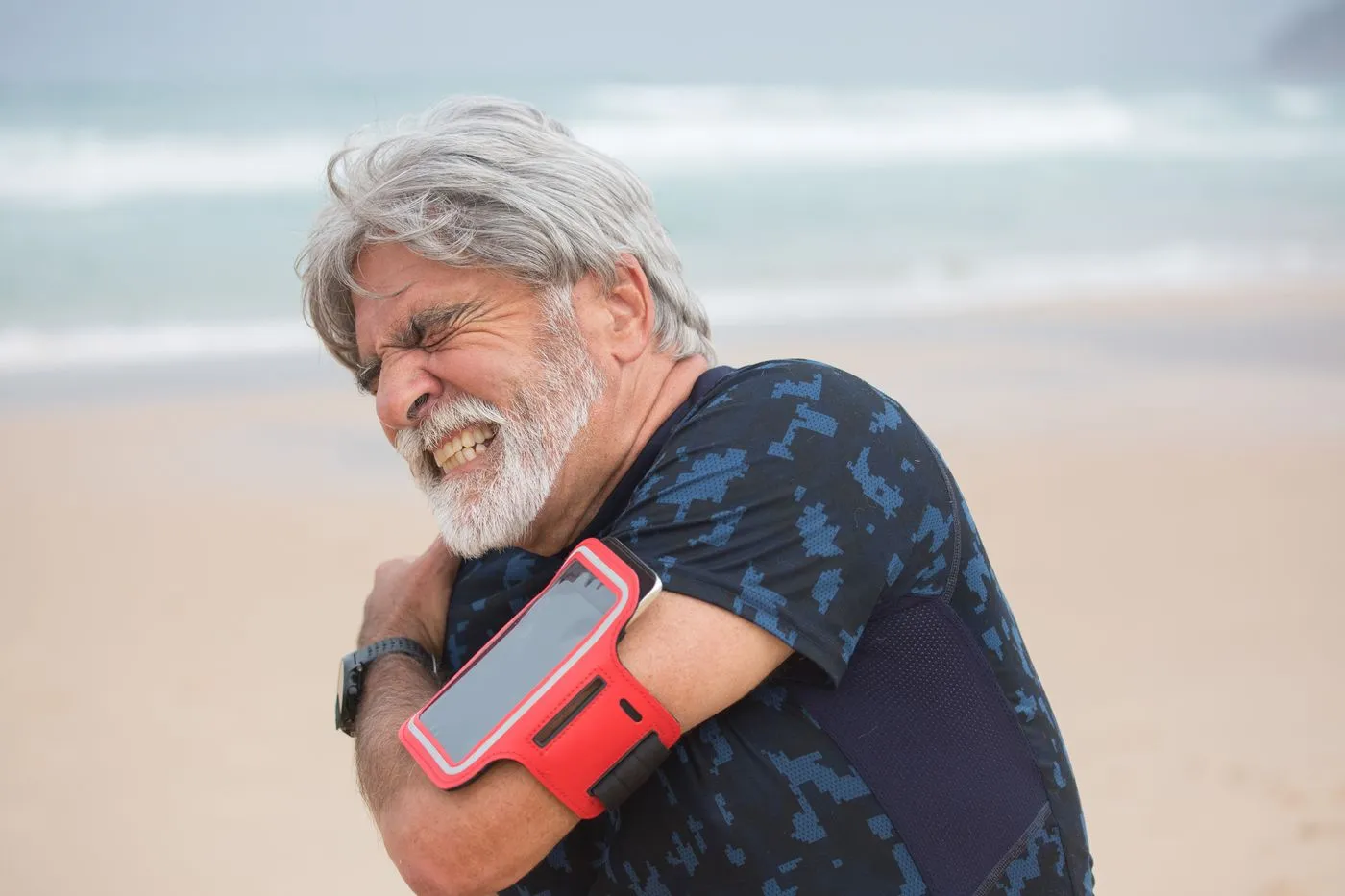
An older man grimaces and holds his shoulder on a beach. Photo: Kampus Production, Pexels.
The knee that complains on the stairs, the shoulder that catches in the morning, the legs that stay sore two days after yard work: after 50 they all start to feel like a message. Here is how to read it and what the official sources say to do next.
Why do joints and muscles ache more after 50?
Usually it is more than one thing. MedlinePlus says the most common causes of muscle aches are injury, overuse (using a muscle too much, too soon before warming up or too often) and tension or stress. For joints, the NIAMS says osteoarthritis is more common as people age, and that it is more likely with extra weight, a past injury or surgery on the joint, repetitive movements and a family history of it. The NIAMS also says it does not come from simple wear and tear.
| Possible cause | What the sources say | A clue |
|---|---|---|
| Overuse or a strain | MedlinePlus: using a muscle too much, too soon before warming up, or too often | It follows a big weekend job |
| Osteoarthritis | The NIAMS: more common with age; hands, knees, hips, neck and lower back are often affected | The same joint, again and again |
| A medicine | MedlinePlus lists statins and ACE inhibitors among possible causes of muscle aches | It began after a new pill or dose |
| Tension or stress | MedlinePlus lists tension and stress among the most common causes | Neck and shoulders, worse on bad weeks |
| An infection or another illness | MedlinePlus names the flu, Lyme disease, lupus and others among less common causes | Fever, rash or feeling unwell too |
That mix is why a single fix, such as a new pair of shoes, often helps only part of the problem.
How can I tell sore muscles from a joint problem?
The NIAMS describes the usual joint picture: pain when you use the joint that may ease with rest, stiffness in the morning or after sitting that usually lasts less than 30 minutes, swelling after heavy use, limited movement, and a feeling that the joint is loose or unstable. A knee may make a grinding or scraping noise, and weak muscles around it can make it buckle.
Muscle soreness, by comparison, tends to follow something you did. According to MedlinePlus, overuse aches come from asking a muscle for too much, too soon, and rest, gentle stretching and massage are the usual first steps. When the picture is muddy, that is a fair reason to ask your doctor, and the checkups guide lists what to bring to the visit.
Should I stop exercising when it aches?
For most aches, the official advice is to adjust, not quit. The NIAMS says exercise can reduce joint pain and stiffness and increase flexibility, muscle strength and endurance, with one condition: start slowly, give yourself time to adjust, and talk to your doctor or physical therapist about a safe, well-rounded program.
The National Institute on Aging (NIA) gives the other half of the rule. Its safety tips start with listening to your body: too much strength work can leave you exhausted, with sore joints and muscle pain or injury, and stretching should stop short of hurting. Warm up first with easy walking or lighter weights, and avoid locking your arm and leg joints in a straight position. In our opinion, a good test is the next morning: a little stiffness that fades is a sign you picked the right load, and pain that is worse than the day before is a sign to pull back.
What kinds of movement help most?
The NIA says to aim for all three types: aerobic, muscle-strengthening and balance, plus flexibility. One type helps you do the others, and variety lowers boredom and the risk of injury.
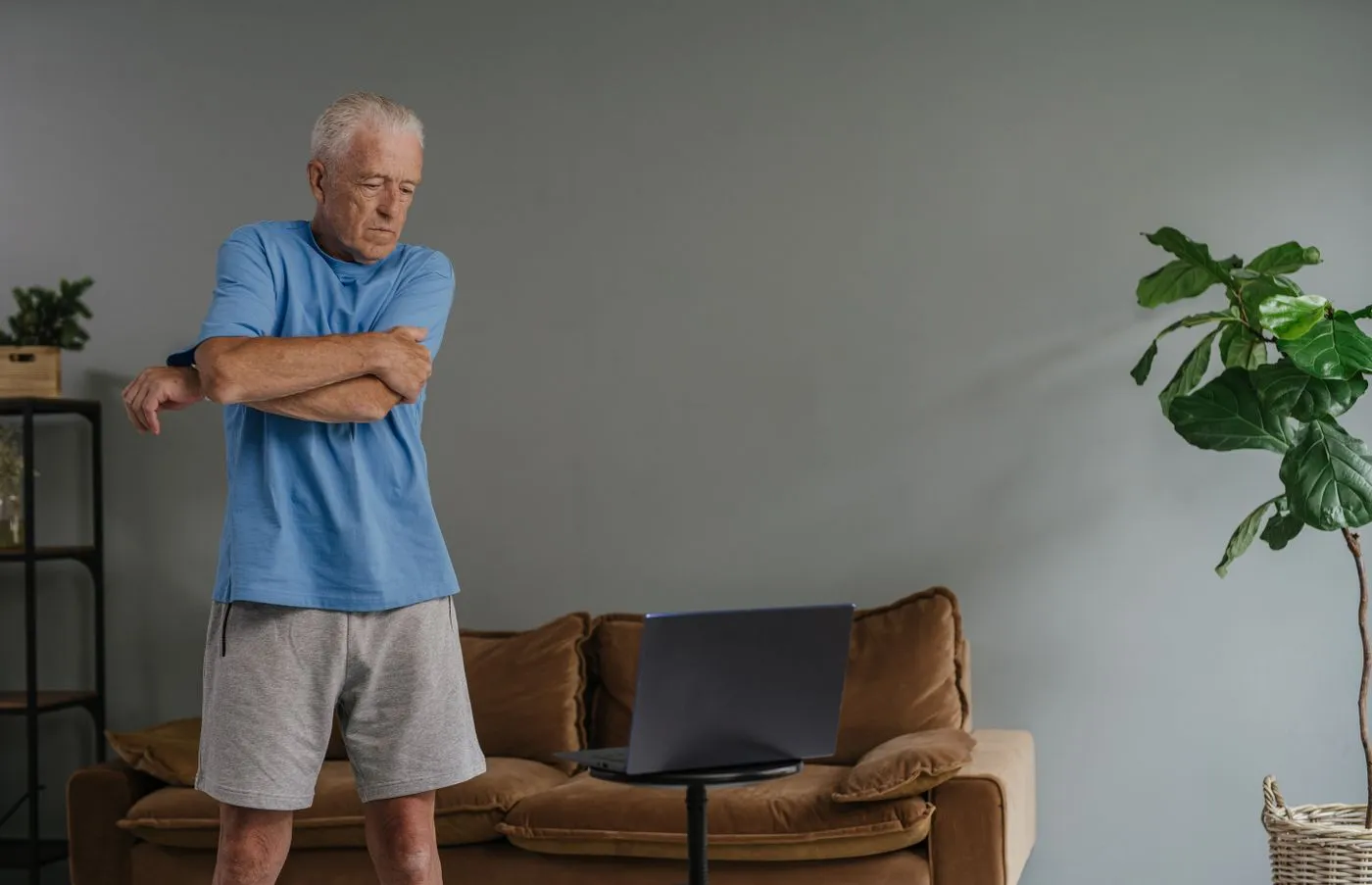
- Aerobic: build up gradually to at least 150 minutes of moderate activity a week, such as brisk walking. Swimming, bicycling, dancing and housework count too, and the NIA says even light movement can be beneficial.
- Strength: at least two days a week, with a rest day for each muscle group between sessions. Beginners can begin with no weights at all, or with light bands.
- Balance: about three sessions a week, for example tai chi, yoga or standing on one foot with a sturdy chair or wall nearby.
- Flexibility: stretch when your muscles are warm, after endurance or strength work, and breathe as you go. Our ten-minute morning mobility routine puts that into practice.
For sore joints in particular, the NIAMS points to low-impact activities that give a moderate level of activity without stress on the joints, namely walking, cycling, swimming, tai chi, water aerobics and low-impact aerobics classes, along with range-of-motion stretching and strengthening for the muscles that support the affected joints. Our starter strength plan shows one way to begin, and the Fitness & Food guide puts it in a weekly routine.
Does body weight change how the joints feel?
It does, according to the NIAMS. Managing your weight can reduce stress on the joints, and if you are overweight, losing weight can reduce pain, prevent more injury and increase mobility. The NIAMS says this can be especially helpful for weight-bearing joints such as the knees and hips. That is good news for anyone willing to start with the daily walk, because each small step in that direction takes a little load off the joints.
What can I do at home when something is sore?
Both MedlinePlus and the NIAMS give short, practical lists.
- Ice, then heat: MedlinePlus says to use ice in the first 24 to 72 hours after an injury, and heat after that. The NIAMS says heat increases blood flow, tolerance for pain and flexibility, and cold numbs the nerves and may relieve inflammation.
- Rest the sore spot, not the whole body: MedlinePlus says to rest the affected part, and lists walking, cycling and swimming as regular exercise that helps muscle aches.
- Stretch if you sit all day: MedlinePlus says to stretch at least every hour if you sit in one position most of the day, and to drink plenty of fluids.
- Sleep and stress: MedlinePlus lists getting plenty of sleep and reducing stress. Our sleep problems guide covers the sleep side.
- Avoid repeated motions: the NIAMS says to try to avoid repetitive motions such as frequent bending, and notes that supports such as a cane or shoe inserts can help lower pain and pressure.
Strain often arrives with a chore, so two of our pieces are worth a read before the season starts: snow shoveling after 50 and making your home safer from falls. The muscles also need fuel, and how much protein men need is covered separately.
Could a medicine be behind the muscle aches?
MedlinePlus lists certain medicines, including statins and ACE inhibitors, among the possible causes of muscle aches. Its page on statins says they usually do not cause side effects, that muscle damage is an uncommon one, and that if muscle pain starts, your provider may order a blood test. It adds that the pain may go away if you switch to a different statin, and that you should tell your provider about any symptoms and should not stop a statin on your own.
The practical step is a short note for your next visit: what hurts, when it began and which medicines you started or changed around then.
When is it time to see a doctor?
MedlinePlus says to contact your provider if:
- your muscle pain lasts more than 3 days;
- you have severe, unexplained pain;
- there is swelling or redness around the tender muscle, or any other sign of infection;
- you have poor circulation in the area, for example in your legs;
- you have a tick bite or a rash;
- the pain is linked to starting or changing the dose of a medicine, such as a statin.
It says to call 911 or the local emergency number if you have muscle weakness or cannot move part of your body, are short of breath or have trouble swallowing, have sudden weight gain, water retention or are urinating less than usual, or are vomiting or have a very stiff neck or high fever. For joints, the NIAMS says treatment is a team effort, and your primary care doctor is a good place to begin, with a physical therapist often helping to improve joint function.
What is the bottom line?
Aches after 50 are common, and most of them respond to the same things: a slow start, a mix of walking, strength, balance and stretching, a lighter load on the joints and a little patience. Keep a note of what hurts and when, and bring it to your doctor if it lingers. Staying active is one of the best moves you can make for the years ahead.
Frequently asked questions
Is it normal for joints to ache more after 50?
It is common. The NIAMS says osteoarthritis, a joint condition, is more common as people age, and it lists aging, extra weight, an old joint injury or surgery, repetitive use and family history as things that make it more likely. Aches that keep coming back are worth mentioning to your doctor.
Should I stop exercising when my joints hurt?
Not necessarily. The NIAMS says exercise can reduce joint pain and stiffness and increase flexibility, muscle strength and endurance, and advises starting slowly and checking with your doctor or physical therapist on a safe program. The NIA adds that you should listen to your body and never stretch so far that it hurts.
What kind of exercise is easiest on sore joints?
The NIAMS lists low-impact options that do not put stress on the joints: walking, cycling, swimming, tai chi, water aerobics and low-impact aerobics classes. It also names exercises in the water as a way to lower the stress on the joints.
Should I use heat or ice on a sore muscle?
MedlinePlus says to use ice for the first 24 to 72 hours after an injury, and that heat often feels more soothing after that. For joint pain, the NIAMS says both help: heat increases blood flow, tolerance for pain and flexibility, while cold numbs the nerves around the joint and may relieve inflammation.
Can my medicine cause muscle aches?
It can. MedlinePlus lists some medicines, including statins and ACE inhibitors, among the possible causes of muscle aches. If the pain began after starting or changing a medicine, contact your provider, and do not stop a statin on your own.
Does being overweight make joint pain worse?
The NIAMS lists being overweight or obese as something that raises the chance of osteoarthritis. It says managing your weight reduces stress on the joints and that losing weight can reduce pain, prevent more injury and increase mobility, especially in weight-bearing joints such as the knees and hips.
When should I see a doctor about muscle or joint pain?
MedlinePlus says to contact your provider if muscle pain lasts more than 3 days, is severe and unexplained, comes with swelling or redness, follows a tick bite or a rash, or is linked to starting or changing a medicine. Muscle weakness or being unable to move part of your body is a reason to call 911.
Sources we checked for this article
- National Institute on Aging (NIH): Three Types of Exercise Can Improve Your Health and Physical Ability (content reviewed January 14, 2025, read November 10, 2026)
- NIAMS (NIH): Osteoarthritis, Symptoms, Causes and Risk Factors (last reviewed September 2023)
- NIAMS (NIH): Osteoarthritis, Diagnosis, Treatment and Steps to Take (last reviewed September 2023)
- MedlinePlus (National Library of Medicine): Muscle aches (review date April 1, 2025)
- MedlinePlus (National Library of Medicine): Statins (last updated May 5, 2025)