
Home & DIY · Winter Home Care
Frozen Pipes: How to Prevent Them and What to Do If They Freeze
By OakMan Guide Editorial Team Updated 6 min read
The short answer
Keep the heat at the same setting day and night, open the cabinet doors under sinks on exterior walls and let a faucet on exposed pipes drip when it is very cold. Drain outdoor hoses and spigots before the freeze. If only a trickle comes out, keep the faucet open and warm the pipe slowly with a hair dryer, never a flame. Call a licensed plumber if you cannot thaw it.
We're not doctors, and this is not medical advice.
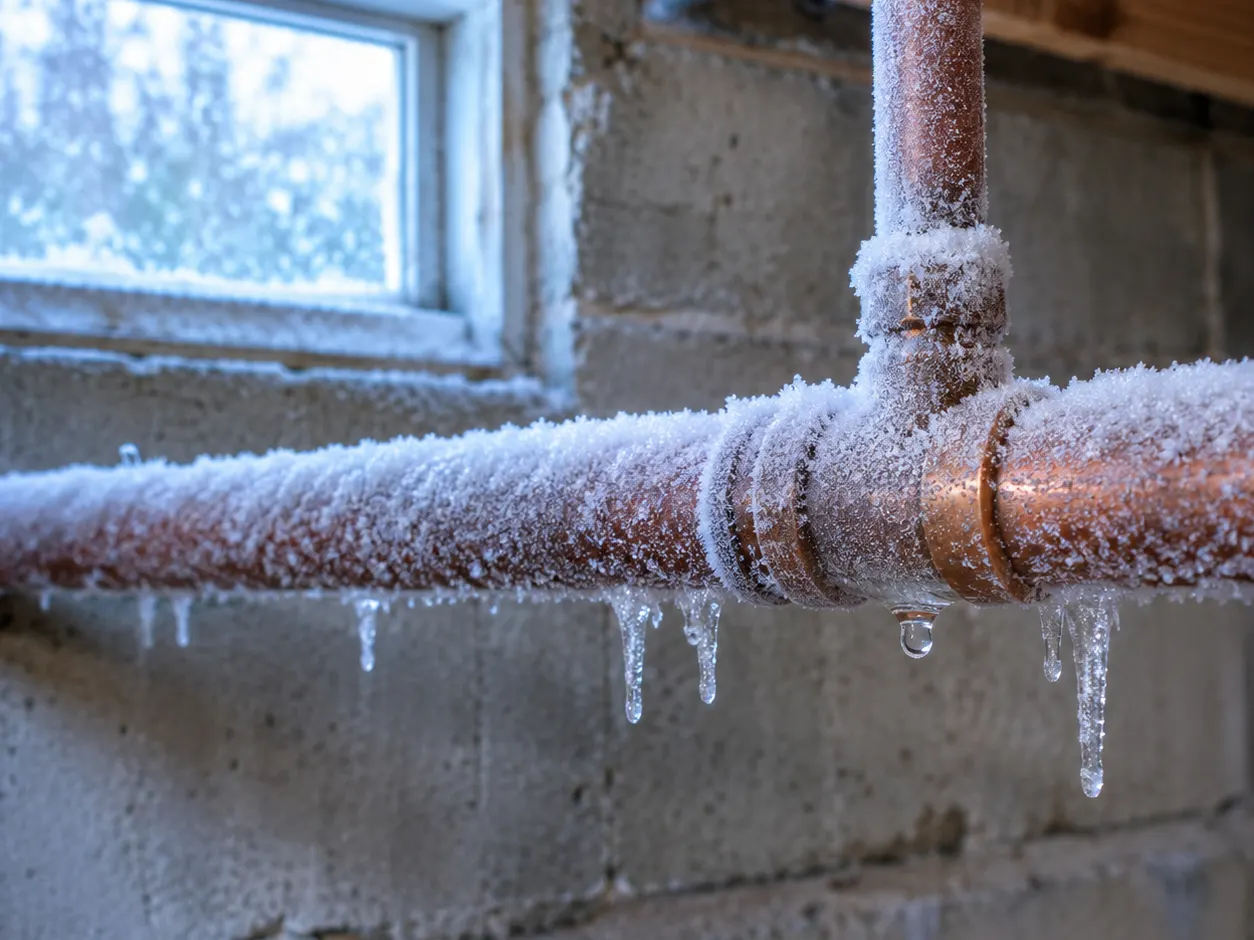
A copper water pipe coated in white frost, with icicles hanging from it, in a basement. Realistic AI-generated image.
Water freezes at 0 °C (32 °F), and ice needs more room than water does. That one fact is behind every tip on this page, and most of the tips take minutes to do.
Why do pipes freeze and burst?
The American Red Cross explains it in plain terms: water expands when it freezes, and that puts tremendous pressure on whatever contains it, including metal and plastic pipes. No matter how strong the pipe is, it says, expanding water can break it.
The EPA lists burst pipes among the main winter hazards at home, along with power outages and indoor air problems. A pipe that splits can also soak walls and floors, which is why the prevention steps below matter more than the repair steps.
Which pipes freeze first?
The Red Cross names three groups. Pipes exposed to severe cold, such as outdoor hose bibs, swimming pool supply lines and sprinkler lines. Water supply pipes in unheated areas inside the house: basements, crawl spaces, attics, garages and kitchen cabinets. And pipes that run along exterior walls with little or no insulation.
If you have a short walk-through to do this weekend, those are the places to look.
| Where | What the Red Cross and EPA suggest |
|---|---|
| Outdoor hose bibs | Remove, drain and store hoses; close the inside valve and open the outside bib |
| Garage | Keep the door closed if supply lines run through it; insulate the pipes |
| Under sinks | Insulate hot and cold pipes; open the cabinet doors on cold nights |
| Basement, crawl space, attic | Add insulation to keep these areas warmer |
| Exterior walls | Let a nearby faucet drip when it is very cold |
What should I do before the cold arrives?
The Red Cross says to protect pipes before the onset of cold weather, and the Ready.gov winter weather page says the same in one line: prepare your home with insulation, caulking and weather stripping, and learn how to keep pipes from freezing. The steps from the Red Cross and the EPA come down to this:
- Hoses and spigots. Remove, drain and store outdoor hoses. Close the inside valves that feed outdoor hose bibs, then open the outside bibs so leftover water can drain. The EPA says the same: shut off and drain outdoor spigots before freezing temperatures arrive.
- Pool and sprinkler lines. Drain them the way the manufacturer or installer directs. Do not add antifreeze unless they say to.
- Insulation. Insulate attics, basements and crawl spaces so those areas stay warmer. Check the garage and the cabinets under kitchen and bathroom sinks, and insulate both hot and cold pipes there.
- Pipe wrap. The Red Cross suggests pipe sleeves or UL-listed heat tape or heat cable on exposed pipes. It adds that even a quarter inch of newspaper gives some protection in places where hard freezes are not frequent or long.
- Exterior-wall lines. The EPA says to insulate water lines along exterior walls if you can. The Red Cross adds that moving exposed pipes to a more protected spot is worth considering.
- The shutoff valve. The EPA says to learn how to shut off the water valves in case a pipe bursts. Do it now, in daylight, not with water on the floor.
Our winterize your home checklist puts this step next to alarms, heating service and drafts, so you can see the whole job in order.
What do I do on the coldest nights?
The Red Cross has a short list for the days when the forecast is severe:
- Let a faucet drip. Pick one served by exposed pipes and let the cold water run at a trickle. The Red Cross says running water, even at a trickle, helps prevent freezing. The EPA says to leave indoor taps on exterior walls slightly open, and the IBHS says to let all faucets drip during extreme cold.
- Open the cabinet doors. Kitchen and bathroom doors, so warmer air circulates around the plumbing. Move cleaners and household chemicals out of reach of children first, and the EPA adds pets.
- Hold the thermostat steady. Keep it at the same temperature day and night. You may pay a higher heating bill, the Red Cross says, but you can prevent a much more costly repair.
- Close the garage door if water supply lines run through the garage.
- Going away? Leave the heat on, set no lower than about 13 °C (55 °F).
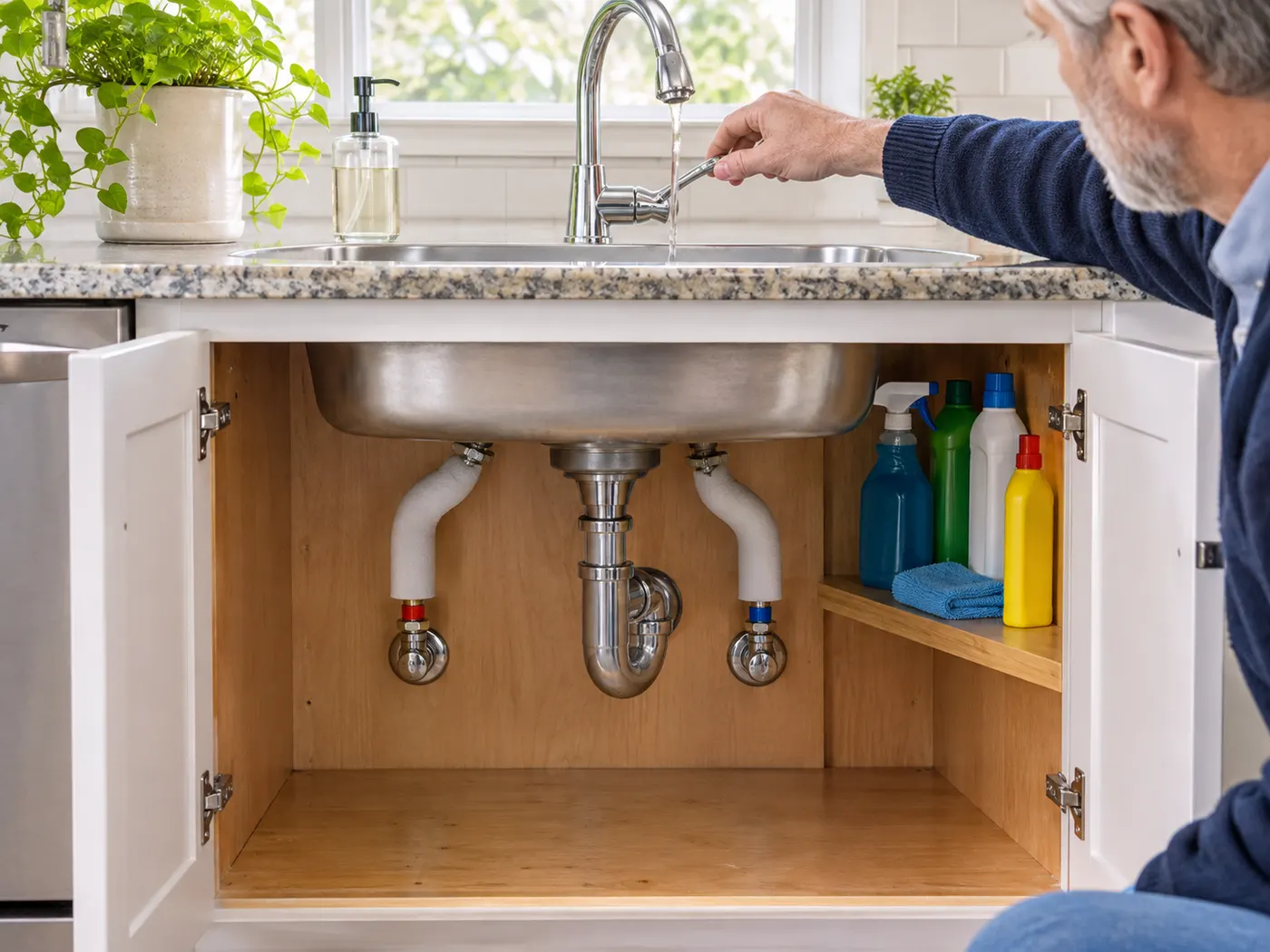
In our opinion, the drip and the open cabinet doors are the best return on effort in this whole guide: they take seconds and need no tools. If the power or the heat goes out, the EPA lists the same two steps for keeping pipes from bursting, so they are worth remembering for a storm too.
How do I know a pipe is frozen?
The first sign, according to the Red Cross, is a faucet that gives only a trickle. When that happens, treat it as a frozen pipe. It says the likely places are against exterior walls or where the water service enters the house through the foundation.
Then check every other faucet. The Red Cross says that if one pipe freezes, others may freeze too.
How do I thaw a frozen pipe safely?
- Keep the faucet open. As the frozen area melts, water starts to flow, and running water helps melt the rest of the ice.
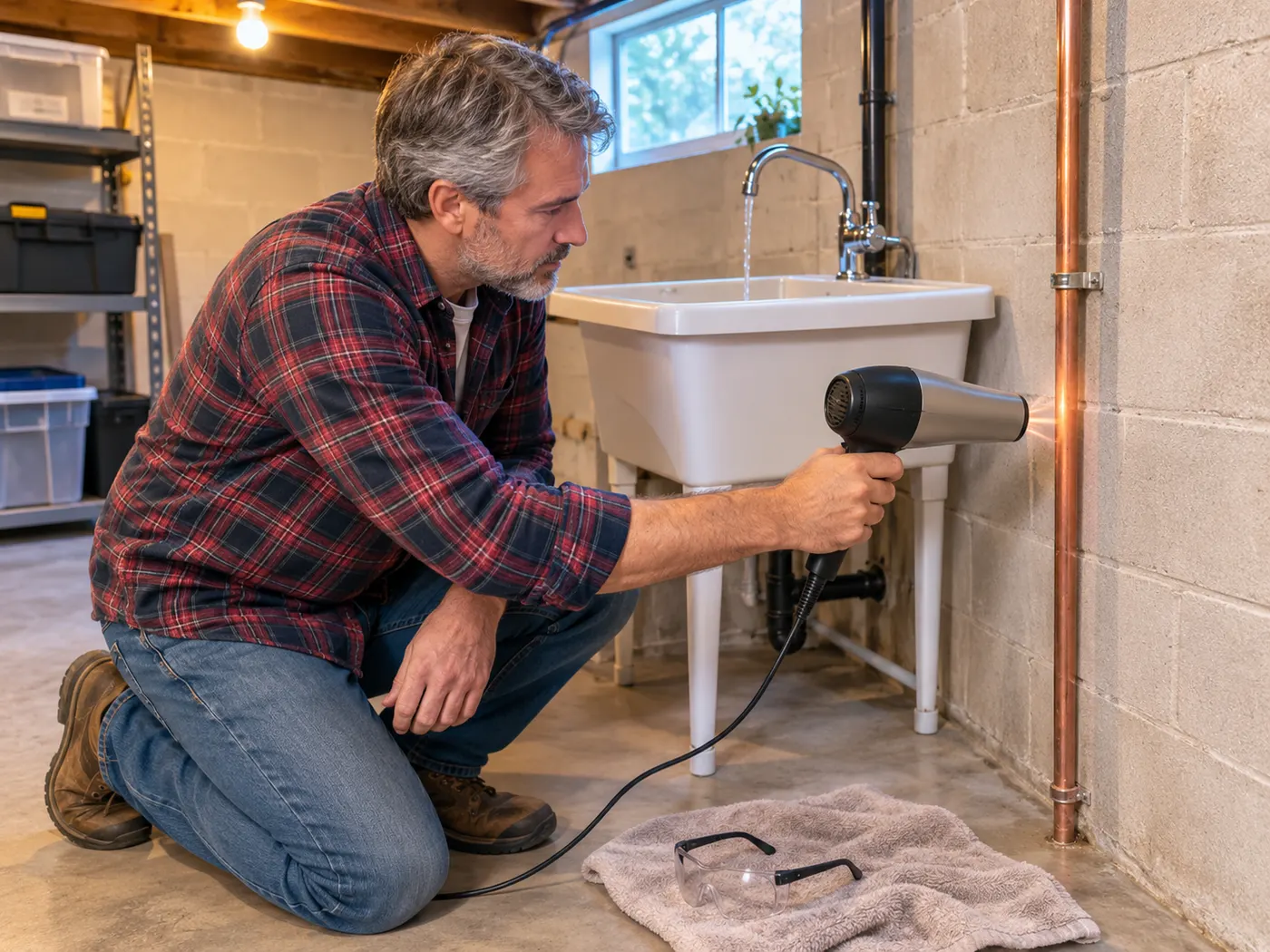
- Apply gentle heat. The Red Cross lists an electric heating pad wrapped around the pipe, an electric hair dryer, towels soaked in hot water, or a portable space heater kept away from anything that can burn. The EPA says to thaw slowly with warm air from a hair dryer.
- Keep going until full pressure returns.
- Check the other faucets in the house.
No open flame
The Red Cross says not to use a blowtorch, a kerosene or propane heater, a charcoal stove or any other open-flame device on a frozen pipe. The EPA says not to thaw pipes with a torch. If you do bring in a portable heater, our space heater safety guide covers the clearance and outlet rules.
What if a pipe bursts?
The EPA says to shut off the water valves if a pipe bursts, which is why finding them ahead of time matters. After that, deal with the water quickly. The EPA says repairing broken pipes is a top priority to prevent water damage and mold, and that wet walls and flooring should be fixed promptly and dried completely.
The EPA also warns not to use a generator or appliances that are wet or in places that could get wet, because that can cause shock or electrocution. Keep them away from standing water and elevate them if you need to.
When should I call a plumber?
The Red Cross says a licensed plumber is the right call in three cases: the frozen spot cannot be found, it cannot be reached, or the pipe will not thaw. A pipe inside a wall, an attic or a crawl space is a good example of the second case, so there is no need to climb or crawl to reach it. A pipe that has already burst is the same call, after the water is off. For the rest of the cold-weather house checks, our fall-proofing guide covers falls at home.
What is a simple plan for this weekend?
- Find the shutoff valve and make sure everyone in the house knows where it is.
- Drain and store the hoses, and shut off and drain the outdoor spigots.
- Check the garage and the sink cabinets for bare pipes and wrap them.
- Pick the faucet you will let drip on the coldest night, and clear the cabinet doors of cleaners.
- Test the smoke and CO alarms while you are at it, as our alarm guide suggests.
More cold-weather habits are in the Home and DIY guide, and our snow shoveling guide covers the outdoor chores that come with the same weather.
Frequently asked questions
Should I leave a faucet dripping when it is very cold?
Yes, on a faucet served by exposed pipes. The Red Cross says running water through a pipe, even at a trickle, helps prevent freezing. The EPA suggests leaving indoor taps on exterior walls slightly open so they drip continuously during extreme cold, and the IBHS says the same.
Which pipes freeze first?
The Red Cross lists three groups: pipes exposed to severe cold, such as outdoor hose bibs and pool or sprinkler lines; supply pipes in unheated areas such as basements, crawl spaces, attics, garages and kitchen cabinets; and pipes that run along exterior walls with little or no insulation.
How warm should I keep the house when I am away?
The Red Cross says to leave the heat on and set it no lower than about 13 °C (55 °F). It also says to keep the thermostat at the same temperature day and night during cold weather, even if that means a higher heating bill.
Is it safe to thaw a pipe with a hair dryer?
Yes. The Red Cross lists an electric hair dryer, an electric heating pad wrapped around the pipe, towels soaked in hot water and a portable space heater kept away from anything that can burn. The EPA says to thaw slowly with warm air from a hair dryer. Both say never to use a torch or any open flame.
Should I put antifreeze in my water lines?
No, not in the lines inside your home. The Red Cross says not to put antifreeze in pool or sprinkler supply lines unless the manufacturer or installer directs it, because it is harmful to the environment and dangerous to people, pets and wildlife. Drain those lines the way the manufacturer directs instead.
Why open the cabinet doors under the sink?
It lets warmer air from the room reach the pipes. The Red Cross and the EPA both say to move cleaners and household chemicals out of reach of children, and the EPA adds pets, before you leave the doors open.
What do I do if a pipe bursts?
Shut off the water valves, says the EPA, which also suggests learning where they are before the cold arrives. Then fix the leak promptly and dry everything completely, because wet walls and floors lead to mold.
Sources we checked for this article
- American Red Cross: Preventing and Thawing Frozen Pipes (read November 19, 2026)
- U.S. Environmental Protection Agency: Winter Weather and Indoor Air Quality (page updated November 10, 2026, read November 19, 2026)
- Ready.gov: Winter weather (read November 19, 2026)
- Insurance Institute for Business & Home Safety: Before a winter weather event (read November 19, 2026)