
Men's Health · Vitality
Boron for Men Over 50: What the Research Says and What a Label Shows
By OakMan Guide Editorial Team Updated 7 min read
The short answer
Boron is a trace mineral in nuts, raisins and avocado, and men eat about 1 mg a day. The best-known supplement result is a one-week study of 8 men taking 10 mg, which saw hormone changes. It is tiny and short, so it is a hint, not proof. The official upper limit for adults is 20 mg a day, so the milligrams on a label are the first number to check.
We're not doctors, and this is not medical advice.
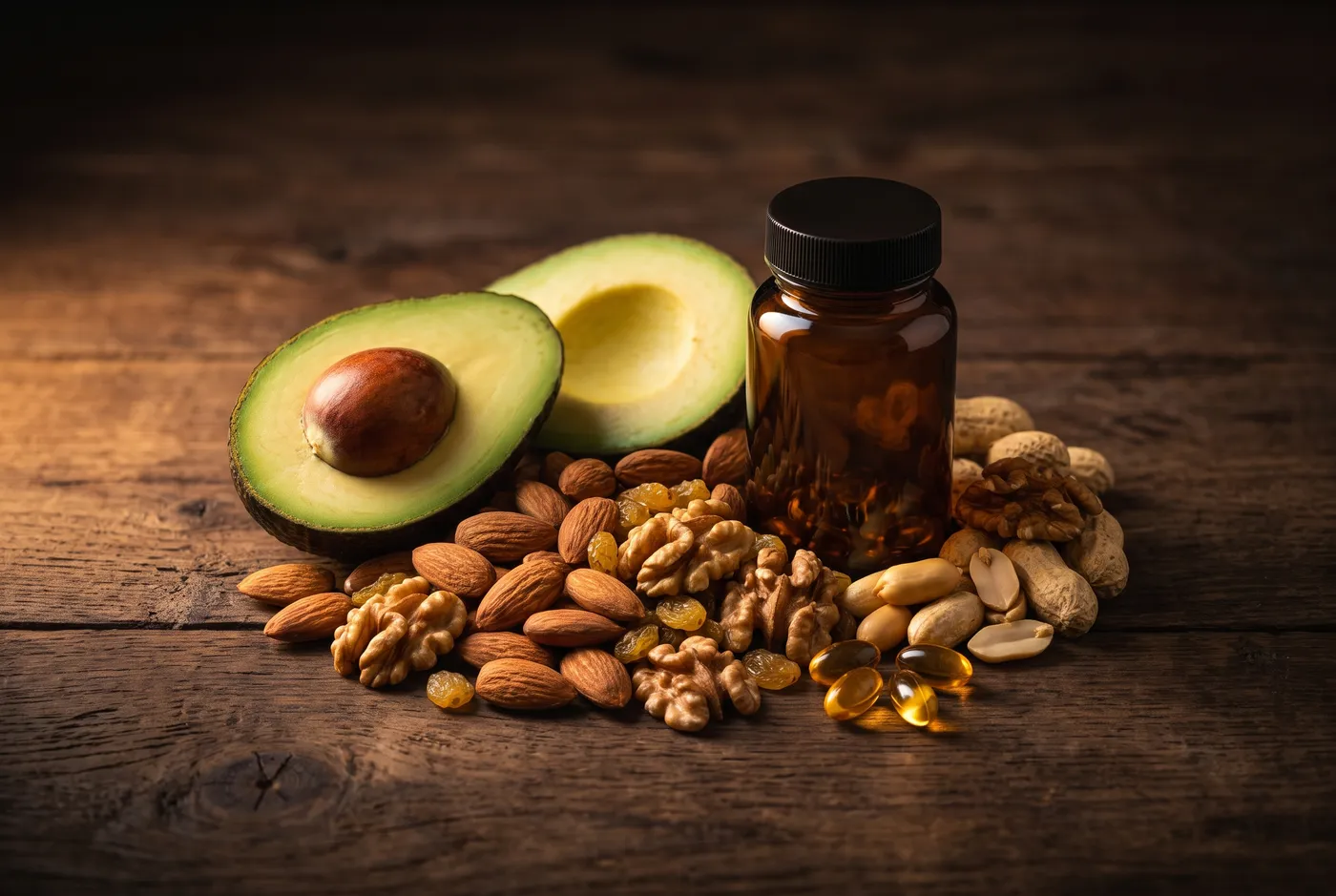
Avocado, almonds, walnuts, raisins and peanuts beside an amber supplement bottle. Realistic AI-generated image.
Boron shows up on more and more men's vitality labels, usually as one line with a number next to it. Here is what that number means, what the research behind it looks like and how much you already get from food.
What is boron and where does it come from?
Boron is a trace mineral. It is in soil, in plants and so in the foods we eat. Researchers describe it as a nutrient of growing interest, but no official daily requirement has been set for it. The only number the authorities have published is an upper limit of 20 mg a day for adults, which a 2015 review article lists.
It is also a common extra in men's vitality formulas, alongside herbs such as the one in our Tongkat Ali article. Our men's vitality guide covers the wider picture. Here we look at boron on its own.
How much boron do men get from food?
About 1 mg a day. A 1999 study in the Journal of the American Dietetic Association built a database of 1,944 foods and linked it to the three-day food records of 11,009 Americans. For men, the results were:
| Group of men | Boron a day from food |
|---|---|
| Lowest 5% | 0.43 mg |
| Middle value | 1.02 mg |
| Average | 1.17 mg |
| Top 5% | 2.42 mg |
| Vegetarian men, middle value | 1.30 mg |
The foods that stood out as high in boron were peanut butter, wine, raisins, peanuts and other nuts. Coffee and milk have little boron per cup, but men drink so much of them that together they supplied about 12% of the total. A second study by the same group found similar figures in Germany, Mexico and Kenya, with men averaging 1.1 to 2.1 mg a day.
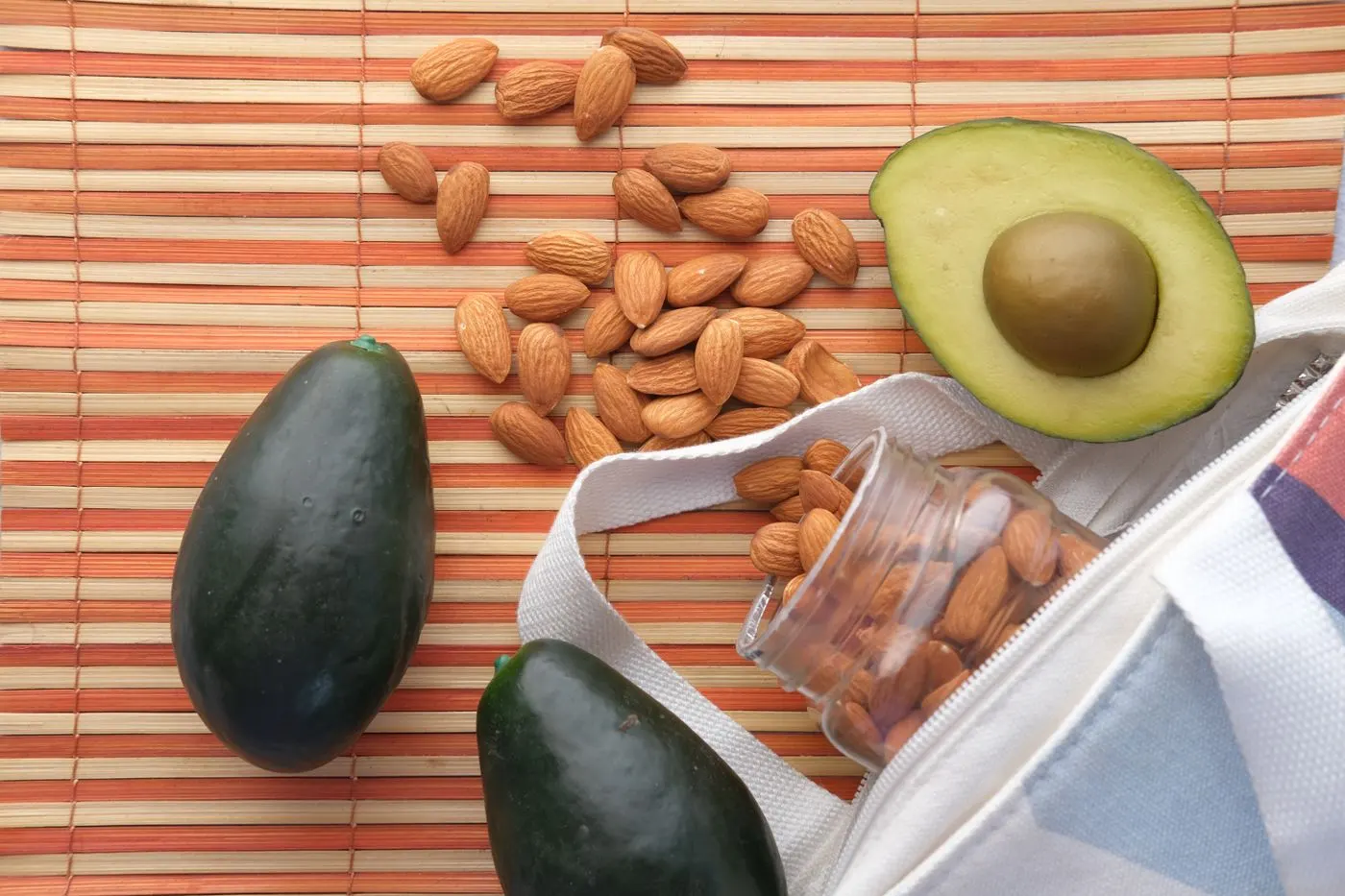
If you want more of these foods, our foods and habits guide and the protein guide both lean on nuts, which also bring protein and fiber.
What does the research on boron in men show?
The study most often quoted is a 2011 paper in the Journal of Trace Elements in Medicine and Biology by Naghii and colleagues. It followed 8 healthy men in Tehran. On day 0 they took a placebo capsule, on day 1 a 10 mg boron capsule and then one a day for a week. Each man was compared with himself.
- Within hours: blood boron rose, and sex hormone binding globulin, a protein that carries hormones in the blood, fell, along with two markers of inflammation.
- After a week: free testosterone rose and estradiol fell on average, and the inflammation markers stayed lower.
The authors themselves call it the first human study to show a rise in free testosterone after boron. That is worth reading as an opening, not a finish line: eight men, one week and no separate placebo group is a small base to build a purchase on. We did not find a larger randomized trial to set beside it.
The 2015 review article, written by a medical editor, gathers a wider range of studies. It reports that in the studies it collected, benefits did not appear at intakes below 3 mg a day. It also suggests that 3 mg a day be considered for people whose diets lack fruits and vegetables, among others. That fits the food numbers above: a man eating a plate full of plants, nuts and raisins gets closer to the amounts that were studied than a man who does not.
How much is too much?
The upper limit for adults is 20 mg a day. It counts everything you take in, food and every supplement. Because food gives about 1 mg, a capsule with 10 mg is roughly ten times a normal day of eating, and a capsule with 20 mg reaches the ceiling by itself. That is why the label number matters, and why it is wise to add up boron from every product on your shelf.
The one-week study cannot say what happens over months or years. If you take medicine or have a medical condition, ask your doctor before you start. A supplement question fits into any routine visit, and the checkups guide has more to raise while you are there.
How do I read a boron label?
- Find the milligrams of boron. It should sit on its own line of the Supplement Facts panel, not hidden inside a blend.
- Check what the number measures. Boron comes as compounds, such as a citrate or a chelate. Look for whether the figure is boron itself or the weight of the whole compound.
- Compare with the study. The one-week study used 10 mg a day. Anything near that is about ten times what a normal diet gives.
- Count your total. Add boron from every product, because the 20 mg limit covers the sum.
- Plan a short trial. Pick a length, write down how you feel and review it with your doctor. Our erectile dysfunction guide explains why those changes are worth a conversation after 50.
What is the bottom line on boron?
Boron is a food mineral with an intriguing but thin set of human studies behind its supplement use. Food already gives men about 1 mg a day, and nuts, raisins and avocado are an easy way to nudge that up. If you choose a capsule, choose a label that shows the milligrams plainly, keep the total well under 20 mg and pair it with the basics in our men's health guide.
Frequently asked questions
What is boron and do men need it?
Boron is a trace mineral found in plants and in the foods we eat. No official daily requirement has been set for it. The only official number is an upper limit of 20 mg a day for adults, as a 2015 review article notes.
How much boron do men get from food?
A US survey that linked a boron database of 1,944 foods to the diets of 11,009 people found that men average about 1.2 mg a day, with a middle value of about 1 mg. The top 5% of men reached about 2.4 mg. The survey used food records from 1989 to 1991.
Which foods are high in boron?
In that survey, peanut butter, wine, raisins, peanuts and other nuts were among the top 50 contributors that are high in boron. Coffee and milk are low in boron, but men drink so much of them that together they supplied about 12% of the total.
Does boron raise testosterone?
One small study of 8 healthy men found higher free testosterone after a week of 10 mg a day. It had no separate placebo group and ran for a week, so we read it as a hint worth testing in bigger trials, not as a promise.
How much boron do the studies use?
The study we read gave 10 mg a day for a week. A 2015 review article reports that, in the studies it gathered, benefits did not show up at intakes below 3 mg a day. Food gives men about 1 mg, so supplements are a different order of amount.
What is the safe upper limit for boron?
The upper intake level for adults is 20 mg a day, counting everything you take in. A label that shows 10 mg leaves room under the limit, and a label that shows 20 mg or more reaches it, which is worth knowing before you add other supplements.
How do I read a boron supplement label?
Find the milligrams of boron per serving, check whether the figure is boron itself or the whole compound, add up boron from every supplement you take, and compare the total with the 10 mg used in the study and the 20 mg upper limit.
Sources we checked for this article
- Naghii MR, Mofid M, Asgari AR, Hedayati M, Daneshpour MS. Comparative effects of daily and weekly boron supplementation on plasma steroid hormones and proinflammatory cytokines. J Trace Elem Med Biol 2011;25(1):54-8 (abstract read November 9, 2026)
- Pizzorno L. Nothing Boring About Boron. Integr Med (Encinitas) 2015;14(4):35-48 (abstract read November 9, 2026)
- Rainey CJ, Nyquist LA, Christensen RE, Strong PL, Culver BD, Coughlin JR. Daily boron intake from the American diet. J Am Diet Assoc 1999;99(3):335-40 (abstract)
- Rainey C, Nyquist L. Multicountry estimation of dietary boron intake. Biol Trace Elem Res 1998;66(1-3):79-86 (abstract)