
Home & DIY · Home Safety
Smoke and Carbon Monoxide Alarms: Where to Put Them and When to Replace
By OakMan Guide Editorial Team Updated 7 min read
The short answer
Put smoke alarms inside every bedroom, outside each sleeping area and on every level, and CO alarms outside each sleeping area and on every level. Test both monthly. The NFPA says to replace smoke alarms 10 years after the manufacturing date, and the CDC says to replace CO alarms by the manufacturer's instructions or every 5 years. If a CO alarm sounds, get outside to fresh air.
We're not doctors, and this is not medical advice.
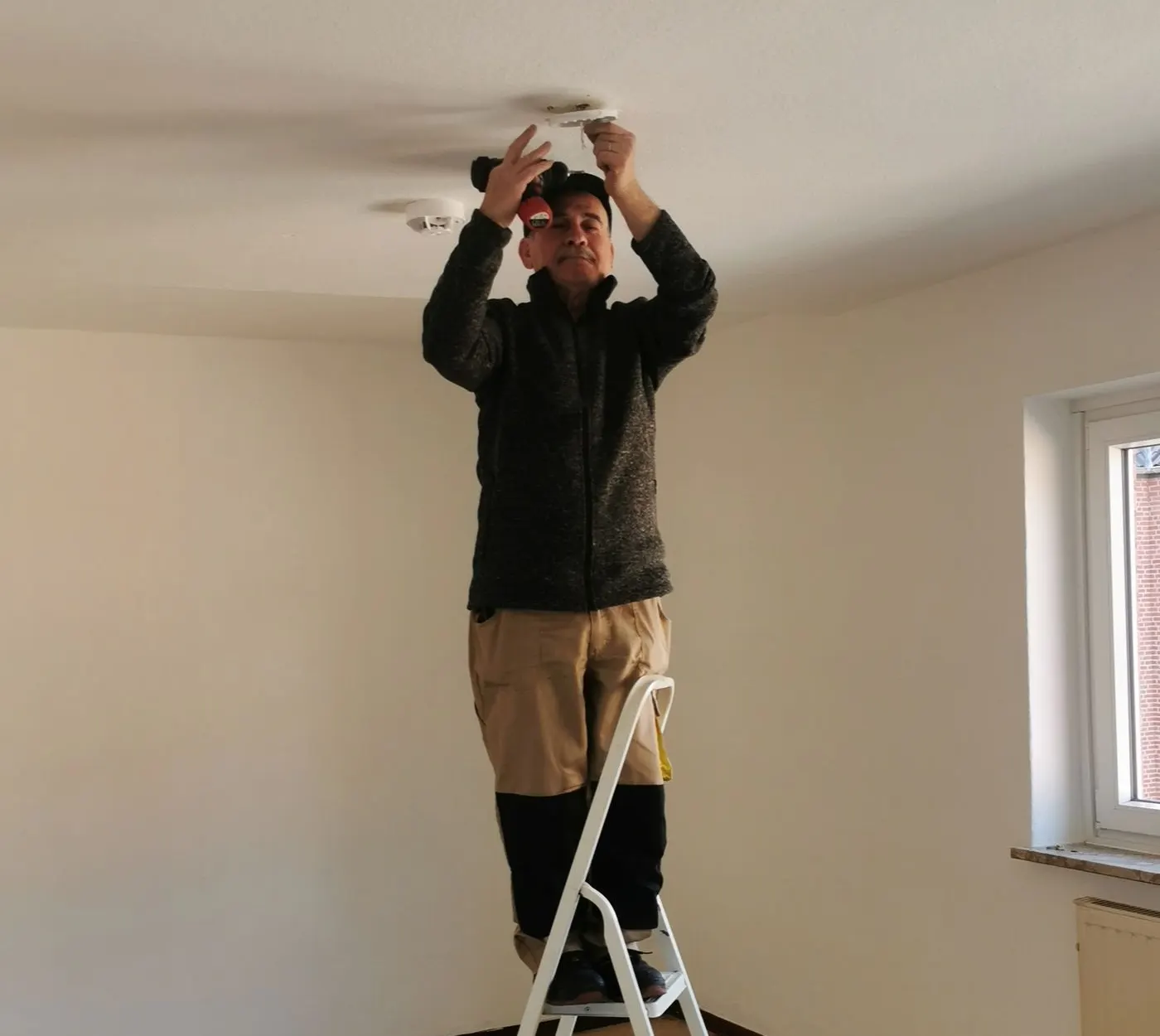
A man on a stepladder works on a ceiling light in an empty room. Photo: El Jundi, Pexels.
Heating season means the furnace runs, the fireplace gets lit and the generator comes out when the power fails. Here is where the alarms belong, how to keep them working and when to retire each one.
Why do alarms matter more in cold weather?
Because more fuel is burning indoors. The NFPA says heating and cooking equipment that burns fuel can be a source of carbon monoxide (CO), and so can a vehicle or generator running in an attached garage. The CDC adds gas- and oil-burning furnaces, portable generators and charcoal grills to the list, and calls CO an odorless, colorless gas that can cause sudden illness and death.
Smoke is the other half. The NFPA says that when working smoke alarms are in the home, the risk of dying in a home fire is cut by 60 percent, and that you may have as little as 2 minutes to escape safely. That is why a working alarm in the right place matters more than a fancy one in the wrong place.
Where should smoke alarms go?
The NFPA gives a short list. Install smoke alarms inside and outside every bedroom and sleeping area, such as a hallway, and on every level of the home, including the basement. Put them on the ceiling or high on a wall. Do not put them in the kitchen or the bathrooms, and keep them at least 10 feet (3 meters) from the stove to reduce false alarms.
For the best protection, the NFPA recommends interconnected alarms, so that when one sounds they all sound. That way you hear it wherever the fire starts. Hardwired alarms should be installed only by a qualified electrician, and the manufacturer's instructions have the final word on placement.
| Where | Smoke alarm | CO alarm |
|---|---|---|
| Inside every bedroom | Yes | Near each sleeping area |
| Outside the sleeping area | Yes | Yes, centrally located |
| Every level of the home | Yes, basement too | Yes |
Where should carbon monoxide alarms go?
The NFPA says CO alarms belong in a central location outside each sleeping area and on every level of the home, plus any other place your local laws or codes require. The CPSC gives the same advice and says interconnected CO alarms are best. The CDC says battery-operated or battery backup CO detectors should be near every sleeping area.
Two details are easy to miss. First, follow the manufacturer's instructions for placement and mounting height, because they differ by model. Second, the CDC suggests a detector with a digital readout if you want to see the highest CO level in your home, not only hear an alarm.
How do I test and maintain them?
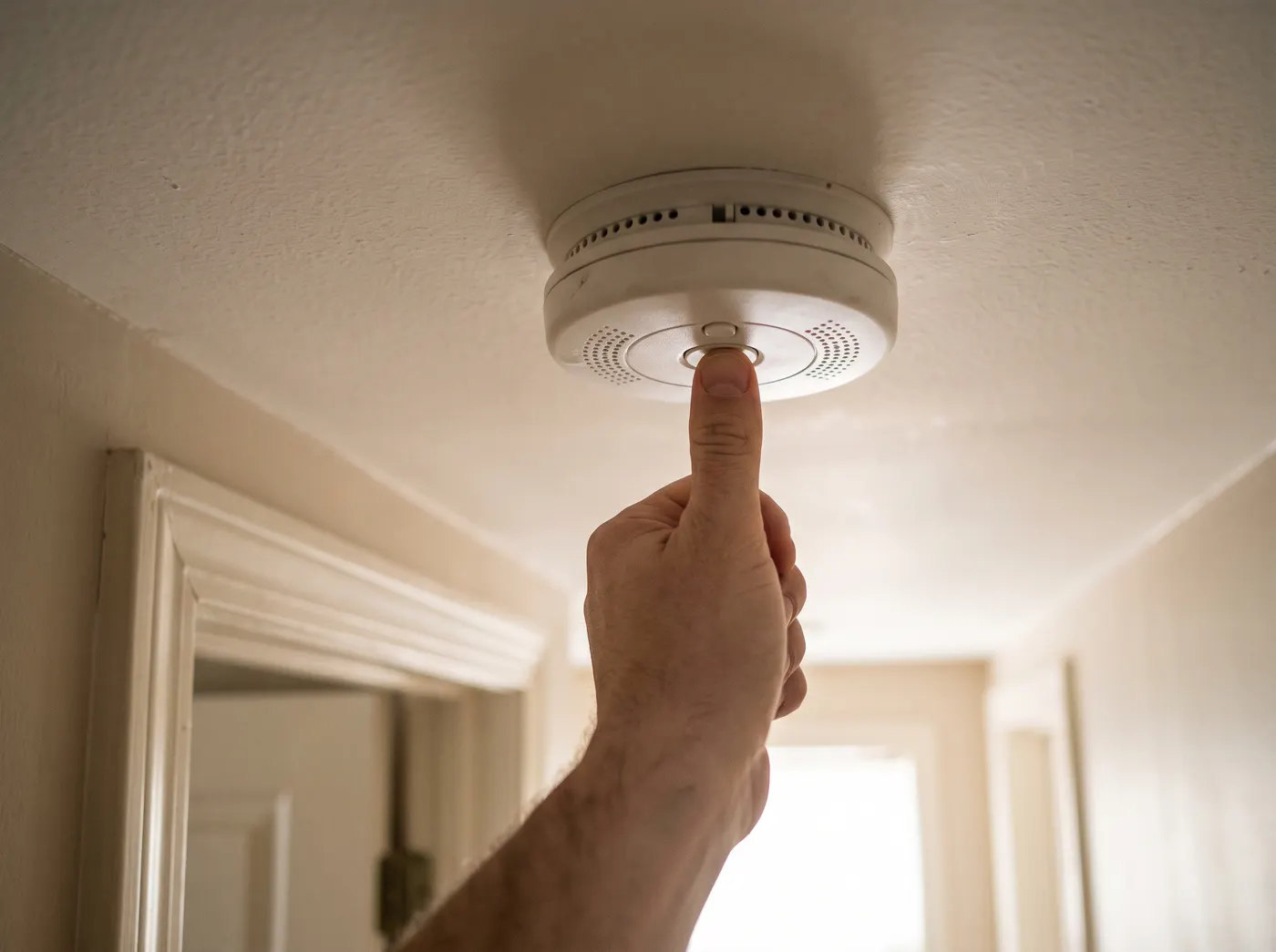
- Test smoke alarms every month. The NFPA says to push the test button once and listen for the loud beep, beep, beep.
- Test CO alarms at least once a month, the NFPA says.
- Change batteries on a schedule. The CDC suggests checking CO detector batteries when you change the clocks each spring and fall. It is an easy habit to tie to a date you already remember.
- Clean them as the label says. The NFPA says to follow the manufacturer's cleaning instructions, which come in the package or online.
- Learn the sounds. Three loud beeps mean smoke or fire. A single chirp every 30 or 60 seconds means a low battery, the NFPA says.
Our fall-proofing guide covers the ladder side of this job: a stable stepladder and a second person nearby are worth the extra minute.
When do I replace them?
Smoke alarms wear out on a clock. The NFPA says all smoke alarms must be replaced 10 years after the manufacturing date. If an alarm still chirps after you put in a new battery, it has reached the end of its life and the whole unit must be replaced. The NFPA also says that either type, a unit with yearly battery changes or a 10-year unit, gives protection, as long as it is listed with a nationally recognized testing laboratory.
CO alarms have their own clock. The CDC says to replace a CO detector following the manufacturer's instructions or every 5 years, and to set a reminder on your phone or calendar when you buy and install it. The NFPA says to replace CO alarms according to the manufacturer's instructions.
| Task | How often |
|---|---|
| Test a smoke alarm | Once a month |
| Test a CO alarm | At least once a month |
| Smoke alarm lifespan | 10 years from manufacture |
| CO alarm lifespan | Label, or every 5 years |
| Batteries and clocks | Check at each change |
In our opinion, the simplest fix is to write the install date on the back of each alarm with a marker and to put the next replacement date in your phone the same day.
What do I do when a CO alarm sounds?
Get out first, then call
The NFPA says to move immediately to fresh air, outdoors or by an open window or door, and to make sure everyone in the home is accounted for. Call for help from a fresh air location and stay there until emergency personnel arrive. The CPSC says that if you suspect CO poisoning, you should get outside to fresh air immediately and then call 911.
The CDC lists the common symptoms as headache, dizziness, weakness, upset stomach, vomiting, chest pain and confusion, often described as flu-like. It also says people who are sleeping or have been drinking can die before they have any symptoms, which is the reason an alarm near the bedrooms matters. Older adults and people with chronic heart disease, anemia or breathing problems are more likely to get sick from CO, the CDC says. Our checkups list is a good place to keep track of the conditions you already have.
If the alarm gives a trouble signal instead, the NFPA says to check for low batteries, replace the battery if it is low and call the fire department if it still sounds. It also suggests calling your local fire department's non-emergency number ahead of time, to learn what number to call if the CO alarm sounds.
What else keeps CO out of the house?
- Service fuel-burning equipment yearly. The CDC says to have the heating system, water heater and any other gas, oil or coal appliance serviced by a qualified technician every year, and the chimney checked or cleaned yearly.
- Keep generators outside. The CDC and CPSC say to run a generator only outdoors, more than 20 feet from windows, doors and vents, never inside the home or garage, even with doors open. Our portable generator safety guide has the full rules.
- Never run a vehicle in the garage. The NFPA says to take a warmed-up vehicle out of the garage right away, even with the garage door open, and to check that the exhaust pipe is not covered by snow.
- Clear the vents after a storm. The NFPA says to make sure dryer, furnace, stove and fireplace vents are free of snow build-up. Our snow shoveling guide has the safe way to do that job.
- Grills stay outside. Gas and charcoal grills can produce CO, and the CDC says never to burn charcoal indoors.
What is a simple plan for this weekend?
- Walk the house. Count the alarms on each level, inside and outside the bedrooms and in the basement.
- Check the dates. Find the manufacturing date on each smoke alarm and the replacement date or lifespan on each CO alarm.
- Press every test button and change any weak battery.
- Set the reminders. Monthly test, clock-change batteries and the replacement dates.
The rest of the season is in our winterize your home checklist and the Home and DIY guide.
Frequently asked questions
Where should smoke alarms go in a house?
The NFPA says to install them inside and outside every bedroom and sleeping area, such as a hallway, and on every level of the home, including the basement. Mount them on the ceiling or high on a wall. Keep them away from the kitchen and bathrooms.
How often should I test my smoke and CO alarms?
The NFPA says to test smoke alarms once a month by pressing the test button, and to test CO alarms at least once a month. If a smoke alarm does not sound, change the battery or, if the unit is over 10 years old, replace the whole unit.
When do smoke alarms expire?
The NFPA says all smoke alarms must be replaced 10 years after the manufacturing date. If an alarm keeps chirping after you put in a new battery, it has reached the end of its life and the unit must be replaced.
How often should I replace a carbon monoxide alarm?
The CDC says to replace a CO detector following the manufacturer's instructions or every 5 years. The NFPA says the same thing in fewer words: replace CO alarms according to the manufacturer's instructions. Check the label for the date or the lifespan.
What should I do if my CO alarm goes off?
The NFPA says to move immediately to fresh air outdoors or by an open window or door, make sure everyone is accounted for, call for help from outside and stay there until emergency personnel arrive. The CPSC adds that if you suspect CO poisoning you should get to fresh air and then call 911.
What does a single chirp every 30 or 60 seconds mean?
On a smoke alarm, the NFPA says it means the battery is low and must be changed. Three loud beeps in a row mean smoke or fire: get out, call 9-1-1 and stay out.
Do I need both smoke alarms and CO alarms?
They detect different dangers. Smoke alarms warn about fire. CO alarms warn about a gas you cannot see or smell, produced when fuel burns, such as in gas and oil furnaces, generators and grills, according to the CDC.
Sources we checked for this article
- National Fire Protection Association: Smoke alarm information (safety tips and FAQ, read November 14, 2026)
- National Fire Protection Association: Carbon monoxide safety (safety tips, read November 14, 2026)
- Centers for Disease Control and Prevention: Carbon Monoxide (CO) Poisoning Basics (page updated October 26, 2026, read November 14, 2026)
- U.S. Consumer Product Safety Commission: Carbon Monoxide (read November 14, 2026)