
Men's Health · Screening
Colon Cancer Screening After 50: Options, Ages and What to Expect
By OakMan Guide Editorial Team Updated 8 min read
The short answer
Most men at average risk should start colon cancer screening at 45, and the American Cancer Society says to continue through 75. You can choose a yearly stool test, a stool DNA test every 3 years or a colonoscopy every 10 years. The best test is the one you actually complete, and any abnormal result leads to a colonoscopy.
We're not doctors, and this is not medical advice. Everything below comes from the official sources listed at the end, and which test and schedule fit you is a question for your doctor.

A man talks with a woman doctor who holds a clipboard across a desk. Realistic AI-generated image.
Screening is one of the few checkups that can find a problem before it starts. The choice of test is wider than most men think.
When should I start colon cancer screening?
At 45 if you are at average risk. The American Cancer Society recommends that people at average risk start regular screening at age 45, and the USPSTF expanded its own range in 2021 to ages 45 to 75, where it had been 50 to 75. The ACS page was last revised in May 2026, so the 45 starting line is current.
| Age | What the official sources say |
|---|---|
| 45 to 49 | The ACS says start regular screening at 45. The USPSTF gives screening a B grade. |
| 50 to 75 | Regular screening. The USPSTF gives it an A grade. |
| 76 to 85 | A decision with your doctor, based on health, past screening and preferences. |
| Over 85 | The ACS says people over 85 should no longer get screened. |
"Average risk" has a specific meaning. The ACS says it applies if you do not have a personal history of colorectal cancer or certain polyps, a family history of colorectal cancer, inflammatory bowel disease (ulcerative colitis or Crohn's disease), a confirmed or suspected hereditary syndrome such as Lynch syndrome, or radiation to the belly or pelvic area for a prior cancer. If any of those apply, the ACS says you might need to start before 45, be screened more often or get specific tests. That is a conversation for your doctor, and our list of men's health checkups after 50 is a good place to bring it up.
Which screening tests are there, and how often?
The American Cancer Society groups them into stool-based tests, visual exams of the colon and rectum, and blood-based tests. These are the preferred options it lists for people at average risk:
| Test | How often | In short |
|---|---|---|
| FIT (stool test) | Every year | At home, hidden blood |
| Guaiac stool test (highly sensitive) | Every year | At home, hidden blood, some food and drug limits |
| Stool DNA or RNA test | Every 3 years | At home, a full bowel movement |
| Colonoscopy | Every 10 years | Clinic, sedation, full bowel prep |
| CT colonography | Every 5 years | Scanner, same bowel prep |
| Sigmoidoscopy | Every 5 years | Clinic, lower colon only |
The USPSTF list is close to this one. It names a highly sensitive guaiac test or FIT every year, stool DNA-FIT every 1 to 3 years, CT colonography every 5 years, flexible sigmoidoscopy every 5 years, flexible sigmoidoscopy every 10 years plus a yearly FIT, and colonoscopy every 10 years. It says several tests are available and that the choice can turn on how often the test is repeated, where it is done, whether you need bowel prep and whether you need sedation.
What about blood tests?
The ACS says blood-based tests are not a preferred option at this time. It says to use one only if you are not willing to get a stool-based test or a visual exam, that a positive result needs a follow-up colonoscopy, and that these tests are not as good at detecting precancerous growths. It notes that two blood tests are FDA-approved for people at average risk.
The best test is the one you complete
The ACS says the most important thing is to get screened, no matter which test you choose. It also says that if you choose any test other than a colonoscopy, an abnormal result should be followed up with a timely colonoscopy. A stool test is not a replacement for a colonoscopy if it comes back positive, it is a way to decide who needs one.
How do the at-home stool tests work?
The ACS says stool-based tests can be done at home, many people find them more convenient than a colonoscopy, and they need to be done more often. They look for small amounts of hidden blood, and the DNA and RNA tests also look for changes in cells in the stool. You get a kit with supplies and instructions, collect the sample and return it as directed. A positive result means a colonoscopy to find the cause, and the ACS notes that blood in the stool can also come from ulcers, hemorrhoids or other conditions.
- FIT. Done once a year at home. The ACS says it has no drug or dietary restrictions, because vitamins and foods do not affect the result.
- Guaiac test. Also yearly, and it uses more than one stool sample. The ACS says only the highly sensitive versions should be used, and that a test done during a rectal exam in the office is not enough.
- Stool DNA or RNA test. Every 3 years. It tests a full bowel movement and has no drug or dietary restrictions.
If you take aspirin, ibuprofen or naproxen every day, the ACS says not to stop them for a guaiac test without talking to your healthcare provider first.
What happens during a colonoscopy?
The NIDDK describes it as a procedure where a doctor uses a flexible tube with a camera on one end to look inside your rectum and colon. It is done in a hospital or an outpatient center and usually takes less than an hour. You get sedatives, anesthesia or pain medicine through an IV, so you do not feel pain, and the doctor can remove polyps during the exam, which you will not feel. The ACS adds that colonoscopy can even prevent colorectal cancer by finding polyps before they turn into cancer.
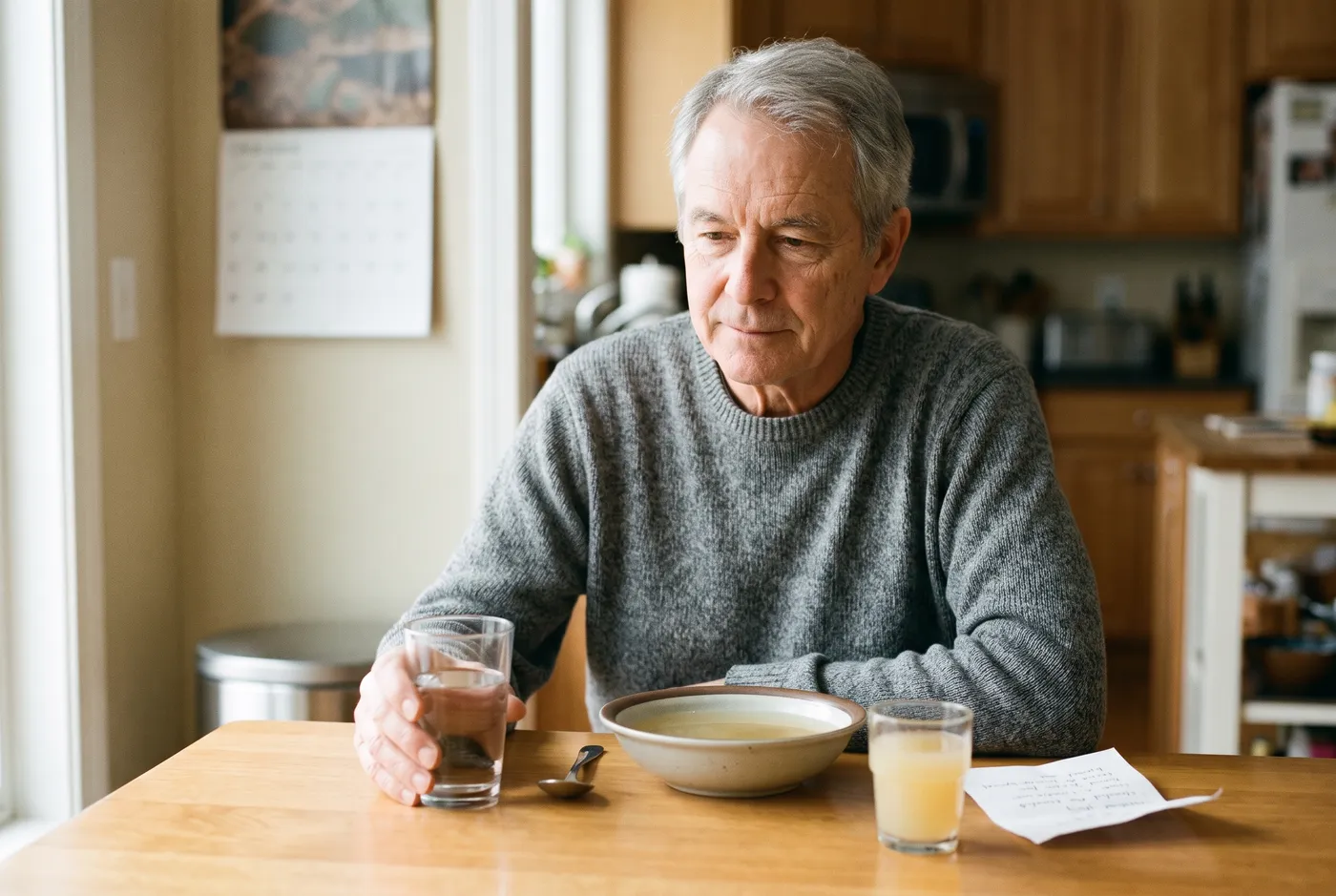
How do I prepare?
The NIDDK says to give your doctor a list of your medicines, vitamins and supplements. Then you follow written instructions, which usually mean:
- A special diet. You may need to avoid high-fiber foods such as whole grains, raw vegetables, beans, nuts and seeds for several days, then follow a clear-liquid diet for a day or more.
- A bowel clean-out. Different preps use pill, liquid or powder laxatives, often taken the night before and the morning of the exam. It causes diarrhea, so stay close to a bathroom. The NIDDK says to finish the prep completely and to call a health care professional if side effects keep you from finishing.
- A ride home. The sedatives or anesthesia need time to wear off before you can drive.
What is recovery like?
You stay about 30 to 60 minutes after the procedure, and the NIDDK says you may feel cramping or bloating in the first hour. It says to expect a full recovery and a return to your normal diet by the next day. If a polyp was removed or a biopsy taken, light bleeding is normal, and biopsy results can take a few days or longer.
When to get care right after
The NIDDK says to seek medical care right away after a colonoscopy if you have severe belly pain, fever, bloody bowel movements that do not get better, bleeding from the anus that does not stop, dizziness or weakness. It says the most common complications are bleeding and perforation, and that delayed bleeding can happen up to 2 weeks later. In the study it cites, perforation happened in about 3 of every 10,000 screening colonoscopies and bleeding in about 15 of every 10,000.
What are the options if I do not want a colonoscopy?
Besides the stool tests above, the ACS describes two other visual exams. CT colonography, also called a virtual colonoscopy, is a CT scan of the colon and rectum. It takes about 15 minutes, needs no sedation and no scope, but it requires the same bowel prep as a colonoscopy, and if it shows polyps a colonoscopy is still needed to remove them. Sigmoidoscopy looks at only the rectum and the lower part of the colon, and the ACS says it is not widely used in the United States because at least 4 out of 10 colorectal cancers start in the upper part of the colon.
Which symptoms mean I should not wait for a screening?
Screening is for people with no symptoms. The American Cancer Society lists these common signs of colorectal cancer, and says that it might not cause symptoms right away:
- A change in bowel habits, such as diarrhea, constipation or narrowing of the stool, lasting more than a few days.
- A feeling that you need to have a bowel movement that is not relieved by having one.
- Rectal bleeding with bright red blood, or blood in the stool that makes it look dark brown or black.
- Cramping or belly pain, weakness and fatigue, or unintended weight loss.
The ACS says many of these have other causes, such as infection, hemorrhoids or irritable bowel syndrome, but that you should see your doctor right away so the cause can be found. It also says most people with polyps have no symptoms at all, which is the reason screening exists. If you are already tracking other changes with a doctor, such as a weaker urine stream, mention the bowel ones too.
Does Medicare cover colon cancer screening?
Mostly, yes. Medicare.gov says Part B covers screening colonoscopies, with no minimum age. If your doctor or provider accepts assignment you pay nothing for the screening test, including a follow-up colonoscopy after a positive stool test. If a polyp or other tissue is removed during the colonoscopy, you pay 15% of the Medicare-approved amount for your provider's services, and a facility coinsurance can apply in a hospital outpatient setting or surgical center. Part B covers a colonoscopy once every 120 months if you are not at high risk, or once every 24 months if you are.
Part B also covers fecal occult blood tests once every 12 months from age 45, with a referral, and multi-target stool DNA tests every 3 years for ages 45 to 85 at average risk and without symptoms. The NIDDK adds that insurance plans sometimes change whether and how often they pay, so check your plan. Our Medicare versus Medicare Advantage basics explains how to read plan details.
What is the bottom line?
If you are 45 or older and have never been screened, pick a test with your doctor this month. A yearly stool test is a legitimate start, a colonoscopy every 10 years is the most thorough, and either one is better than none. Bowel changes, blood or unexplained weight loss do not wait for a schedule. For the rest of your yearly list, start from the Men's Health Guide, and add the PSA conversation and a home blood pressure routine to the same visit.
Frequently asked questions
At what age should I start colon cancer screening?
The American Cancer Society says people at average risk should start regular screening at age 45. The USPSTF gives screening at 50 to 75 an A grade and at 45 to 49 a B grade. If you have a family history, polyps, bowel disease or a genetic syndrome, you may need to start earlier, so ask your doctor.
Which screening tests are there, and how often?
The American Cancer Society lists a highly sensitive stool test (FIT or guaiac) every year, a stool DNA or RNA test every 3 years, a colonoscopy every 10 years, a CT colonography every 5 years and a sigmoidoscopy every 5 years. The USPSTF lists similar strategies, with stool DNA-FIT every 1 to 3 years.
Do I have to get a colonoscopy?
No. The American Cancer Society says the most important thing is to get screened, no matter which test you choose. A stool test or an imaging test is a valid first step, but an abnormal result on any of them needs a follow-up colonoscopy.
How do I prepare for a colonoscopy?
The NIDDK says you talk with your doctor about your medicines, follow a special diet for a few days, clean out your bowel with a laxative prep and arrange a ride home. The prep causes diarrhea, so stay close to a bathroom and finish it completely.
What happens after a colonoscopy?
The NIDDK says you stay about 30 to 60 minutes while the sedation wears off, may feel cramping or bloating in the first hour and should expect a full recovery and your normal diet by the next day. Light bleeding after a polyp is removed is normal.
When should I see a doctor instead of waiting for a screening?
The American Cancer Society lists a change in bowel habits lasting more than a few days, bright red blood from the rectum, blood in the stool, belly pain, unexplained weight loss and unusual weakness. These have many causes, but it says to see your doctor right away so the cause can be found.
Does Medicare cover colon cancer screening?
Medicare.gov says Part B covers screening colonoscopies, fecal occult blood tests and multi-target stool DNA tests. If your provider accepts assignment you pay nothing for the screening test, but if a polyp is removed during a colonoscopy you pay 15% of the Medicare-approved amount for your provider's services.
Should I keep getting screened after 75?
It depends. The American Cancer Society says people in good health with a life expectancy of more than 10 years should continue through age 75. For ages 76 to 85 it says the decision should be based on preferences, life expectancy, overall health and prior screening, and after 85 it says to stop.
Sources we checked for this article
- American Cancer Society: Colorectal Cancer Screening Guidelines (last revised May 27, 2026)
- American Cancer Society: Colorectal Cancer Screening Tests (last revised August 24, 2026)
- American Cancer Society: Colorectal Cancer Signs and Symptoms (last revised January 29, 2024)
- USPSTF: Colorectal Cancer: Screening (final recommendation May 18, 2021)
- NIDDK, NIH: Colonoscopy (last reviewed August 2023)
- Medicare.gov: Colonoscopies (screening) (read November 14, 2026)
- Medicare.gov: Fecal occult blood tests (screening) (read November 14, 2026)
- Medicare.gov: Multi-target stool DNA tests (screening) (read November 14, 2026)