
Home & DIY · Home Safety
Portable Generator Safety: Never Run One Indoors
By OakMan Guide Editorial Team Updated 7 min read
The short answer
Portable generator safety starts with one rule: never run one inside a home, garage, basement, crawlspace, shed or porch, even with doors and windows open. The CPSC says to run it outdoors at least 20 feet from the house with the exhaust pointed away, and the CDC says more than 20 feet from windows, doors and vents. Keep working CO alarms in the house.
We're not doctors, and this is not medical advice.
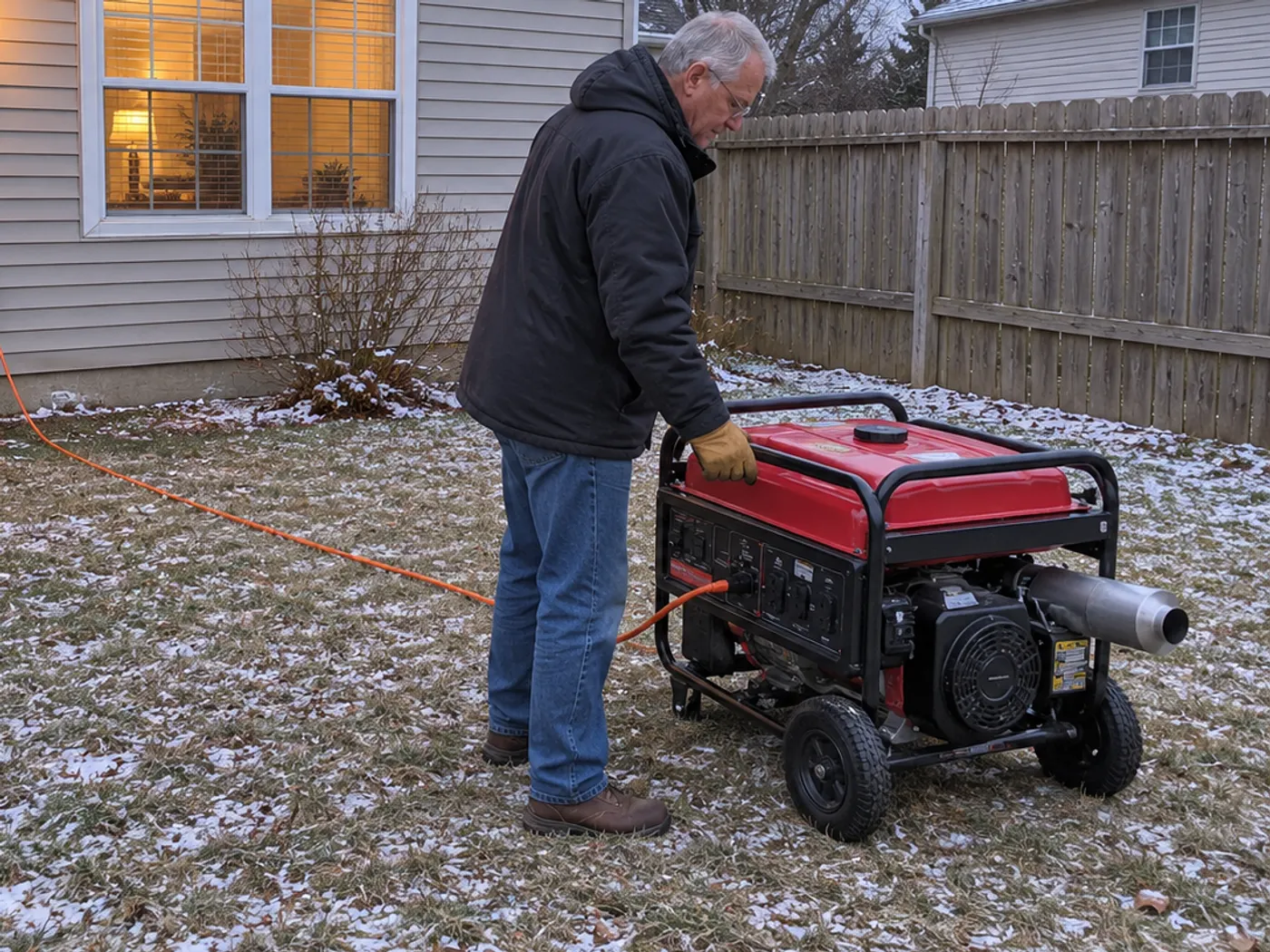
A portable generator set up outdoors on the lawn, with its exhaust pointing away from the house. Realistic AI-generated image.
When a winter storm cuts the power, the generator comes out of the shed and the doors stay shut against the cold. That is exactly when the exhaust finds its way inside. Here is where it can go, how far away, and what else to check.
Why can a portable generator kill you indoors?
Because its exhaust contains carbon monoxide (CO), a gas you cannot see or smell. The CPSC calls CO the "invisible killer" and says that using a generator indoors can kill you in minutes. Its generator page adds that one generator can produce as much CO as hundreds of cars.
The numbers are hard to ignore. The CPSC says more than 80 people die each year in the United States from CO poisoning caused by portable generators, and its January 2026 release says about 750 people died from CO poisoning associated with generators alone from 2012 to 2022. The CPSC safety alert explains why a closed space is so dangerous: generators can produce high levels of CO within minutes, and the gas can linger for hours, even after the generator has shut off.
Two details matter after 50. The CPSC says that even if you do not smell exhaust fumes, you may still be exposed. And the CDC says people who are sleeping can die from CO poisoning before they have any symptoms, so waiting to feel something is not a plan.
Where can I run a portable generator?
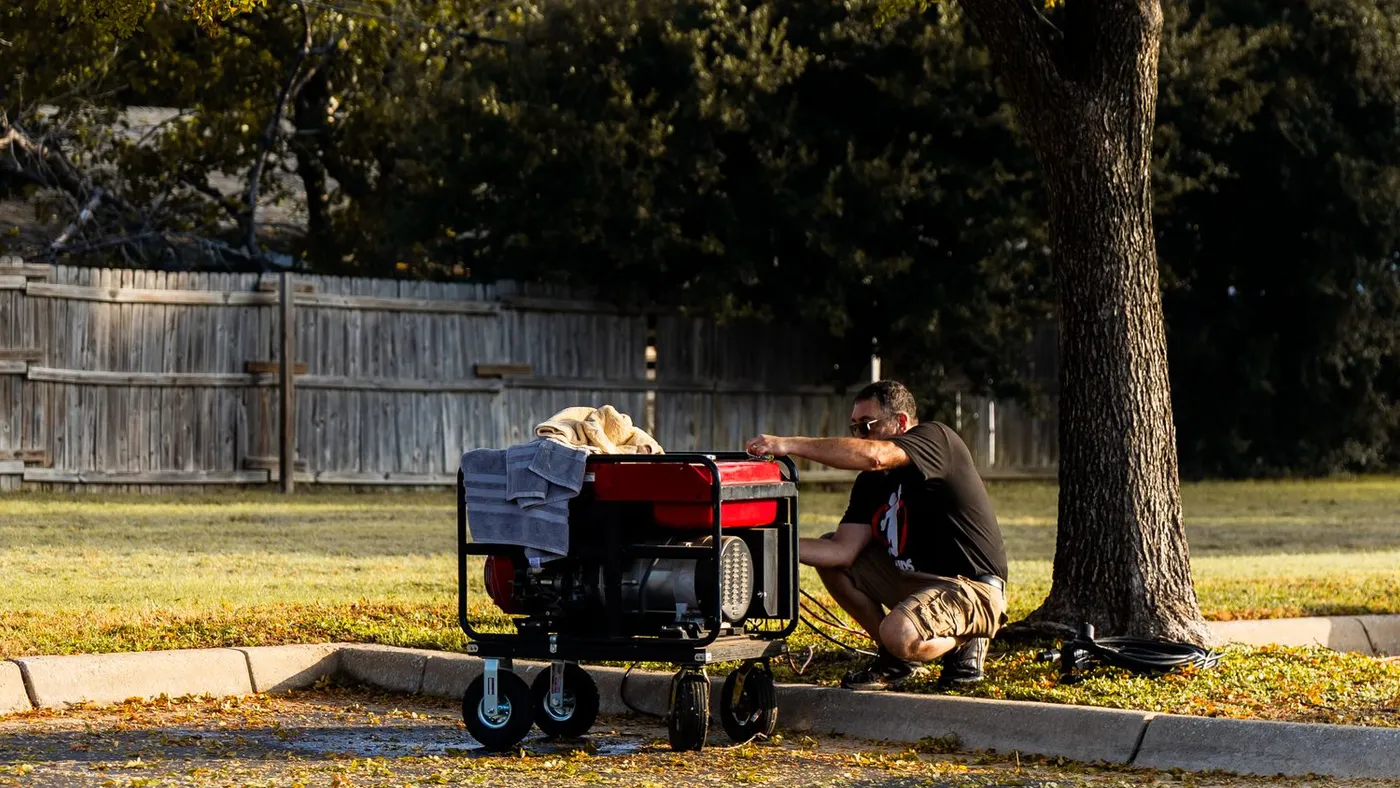
Outside, and only outside. The CPSC says to operate a portable generator outdoors at least 20 feet from the house and to point its exhaust away from the home and other buildings. The CDC puts it slightly differently: more than 20 feet from windows, doors and vents. Both agree on the other half of the rule: never inside the home or garage, even with the doors and windows open.
| Place | Run a generator here? |
|---|---|
| Inside the house, in any room | Never |
| Attached or detached garage, door open or not | Never |
| Basement or crawlspace | Never |
| Shed | Never |
| Porch | Never |
| Outdoors, 20 feet or more from the house, exhaust pointed away, clear of windows, doors and vents | Yes |
The CPSC also says not to use a generator near openings to your home, including doors, windows and vents, and never to leave a car running in an attached garage. A generator in the shed, on the porch or tucked against the wall to stay dry is the mistake that gets repeated every storm.
Is 20 feet always far enough?
It is the number to follow, and one study suggests it is a floor, not a ceiling. The National Institute of Standards and Technology (NIST) simulated a generator running outside a one-story house and found that the safe distance depends on the house, the weather and the unit. In the house it modeled, a generator 15 feet from open windows was not far enough to keep CO out, and NIST said users may need to keep generators as far as 25 feet from the house.
NIST also found that CO can enter through a door or window left open to pass the extension cord, and that slow, stagnant wind was the worst case because the CO lingered by the windows. It cited CDC data that up to half of the non-fatal CO poisonings reported in the 2004 and 2005 hurricane seasons involved generators run within 7 feet of the home. The study is from 2009 and covers one modeled house, so we read it as a reminder, not a new rule.
In our opinion, the practical takeaway is simple: 20 feet is the minimum, use more if your yard allows it, and keep windows and doors on the generator side of the house closed, with only the cord running to the appliances.
Do I need CO alarms if the generator is outside?
Yes. The CPSC says to install battery-operated CO alarms, or CO alarms with battery backup, outside sleeping areas and on each floor of the home, and to test them monthly. The CDC gives the same advice: use a battery-powered or battery-backup CO detector in your home. Battery power matters here, because the power is out when you need the alarm. The CPSC safety alert adds that CO alarms should be certified to the latest safety standards (UL 2034, IAS 6-96 or CSA 6.19.01).
If the alarm sounds, or you feel sick
The CPSC says not to ignore a CO alarm: get outside immediately, then call 911. Its list of CO poisoning symptoms is headache, dizziness, weakness, nausea, vomiting, sleepiness and confusion. If you feel sick, dizzy or weak while using a generator, get to fresh air right away and do not delay.
Where each alarm goes, how often to test it and when to replace it are in our smoke and CO alarms guide.
How do I connect appliances safely?
The CPSC safety alert lists the electrical rules next to the CO rules, because a generator can also shock you, especially in wet conditions.
- Use heavy-duty outdoor extension cords. They should be made for outdoor use, with a wattage rating higher than the total wattage of everything plugged into them.
- Check each cord. The full length should be free of cuts or tears and the plug should have all three prongs.
- Pick cords long enough to keep the generator outdoors and far from windows, doors and vents.
- Protect the cord from getting pinched or crushed if it passes through a window or doorway.
- Keep the generator dry. If it is wet outside, run it under an open, canopy-like structure on a dry surface where water cannot reach it or puddle under it, without running it indoors or near openings. Dry your hands before touching it.
- Never backfeed. The CPSC says never to power the house wiring by plugging the generator into a wall outlet. It risks electrocuting utility workers and neighbors on the same transformer and bypasses built-in household protection.
If you want the generator to power the house wiring directly, that is a job to bring to a licensed electrician rather than a weekend fix.
How do I fuel and store it?
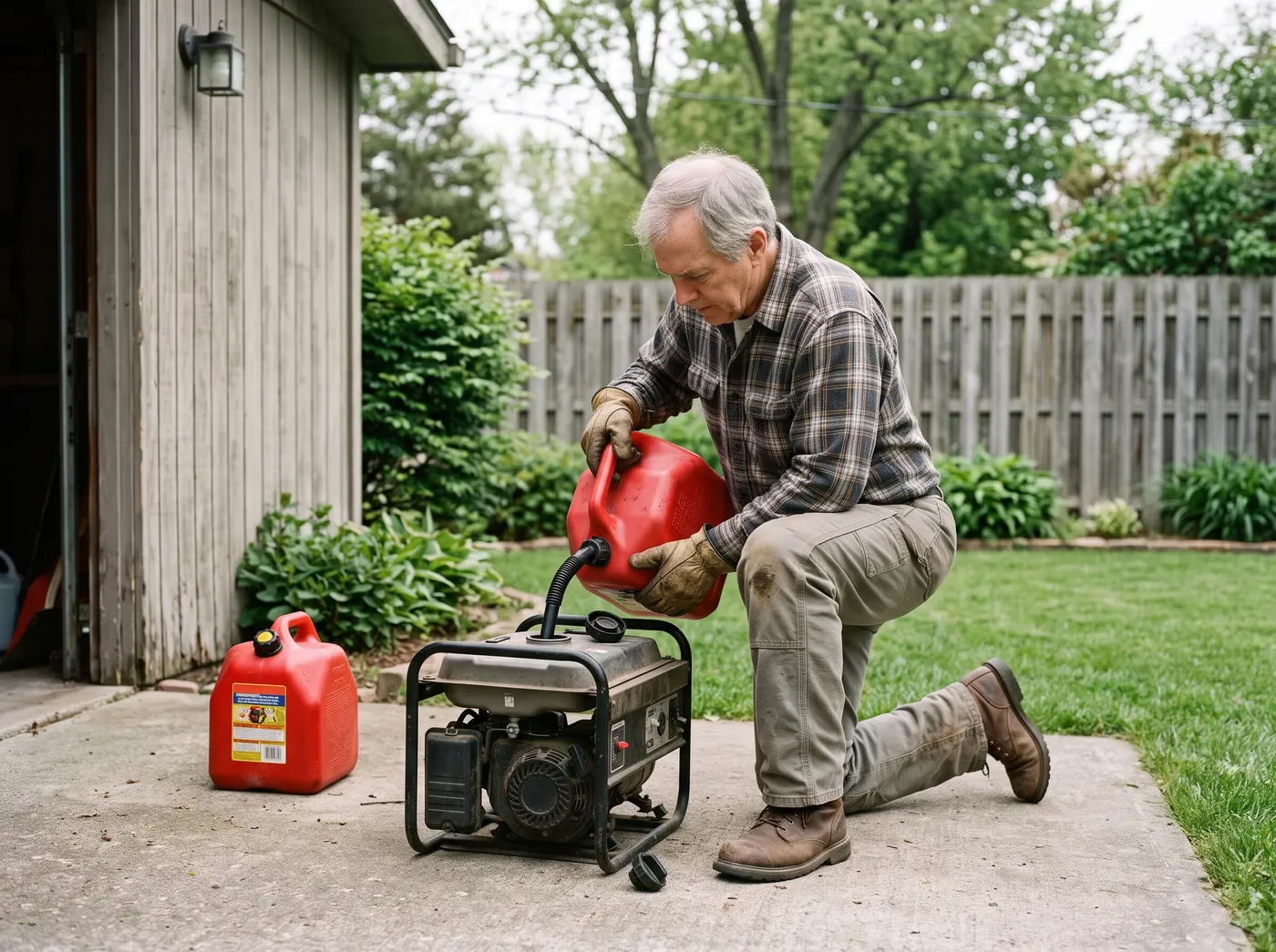
- Turn it off and let it cool before refueling. The CPSC says gasoline spilled on hot engine parts could ignite, and its 2026 release says never to refuel a generator while it is running.
- Keep fuel out of the house. Gasoline, propane, kerosene and other flammable liquids belong outside living areas in properly labeled, non-glass safety containers.
- Mind what is next to the fuel. The CPSC says not to store it near a fuel-burning appliance, such as a natural gas water heater in a garage.
- Read the labels and manual. The CPSC says to check that the generator has had proper maintenance and to follow the warnings on the unit. Danger labels have been required on portable generators made or imported on or after May 14, 2007.
If you are shopping for a new one, the CPSC says to ask the retailer for a model with a safety feature that shuts the generator off automatically when high CO concentrations are present, and notes that some of those models also have reduced emissions.
What else should stay outside during an outage?
The same logic applies to anything that burns fuel. The CPSC says never to burn a charcoal grill indoors, even with ventilation, because charcoal quickly produces deadly CO. The CPSC release also suggests battery-powered flashlights or lanterns instead of candles and never leaving a burning candle unattended. For heat, our space heater safety guide covers the clearances, the outlet rule and the tip-over switch, and the winterize your home checklist has the outage kit.
What is a simple plan before the next outage?
- Pick the spot now. Walk 20 feet or more from the nearest window, door and vent and see where the generator would sit, with the exhaust facing away from the house.
- Check the alarms. Press the test button on every CO alarm and replace any weak battery.
- Inspect the cords. Look for cuts and missing prongs, and compare the cord rating with what you will plug in.
- Store the fuel outside. Use labeled, non-glass containers, away from any gas appliance.
- Read the manual and labels. Do it in daylight, not in the dark with the power out.
- Check on a neighbor. The CPSC says to look in on neighbors during extended outages.
Winter storms bring other jobs, from clearing walks with our snow shoveling guide to keeping the house from freezing with our frozen pipes guide. The whole season is in the Home and DIY guide.
Frequently asked questions
Can I run a portable generator in my garage with the door open?
No. The CPSC says never to use a generator inside a home or garage, even if the doors and windows are open. Deadly levels of carbon monoxide can build up quickly and linger for hours, even after the generator has shut off.
How far from the house should a portable generator be?
The CPSC says at least 20 feet from the house, with the exhaust pointed away from the home and other buildings. The CDC says more than 20 feet from windows, doors and vents.
Can I run a generator on a porch or next to the house if it is raining?
Not on a porch or near an opening. The CPSC says to protect the generator from moisture under an open, canopy-like structure on a dry surface, without running it indoors or near openings to the house.
Do I still need a carbon monoxide alarm if the generator is outside?
Yes. The CPSC and the CDC both say to have battery-operated or battery-backup CO alarms in the home, outside sleeping areas and on each floor, and to test them monthly.
What should I do if my CO alarm sounds or I feel dizzy near a generator?
Get outside to fresh air right away, then call 911. The CPSC lists headache, dizziness, weakness, nausea, vomiting, sleepiness and confusion as signs of CO poisoning.
Can I plug the generator into a wall outlet to power the house?
No. The CPSC says never to plug a generator into a wall outlet, a practice called backfeeding, because it puts utility workers and neighbors at risk of electrocution. Use heavy-duty outdoor extension cords from the generator to each appliance.
Is it safe to refuel a generator while it is running?
No. The CPSC says to turn the generator off and let it cool down before refueling, because gasoline spilled on hot engine parts could ignite.
Sources we checked for this article
- U.S. Consumer Product Safety Commission: What to Know About Generators and Carbon Monoxide (CO) (publication 468, March 2022, read November 23, 2026)
- U.S. Consumer Product Safety Commission: Portable Generator Hazards, Safety Alert (publication 5123, October 2021, read November 23, 2026)
- U.S. Consumer Product Safety Commission: Generators and Engine-Driven Tools (read November 23, 2026)
- U.S. Consumer Product Safety Commission: Keep Warm and Safe This Winter (news release of January 23, 2026, read November 23, 2026)
- Centers for Disease Control and Prevention: Carbon Monoxide (CO) Poisoning Basics (page updated October 26, 2026, read November 23, 2026)
- National Institute of Standards and Technology: For Safer Emergencies, Give Your Power Generator Some Space (released October 6, 2009, updated February 3, 2025, read November 23, 2026)